

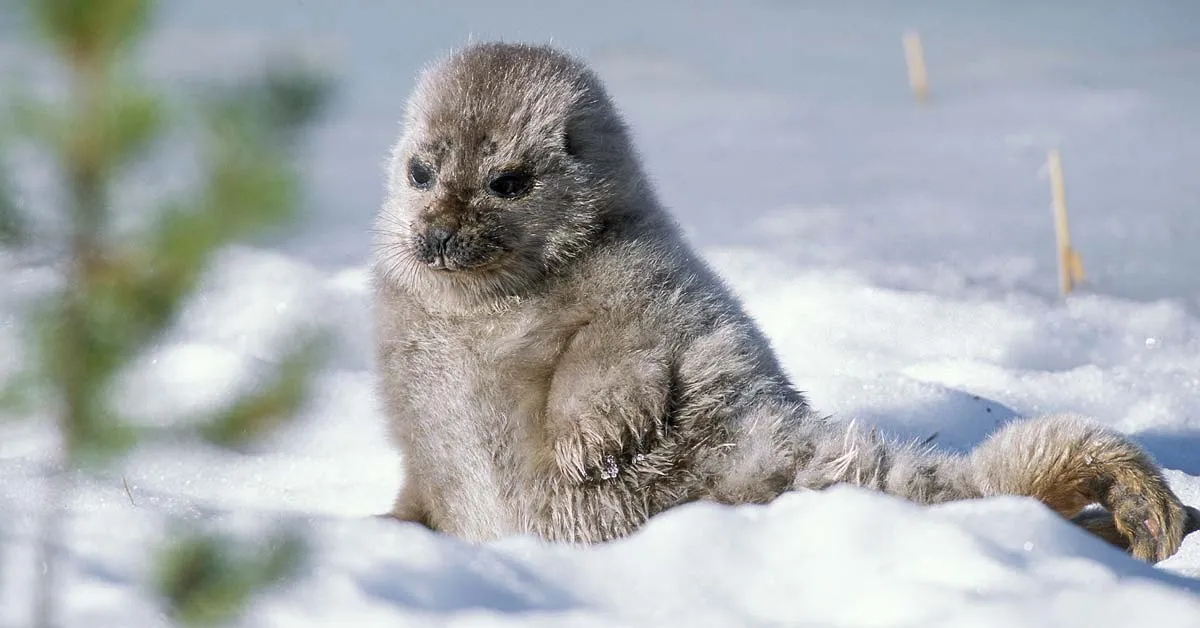
Every winter for the past 12 years, teams have trudged onto the frozen surface of Lake Saimaa in Finland with handheld snowplows, sculpting artificial drifts where endangered seal pups can be born safe from predators and cold.
It sounds like a small gesture. It's actually working.
The Saimaa ringed seal lives nowhere else on Earth. By the 1980s, fewer than 100 remained. Today, thanks to this combination of human intervention and policy change, the population has climbed to about 400. More striking: roughly half of those seals — the ones born since 2014 — came into the world inside these hand-built shelters.
Why the drifts matter
Historically, brutal Finnish winters created towering snow banks naturally. Pregnant seals would hollow out dens in these drifts, creating insulated chambers where pups could develop protected from the elements and from predators. But warming winters mean fewer drifts form on their own. "If there aren't any snow banks, the pups are born on open ice and don't have any protection," explains Joonas Fritze, a World Wildlife Fund officer. "Up to half of the pups could die."
We're a new kind of news feed.
Regular news is designed to drain you. We're a non-profit built to restore you. Every story we publish is scored for impact, progress, and hope.
Start Your News DetoxSo each winter, volunteers and scientists from the University of Eastern Finland, Finland's parks agency, and WWF return to the lake to do the work that climate change has stopped doing. They push snow into drifts, researchers monitor which designs work best, and the seals do what they've always done — they move in.
It's a practical example of what happens when you combine immediate action with longer-term thinking. The artificial drifts buy time. Fishing bans on gill nets, hunting protections, and pollution controls address the broader pressures. But Fritze is clear about what really needs to happen: "We need a long-term plan, which includes taking quick action on climate change."
The work continues to evolve. Researchers test new drift designs, refine placement strategies, and document which approaches give pups the best chance. What began as emergency intervention has become something closer to a partnership — humans and nature co-designing survival.
The Saimaa seal population isn't saved yet. But it's no longer disappearing.





