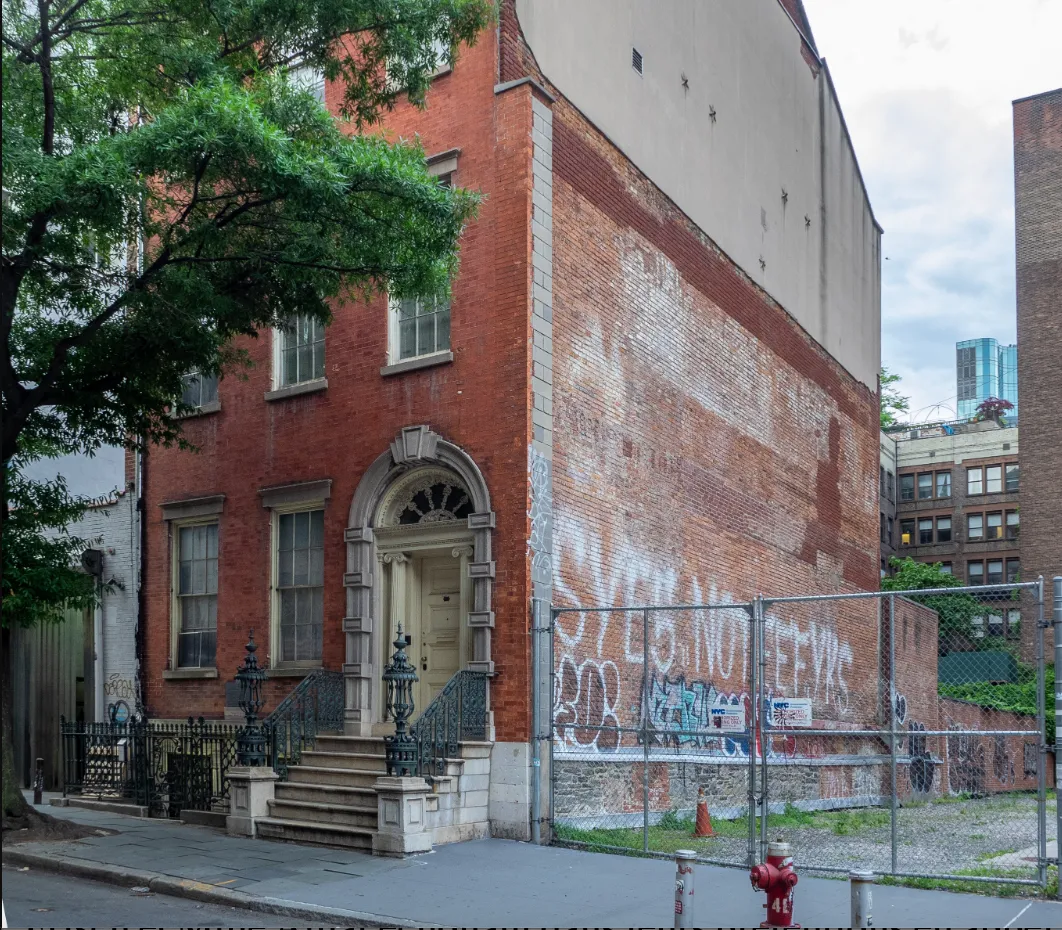
A small rectangular opening cut into floorboards in a Manhattan townhouse has quietly rewritten the building's history. Archaeologists discovered the concealed space—roughly 2 feet by 2 feet—while inspecting a built-in dresser on the second floor of the Merchant's House Museum in NoHo. A ladder descended to the ground floor below.
Experts now believe this passage functioned as a safe house on the Underground Railroad, the secret network of abolitionists who helped enslaved people escape to freedom before and during the Civil War. The discovery transforms how we understand this particular 19th-century home—and New York's role in the abolitionist movement.
A Deliberate Design
The Merchant's House was built in 1832 by Joseph Brewster, a tradesman, and later sold to the Tredwell family, who occupied it for roughly a century before it became a museum. Architectural historian Patrick Ciccone believes Brewster himself designed and built the hidden space. The evidence points to intentional planning: as the builder, Brewster would have had the freedom to incorporate such a feature into the home's design without explanation.
We're a new kind of news feed.
Regular news is designed to drain you. We're a non-profit built to restore you. Every story we publish is scored for impact, progress, and hope.
Start Your News DetoxCiccone notes that being an abolitionist was "incredibly rare among white New Yorkers, especially wealthy white New Yorkers" during this period. Brewster's willingness to risk legal consequences—harboring enslaved people was a federal crime—suggests genuine conviction. Whether the Tredwell family knew about the passage, or used it, remains unclear.
Michael Hiller, a preservation attorney and professor at Pratt Institute, called the discovery "a generational find"—one of the most significant of his career. The museum's curator, Camille Czerkowicz, acknowledged the team had suspected something was there but didn't fully understand what they were looking at until the opening was revealed.
Why This Matters Now
The Merchant's House already held historical weight. It became Manhattan's first designated landmark in 1965 and earned National Historic Landmark status in 1966. But this discovery adds a layer many had overlooked: physical evidence that New York—often remembered for its financial power and commerce—was also a crucial node in the resistance to slavery.
City councilman Christopher Marte framed it directly: "Many New Yorkers forget that we were part of the abolitionist movement. This is physical evidence of what happened in the South during the Civil War and why that history still matters today."
The find arrives at a precarious moment. The museum has faced financial strain in recent years, and there are plans for new development on a neighboring lot. The discovery of this hidden passage may strengthen the case for preservation—and for a fuller telling of the building's role in American history.