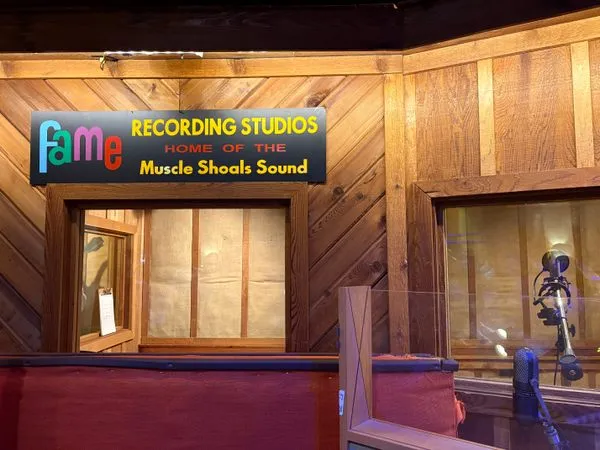
A nondescript building in Muscle Shoals, Alabama, has a bold claim plastered on its front door: "the finest Musicians, Songwriters, Artists and Producers in the World" have walked through. And here’s the kicker: it’s absolutely true.
This isn't some glitzy Hollywood palace. This is FAME Recording Studios, a place where for six decades, musical legends have come to find something a little grittier, a little more soulful, and a lot more real.
The Swampers and the Sound
FAME started life in 1959, above a drugstore, of all places. Founder Rick Hall eventually moved it to its current, unassuming spot on Avalon Avenue. From this humble abode, a sound was born — a unique blend of soul, R&B, pop, country, and gospel that became known simply as the "Muscle Shoals sound."
We're a new kind of news feed.
Regular news is designed to drain you. We're a non-profit built to restore you. Every story we publish is scored for impact, progress, and hope.
Start Your News DetoxBut a sound needs players, and FAME had the best: its house musicians, affectionately known as the Muscle Shoals Rhythm Section, or more famously, the Swampers. These guys became legends in their own right, lending their magic to countless classic recordings. Their presence alone was enough to draw artists from around the globe to this small Alabama town.
Where Legends Were Forged
Forget the bright lights of New York or the polished Nashville sound. Muscle Shoals offered something different. It offered authenticity. Early hits like Arthur Alexander’s “You Better Move On” and Jimmy Hughes’s “Steal Away” put FAME on the map. Then came the parade of icons.
Wilson Pickett, Etta James, Otis Redding – they all found their way to FAME. It was here that Aretha Franklin's first Atlantic session produced "I Never Loved a Man," a track that didn't just change her career, it redefined it. The studio isn't just a relic; it's still a working hub, with modern artists continuing to record in its hallowed rooms.
FAME’s true magic isn't just in the hits it produced, but how it managed to bottle the essence of American music history into two modest rooms in a little-known town. Which, if you think about it, is both impressive and slightly terrifying for anyone who prefers their musical genius to originate in, say, a major metropolitan area.