
Boz Davison found a picture in a 1933 book and saw the label: "defunct game." That was enough. Now, in the villages of South Yorkshire where knurr-and-spell once thrived in pubs and fields, the game is being played again.
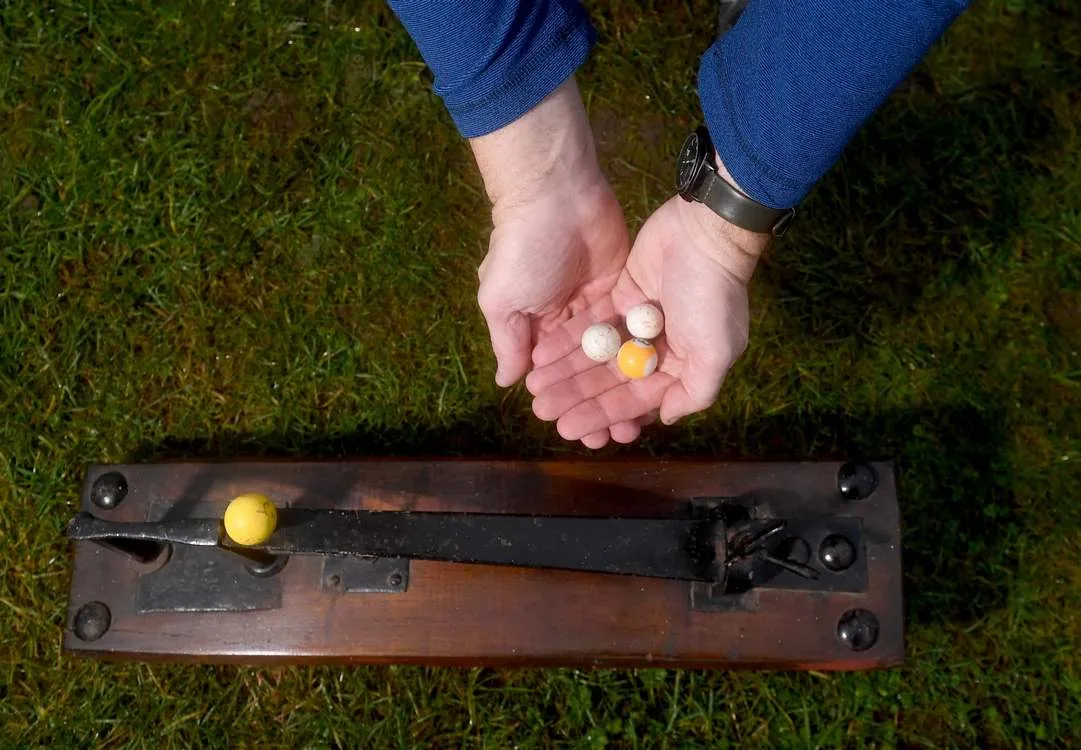
Knurr-and-spell is deceptively simple: hit a small clay ball as far as you can. The catch is how you hit it. The ball—called a knurr or "pottie"—sits on a stressed iron rod that works like a catapult. A quick tap of a specially carved stick triggers the rod, launching the ball into the air. The player then swings at it mid-flight, golf-style. Whoever sends it farthest wins.
The game likely emerged from Germanic roots—"knurren" means wooden ball, "spielen" means to play—and a similar version still exists in Switzerland. But in England, knurr-and-spell nearly disappeared entirely. By the 1970s, it had vanished from most of the country. The game suffered from what Davison calls elitism: it required specific equipment, specific knowledge, and specific people willing to teach it.
We're a new kind of news feed.
Regular news is designed to drain you. We're a non-profit built to restore you. Every story we publish is scored for impact, progress, and hope.
Start Your News DetoxMaking It Playable Again
Davison, based near Barnsley, started by teaching himself how to make the equipment. The traditional sticks—carved from hickory or ash—take a week to craft and are nearly impossible to source now. Rather than wait for perfection, he relaxed the rules. Hockey sticks and hurling sticks work fine; they have similar weight and feel. This pragmatism matters. In the 1970s, players spent years practicing with walking sticks to build technique. That knowledge had simply evaporated.
Word spread to people who remembered the game. Eric Wilson, who won the World Championship in 1969, got involved. So did Tommy Chambers, who played in the 1972 World Championships. "We've played 4 games so far," Davison said. The next formal match is planned for Leeds later this year, with plans to set up games in Lancashire—reviving the historic Roses rivalry between Yorkshire and Lancashire.
Davison has also handled the practical side modern communities expect. He took out public liability insurance to cover the inevitable mishap of someone getting hit by a flying clay ball. Safety wasn't a concern in the 1970s. It is now.
What started as one person's refusal to accept a game as "defunct" has become a slow, deliberate resurrection. The sticks are improvised, the rules are bent, but the core remains: hit the ball farther than anyone else. That simplicity, it turns out, is enough to bring people back.