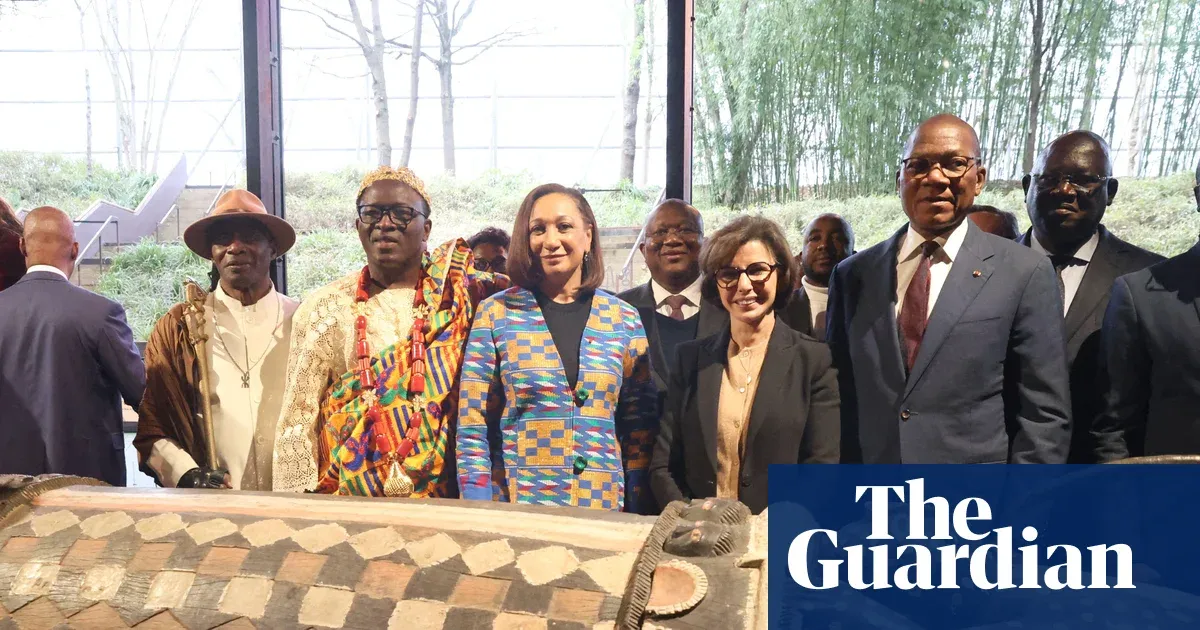
A sacred talking drum, the Djidji Ayôkwé, has been returned to Côte d’Ivoire. French colonial authorities looted it over a century ago. This marks a major cultural return to a former French colony.
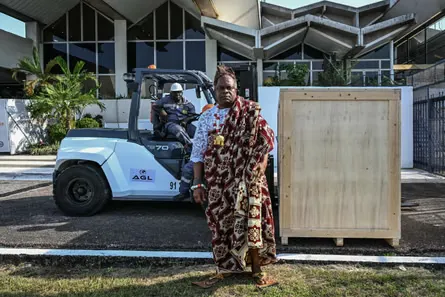
The drum arrived in Abidjan on a Friday morning. It had been held at the Quai Branly – Jacques Chirac Museum in Paris. French officials handed it over earlier this month.
Aboussou Guy Mobio, chief of the Adjamé-Bingerville community, expressed his relief. He called the drum "the missing piece of the puzzle." He noted its return connects them with their ancestors.
We're a new kind of news feed.
Regular news is designed to drain you. We're a non-profit built to restore you. Every story we publish is scored for impact, progress, and hope.
Start Your News Detox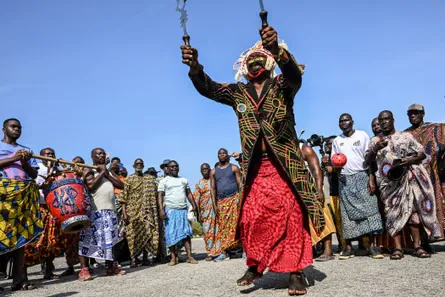
The Djidji Ayôkwé's History
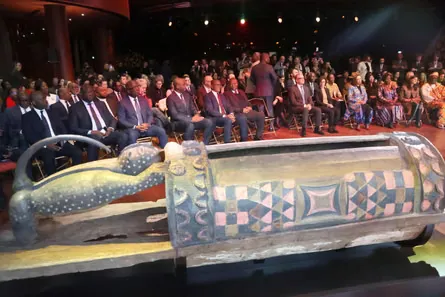
Talking drums are shaped like an hourglass. They mimic human speech tones and rhythms. The Djidji Ayôkwé is 4 meters long and weighs 430 kg.
It was important to the Ebrié people, symbolizing resistance. They used it to send messages over miles, announcing events or dangers. In 1916, colonial authorities seized it after villagers resisted forced labor.
French President Emmanuel Macron promised to return the drum in 2021. It took four years for the French parliament to approve the decision.
Françoise Remarck, Côte d’Ivoire's Minister of Culture, called it "a moment of justice and remembrance." She thanked Presidents Ouattara and Macron for this "historic day."
She addressed the drum directly, saying its return is a message for youth to reclaim their history. It also symbolizes social cohesion, peace, and dialogue.
Looking Ahead
As the drum's crate was moved from the plane, a cultural group performed the traditional tchaman dance. Another ceremony will mark its permanent display at the Musée des Civilisations de Côte d’Ivoire. This is expected in April.
UNESCO has donated $100,000 for research and training at the museum. This prepares for the drum's public exhibition.
Sylvie Memel Kassi, former museum director, believes this return opens the door for more restitutions. She noted that eight other objects are currently being studied by Ivorian and French authorities.