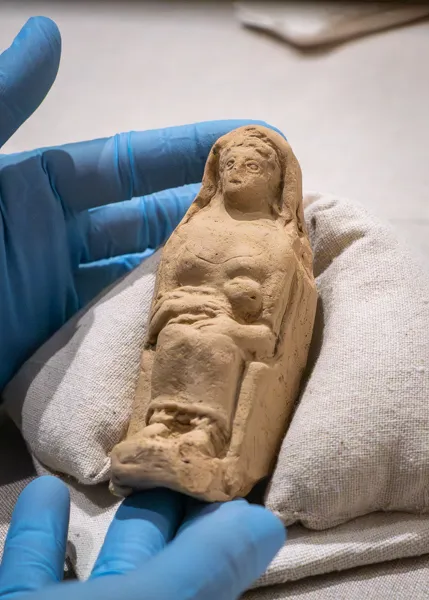
The students looked closely at a small terracotta figurine. It showed a woman holding a baby. Time had softened its features.
On the back, a fingerprint was pressed into the clay. It was left there over 2,000 years ago by the maker. This tiny mark connects us to the person who made it and the worshipper who offered it to a goddess. For the students, the ancient world felt very real.
"Seeing those fingerprints where the clay was pressed into the mold is the most poetic time-traveling you can do," said Lisa Pieraccini. She is a lecturer in the Department of History of Art.
We're a new kind of news feed.
Regular news is designed to drain you. We're a non-profit built to restore you. Every story we publish is scored for impact, progress, and hope.
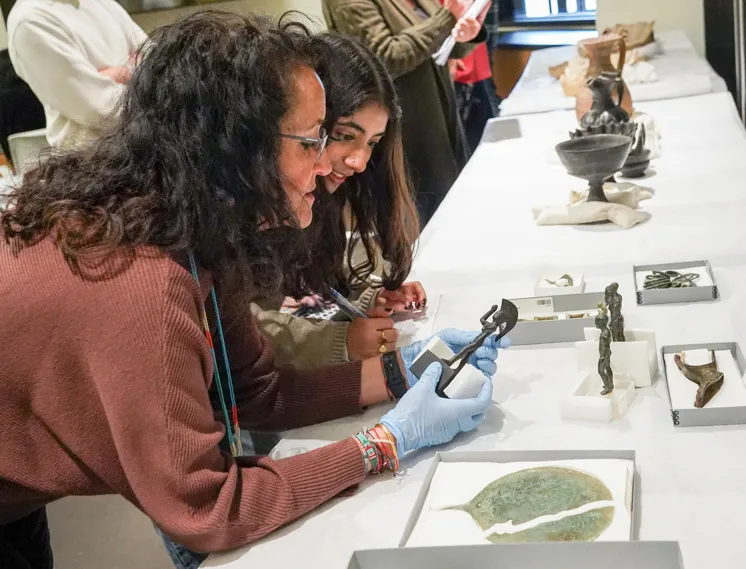
Start Your News DetoxStudents in Pieraccini’s seminar, "The Etruscans: Pasts, Present, and Futures," spent a semester exploring Etruscan history. This civilization thrived in central Italy before Rome rose to power. The students worked with Pieraccini and Art Librarian Lynn Cunningham to create a new exhibit.
Their research led to The Etruscans Uncovered: The Phoebe A. Hearst Collection at UC Berkeley. This exhibit is now open in Doe Library. It features items from the Phoebe A. Hearst Museum of Anthropology and The Bancroft Library. These artifacts, like bronze belt buckles and clay wine pitchers, show Etruscan daily life, art, and religion.
Pieraccini is also the interim director of the Mario Del Chiaro Center for the Study of Ancient Italy and the Roman World. She hopes visitors will take their time with the exhibit.
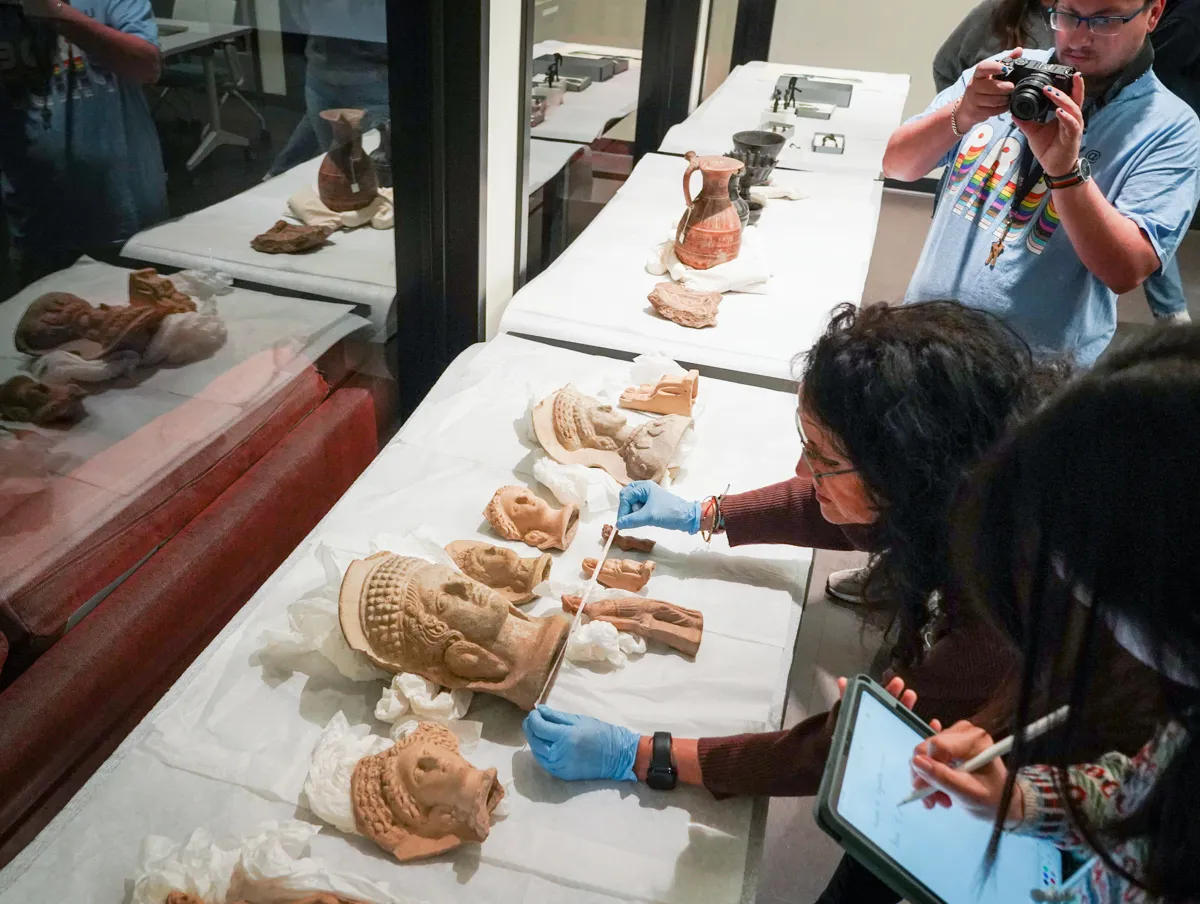
"Read the labels, look at the artifacts, and see an amazing culture from ancient Italy," she said. "They gave so much artistic, religious, and cultural inspiration to the Romans who came after them."
A Collection for Learning
The exhibit uses a collection that still amazes Pieraccini. The Hearst Museum has over 4,000 Etruscan artifacts. This makes it one of the largest collections of its kind in North America. Phoebe Apperson Hearst and her art adviser, Alfred Emerson, built it in the early 1900s.
"(Hearst) wasn’t collecting these artifacts for her home," Pieraccini said. "She gave them to a research institution, UC Berkeley. She wanted students to learn about this culture and do hands-on research."
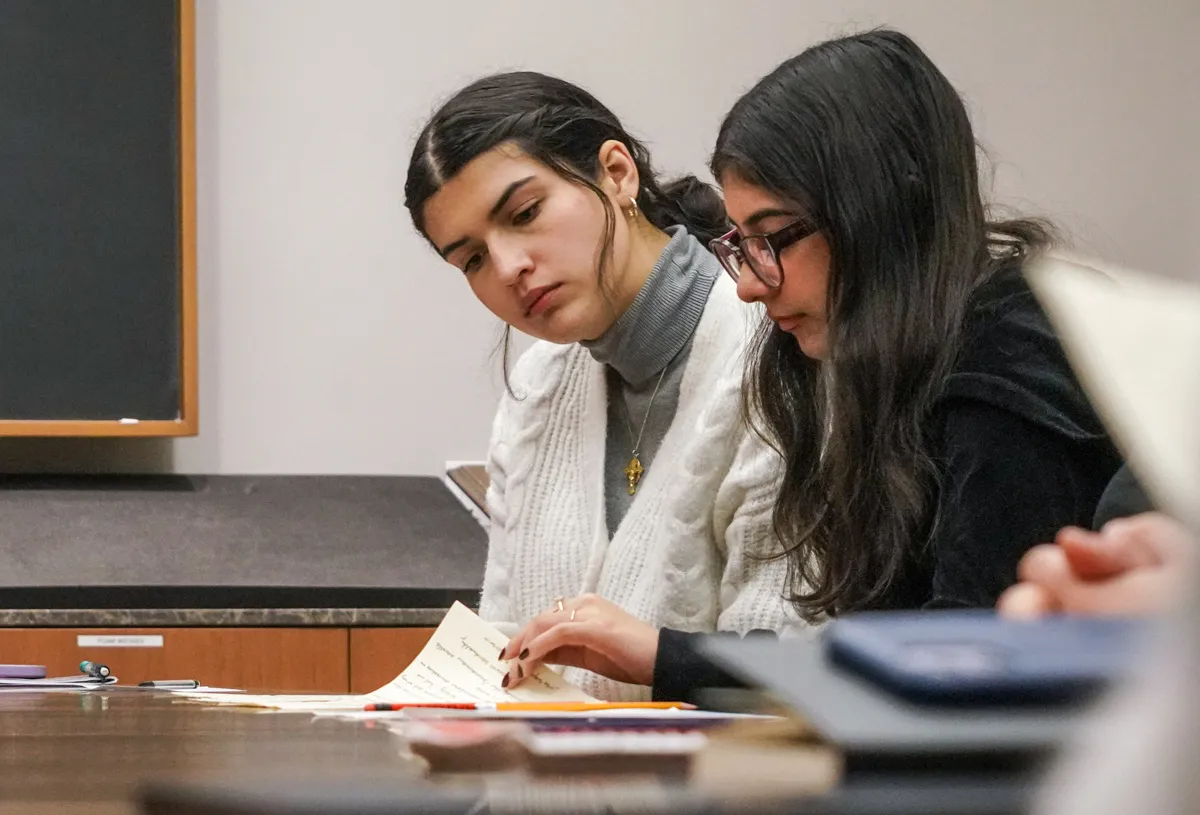
This idea guided Pieraccini’s spring 2025 seminar. After studying Etruscan history, students planned a public exhibit. They chose and analyzed objects and developed themes for the display.
Cunningham helped students with their research. She took the class to the Hearst Museum to see the artifacts. They also visited The Bancroft Library. There, students learned to work with original documents, like Hearst’s letters to Emerson. One letter from 1902 is in the exhibit.
This experience was very important for many students.
Kate McGuirt is studying ancient Greek and Roman studies and art history. She valued the chance to get practical experience.
"It’s always been my dream to work in a museum and curate exhibits," she said. "I never thought I’d do that as an undergrad."
Sofia Huff is an art history major considering art law. The class showed her the complex decisions involved in displaying artifacts.
"Seeing Professor Pieraccini sort through objects and decide what to use was interesting," Huff noted. "It showed me what happens behind the scenes."
Pieraccini enjoyed watching the students get excited about sharing Etruscan culture. Their hard work, which started over nine months ago, is now on display.
"I can’t wait to see the students’ faces when they see the exhibit open," she added.
A Culture Worth Rediscovering
What can visitors see? The exhibit features many artifacts. They show the rich artistry, community life, and religious customs of the Etruscans.
One notable item is a bronze belt buckle from the seventh to sixth centuries B.C.E. It was found at Poggio Buco in southern Etruria. (Ancient Etruria covered most of modern Tuscany and parts of Umbria and Lazio.) The buckle has prongs shaped like horse heads. Today, its surface is green from age. But it would have once shone brightly, showing the wearer's high status.
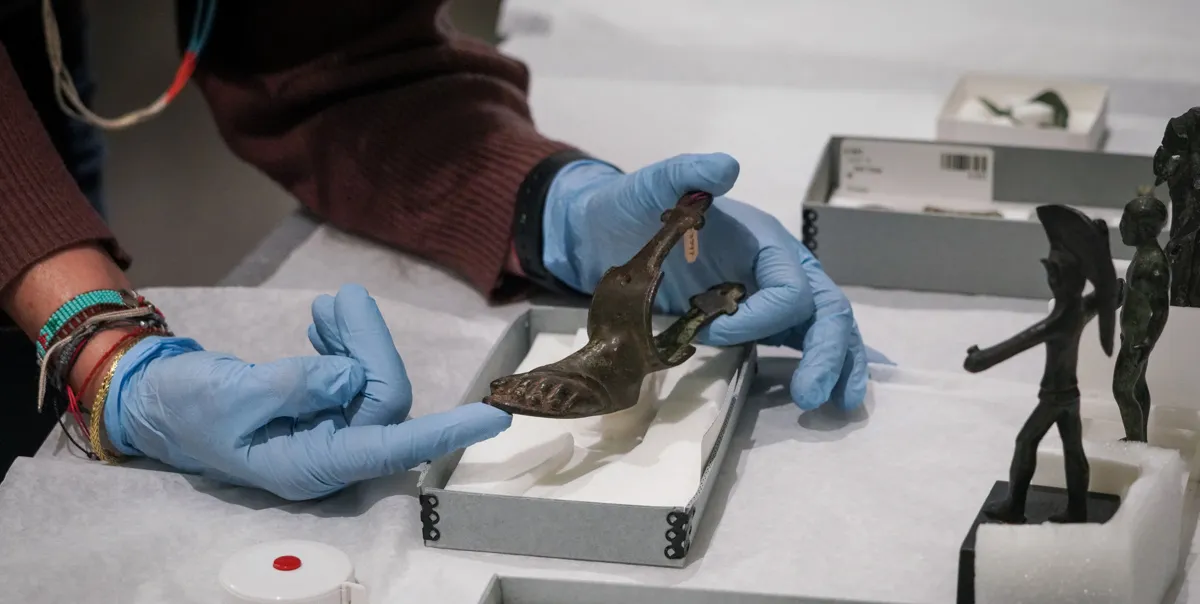
"Bronze was expensive in Etruscan times," Pieraccini said. "It was shiny, so this would have had a lot more bling back then."
Another item is a bronze furniture foot. It is broken but clearly Etruscan in its decoration. Pieraccini likes how it shows the culture's desire to decorate even everyday objects.
A poster in the exhibit shows a bronze mirror from the fifth century B.C.E. This item was too valuable to display. It is engraved with a warrior in a helmet and a winged youth, possibly Eros, holding a hare. The mirror highlights the Etruscans' skill in metalwork and their rich visual art.
For Pieraccini, the exhibit does more than show objects. It helps us better understand the ancient Mediterranean.
"Academic departments have often focused on Greco-Roman civilizations," Pieraccini said. "Other cultures, like the Etruscans, have been overlooked. Shining a light on the Etruscans is an act of decolonization. It shows that the ancient Mediterranean had many different people and cultures. And those people are also worth understanding."
Deep Dive & References: Encountering the Etruscans - Phoebe A. Hearst Museum, through May 2026 The Etruscans: From the Heart of Ancient Italy - Legion of Honor, May 2 through Sept. 20