

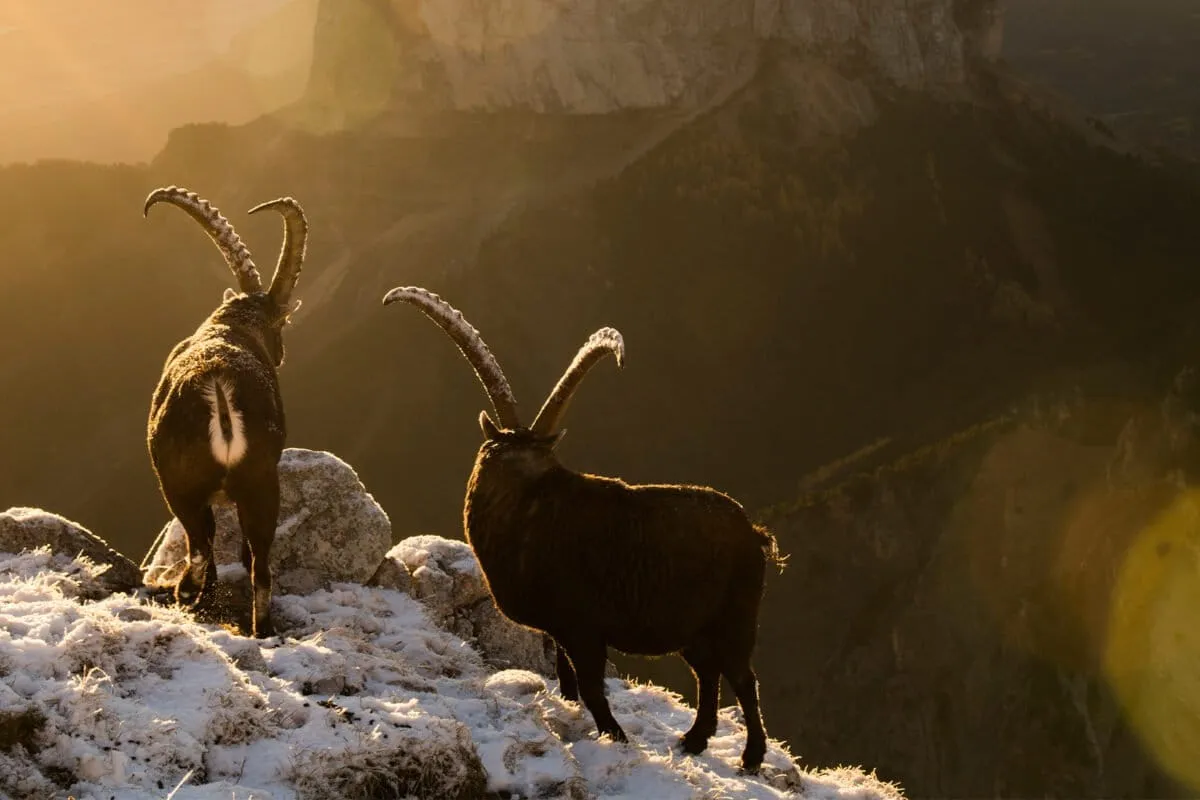
The Dauphiné Alps in southeastern France once teemed with wild horses, bison, gray wolves, and Eurasian lynx. Then, over centuries, they vanished. Now, in June of this year, the nonprofit Rewilding Europe designated this region as its 11th restoration site—and France's largest rewilding project to date.
Rewilding sounds like a recent invention, but it's actually straightforward: restore the animals and plants that historically lived in an ecosystem, and let nature rebuild itself. The approach gained real traction only in the past decade, though the concept emerged in the 1990s. What makes it different from traditional conservation is the scale and ambition. Rather than protecting what remains, rewilding actively reintroduces species that were wiped out locally—wolves, lynx, wild horses, vultures—to restore the ecological functions they performed.
"A fixed approach to nature doesn't really work anymore," said Fabien Quétier, head of landscapes for Rewilding Europe. He's talking about the old model of preserving nature in a kind of frozen state. Rewilding is messier and more dynamic. It means bringing back herbivores like wild horses and cattle to maintain forests through grazing. It means reintroducing scavengers—particularly the four vulture species that once soared over these mountains—to clean up carcasses and prevent disease spread. It means wolves and lynx returning to hunt, and beavers and otters returning to shape rivers.
We're a new kind of news feed.
Regular news is designed to drain you. We're a non-profit built to restore you. Every story we publish is scored for impact, progress, and hope.
Start Your News DetoxThe Dauphiné Alps already had momentum on its side. Alpine ibex, those impressive horned climbers, already roam the limestone cliffs. The region's landscape and existing wildlife populations gave Rewilding Europe a foundation to build from. The project is now focused on systematically reintroducing ungulates and historical predators, working with local communities to ensure the restoration creates economic opportunities alongside ecological ones.
This matters because rewilded ecosystems become more resilient to climate change. A landscape with diverse herbivores, predators, and scavengers is more stable, more adaptive. And unlike conservation efforts that can feel distant and abstract, rewilding connects people to their land in tangible ways—through tourism, through understanding their role in a functioning ecosystem, through seeing wolves return after centuries of absence.
The Dauphiné Alps project is just beginning. But it signals something larger: the idea that we don't have to accept a permanently diminished natural world.





