Two years ago, if you had a cardiac arrest in McKinney, Texas, your chances of survival were roughly one in ten. Today, that's nearly one in two. The shift happened because one fire chief decided to learn from Seattle and then convinced his entire city to act on it.
In late 2024, Fire Battalion Chief Ben Jones sent a team to the Resuscitation Academy in Seattle to study how the city had cracked a problem most American communities struggle with. They came back with a framework called the "chain of survival": recognize the emergency fast, start CPR immediately, get an AED to the person within minutes, and move them to a hospital. Simple in theory. Hard in practice.
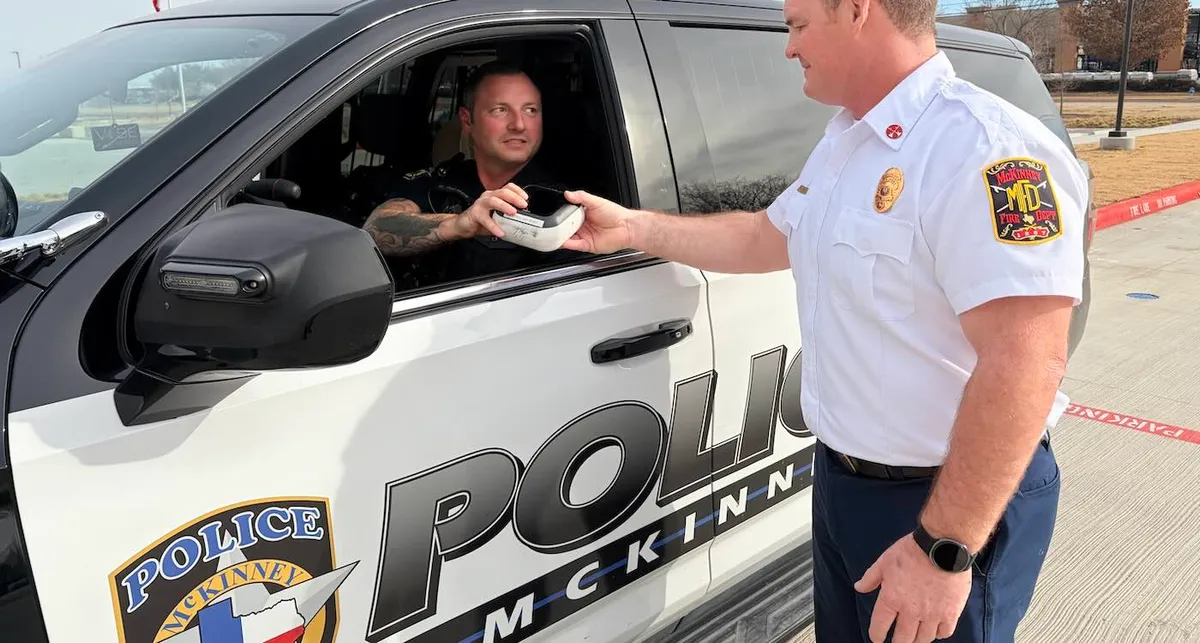
The math is brutal. Every minute a cardiac arrest victim waits cuts their survival odds by 10%. So McKinney's first move was practical: they put automated external defibrillators—AEDs—in every police patrol car, traffic unit, and neighborhood vehicle. Eighty devices, distributed across the city. This created something unexpected: friendly competition between fire and police teams to respond faster, save more people. In the past year alone, nine McKinney residents were revived in time.
We're a new kind of news feed.
Regular news is designed to drain you. We're a non-profit built to restore you. Every story we publish is scored for impact, progress, and hope.
Start Your News DetoxBut the real shift came when the city realized police officers weren't just responders—they were everywhere. A patrol car often reaches a collapsed person before an ambulance. Once officers started saving lives themselves, skeptics became believers. Fire Chief Paul Dow watched the transformation: "It's a really interesting shift in mindset for police officers, and they bought into it."
Now McKinney is going further. The city is deploying 200 additional AEDs through a campaign called "Neighborhood Heroes," which trains and empowers residents to use them. The goal is simple: no one in McKinney should ever be more than four minutes from an AED. The American Heart Association noticed. They've selected McKinney's "4-Minute City" model to represent their Heart Health Month campaign—recognition that what works in one Texas city might work elsewhere.
The jump from 10% to 47% survival is the kind of number that usually requires new technology or massive funding. McKinney did it with coordination, training, and the willingness to ask: what if the people already in your community could be the ones who save your life.