Twenty-six years ago, a local resident named Xian Quanhui—known as "Uncle Bird" to neighbors—planted bamboo on an unremarkable patch of land in Shunde, a city in southern China's Pearl River Delta. He wasn't trying to build a sanctuary. He was just planting bamboo.
Then the egrets arrived.
What started as a handful of wading birds gradually became thousands, then tens of thousands. Today, roughly 25,000 egrets nest in the bamboo forest Xian planted, transforming a forgotten corner of the Pearl River Delta into one of the region's most vital urban wildlife refuges. The Shunde government took notice. They expanded the protected area thirteenfold, brought in scientists and engineers, restored the water systems, and in 2024, opened the Yunlu Wetland Museum—a building designed to step aside rather than dominate.
A Building That Listens
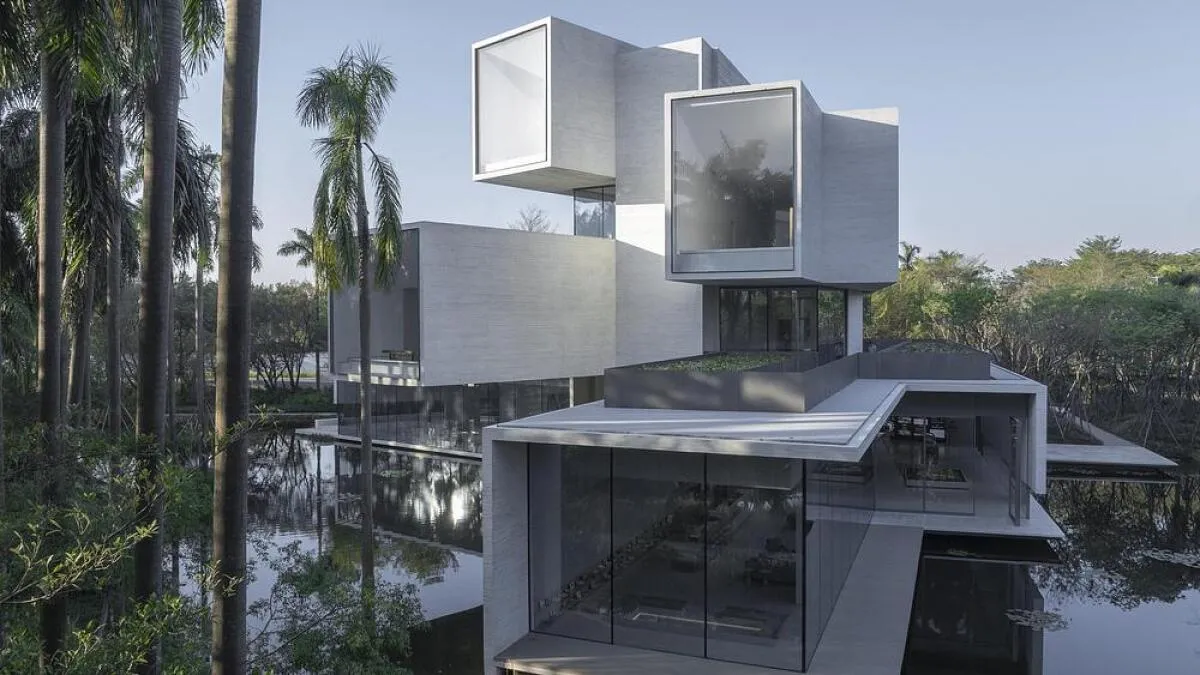
Architectural firm Studio Link-Arc faced an unusual brief: create a museum that doesn't upstage the birds. The result is understated in a way that feels almost radical for a public building. Rather than a grand entrance or signature landmark, the museum is a series of stacked concrete volumes that rise vertically through the landscape, each floor aligned with a different ecological layer—roots, trunks, canopies, open sky. From across the wetland, it dissolves into the greenery.
We're a new kind of news feed.
Regular news is designed to drain you. We're a non-profit built to restore you. Every story we publish is scored for impact, progress, and hope.
Start Your News DetoxInside, there's no central hall, no dominant focal point. Windows act as picture frames, each one capturing a different slice of the wetland as light and seasons shift. Visitors move through the building like ascending through a forest, with sightlines that intersect across levels and views that change with every step. The finishes are restrained: concrete textured with timber imprints, natural tones, diffused light that conveys the passage of time.
Building in a wetland meant real compromises. Architects surveyed hundreds of trees to minimize removal, kept the footprint compact, and added a shallow-water landscape on the roof to reduce the visual impact from above. These measures ease the tension between construction and preservation, but they don't erase it entirely. That tension is the point. The museum asks visitors to notice it—to understand that architecture in nature should lower its voice, not raise it.
What began as one person's quiet act of planting has become a model for how human infrastructure can coexist with wildlife, not by denying the conflict but by acknowledging it and choosing restraint. The egrets are still there, still nesting in the bamboo. Now, visitors can witness what happens when we step back and let nature lead.