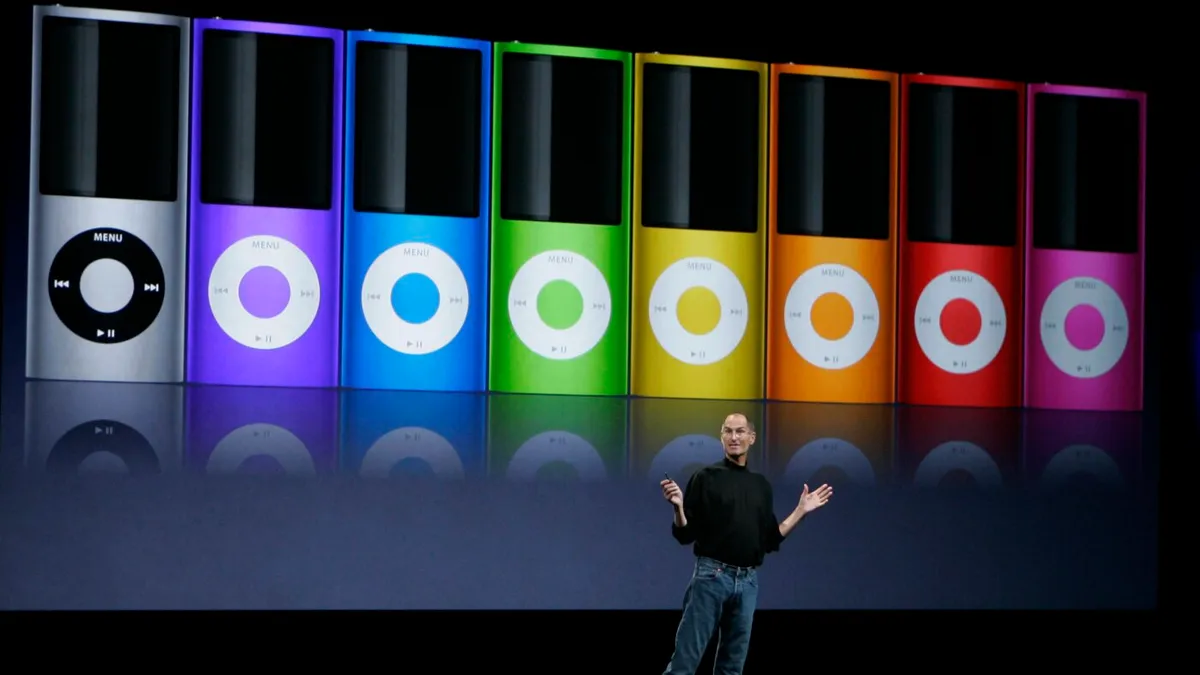
Steve Jobs once reportedly threw an iPod prototype into a fish tank. Why? Because it still had air bubbles. "If there's air bubbles in there, there's still room," he declared, according to a story in David Pogue's new book, Apple: The First 50 Years. The takeaway: Make it smaller. Much, much smaller.
Whether that story is 100% literal truth or a bit of Jobsian folklore, it perfectly encapsulates the mythos Apple has built over five decades. It’s a company that inspires books, films, and even an opera, The (R)evolution of Steve Jobs. As tech journalist Jason Snell puts it, these tales, fact or fiction, highlight Apple's enduring cultural grip. Their goal? Always to be countercultural, always to make the world a bit better.
That rebellious streak was baked in from the start. The 1997 "Think Different" campaign celebrated "the crazy ones, the misfits, the rebels." And, yes, they famously flew a pirate flag over their first headquarters. Because apparently that's where we were then.
We're a new kind of news feed.
Regular news is designed to drain you. We're a non-profit built to restore you. Every story we publish is scored for impact, progress, and hope.
Start Your News DetoxEarly products like the 1984 Macintosh weren't just computers; they were gateways to creativity and individual expression. Then came the iPod, the iPhone, and in 2008, the App Store – a platform that birthed entire new industries like Uber and Airbnb. Which, if you think about it, is both impressive and slightly terrifying.
The Teflon Effect
Fast forward to 2015, and the smartphone era started showing its darker side. Screen time began linking up with isolation and depression, particularly in young people. Even Apple CEO Tim Cook has weighed in, stating he doesn't want people looking at phones more than they look into someone's eyes. Which is a lovely sentiment from the guy running the company that makes the phones.
Despite its corporate behemoth status and the occasional eyebrow-raising political donation (Cook once gave $1 million to a presidential inauguration, noting he focuses on policy, not politics), Apple seems to glide through controversies that would sink other brands. Vulture TV critic Roxana Hadadi calls it the "Teflon" effect. People just don't "cancel" Apple products.
Digital artist Kyt Janae, who creates everything on Apple devices, sums it up: Apple isn't just a tech company; it represents creativity and risk-taking. She's "locked in lifelong, no matter what happens." Fifty years in, it seems the little computer company that could is still convincing us to think different – and keep buying different, too.