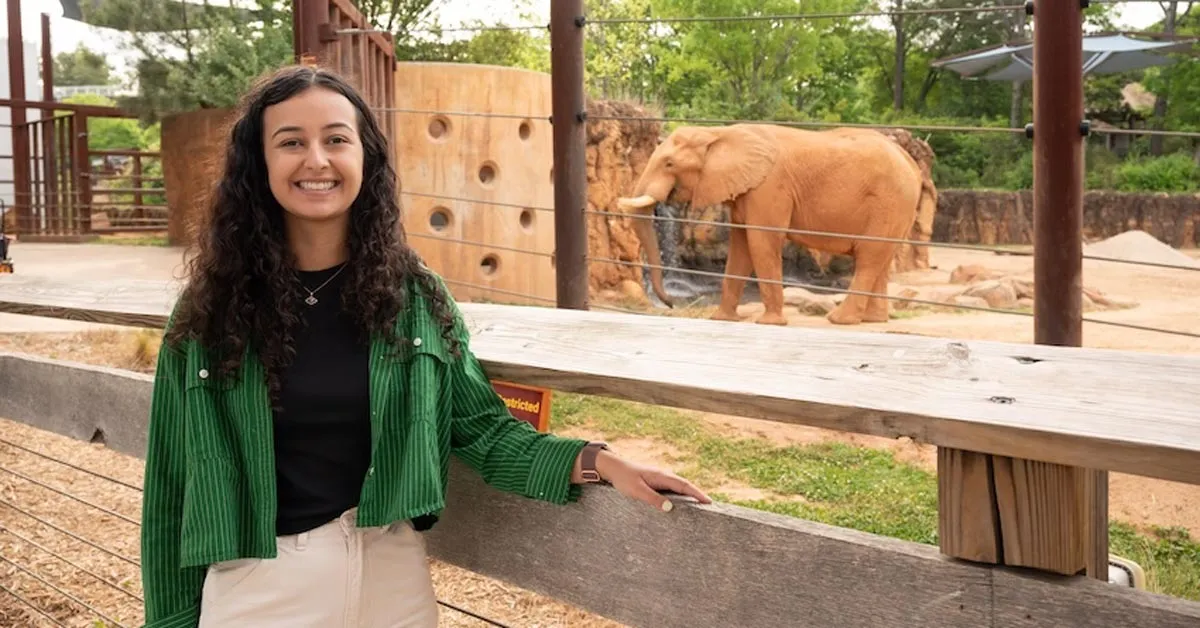
Life for the four African elephants at Zoo Atlanta is quite comfortable. Unlike their wild relatives, Kelly, Msholo, Tara, and Titan don't need to forage for food or protect their young from predators.
However, these smart animals still need ways to stay mentally active. Zoo caretakers built a concrete "enrichment wall" with holes. Elephants can reach through these holes with their tusks to find food or toys. This helps them solve problems, much like they would in their natural habitat.
Adding Sound to the Experience
Arianna Mastali, a Ph.D. student at Georgia Tech, thought of a way to make the wall even better. As part of the Georgia Tech Animal Lab, she designed an audio system for the wall.
We're a new kind of news feed.
Regular news is designed to drain you. We're a non-profit built to restore you. Every story we publish is scored for impact, progress, and hope.
Start Your News DetoxHer system uses cameras and computer vision. When an elephant's trunk goes into a hole, the system detects it. Then, a nearby speaker plays a low-frequency sound. Humans can barely hear this sound.
Kirby Miller, a senior elephant caretaker at Zoo Atlanta, explained that elephants have excellent memories and very sharp hearing. This design makes their habitat more engaging for them.
Miller noted that elephants can hear much higher frequencies than humans. The sound isn't loud for people, but elephants can feel and hear it much more clearly. This makes it more stimulating for them.
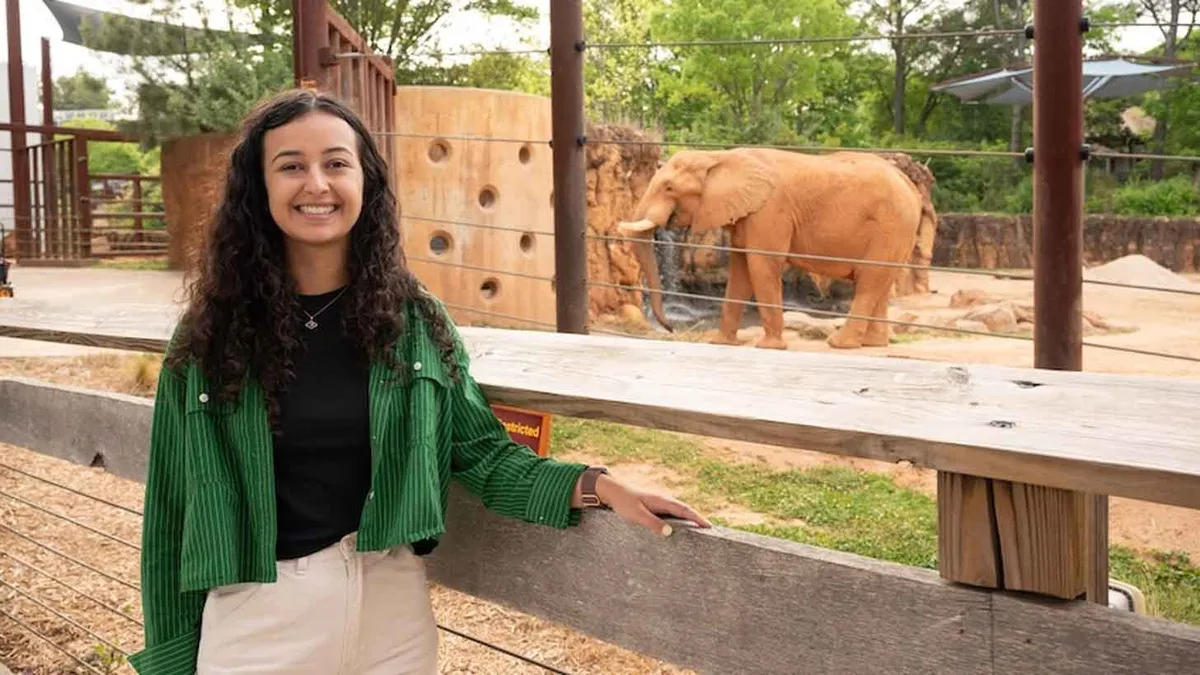 Mastali at Zoo Atlanta. Photo courtesy of Georgia Tech
Overcoming Challenges
Mastali worked with her team to add sensing technology to the project. Their goal was to improve the elephants' well-being.
She first tried putting sensors into a PVC pipe inside the wall. These sensors used infrared beams to detect a trunk. However, the elephants' strong trunks broke the insert within a day or two.
Mastali didn't give up. She explained that elephants are intelligent and need complex environments. The team wanted to add to this complexity while giving the elephants more control.
For the next version, she switched to cameras and computer vision. This avoided damage to the wall and kept the elephants' habitat mostly untouched.
Then, it was time to see if the elephants liked the new design.
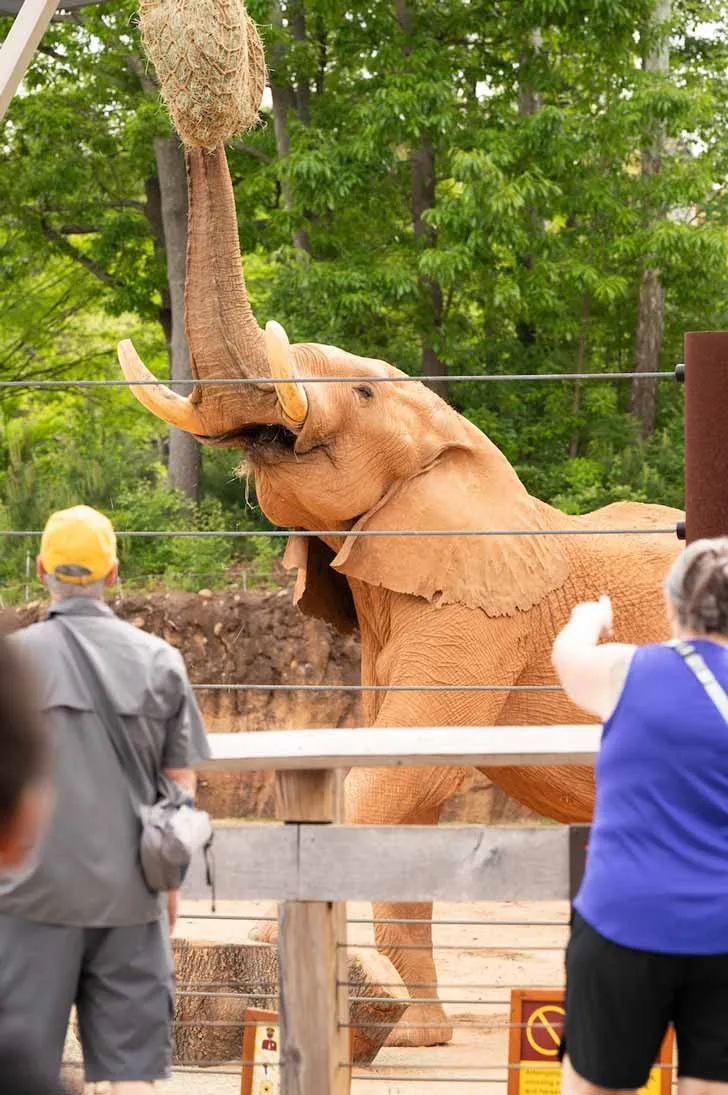 An elephant reaches for a snack at Zoo Atlanta. Photo courtesy of Georgia Tech
A Resounding Success
Miller was pleased with the results. She said they weren't sure if the elephants would care much about the sound. But they spent a lot of time at the wall, especially the less dominant females.
Before the audio system, elephants only went to the wall when they knew food was there. After the system was installed, they became more curious.
Miller recalled hearing the speaker playing sounds even when no food was present. She saw Tara, one of the elephants, with her trunk in a hole, just listening. This showed that the elephants liked the sounds and were curious.
To test her system, Mastali watched the elephants for seven days before and seven days after the audio system was added.
After installation, the number of times elephants approached the wall increased by 176%. The time they spent at the wall went up by 71%.
Mastali considers this a success. She believes they are giving the elephants more choice and control over their environment. This increased autonomy should lead to better care for the animals.
Deep Dive & References
Zoo Atlanta Elephants Embrace New GT-Designed Interactive Enrichment Wall - Georgia Tech News, 2026 Georgia Tech Creates New Enrichment for Zoo Atlanta Elephants - 11 Alive News