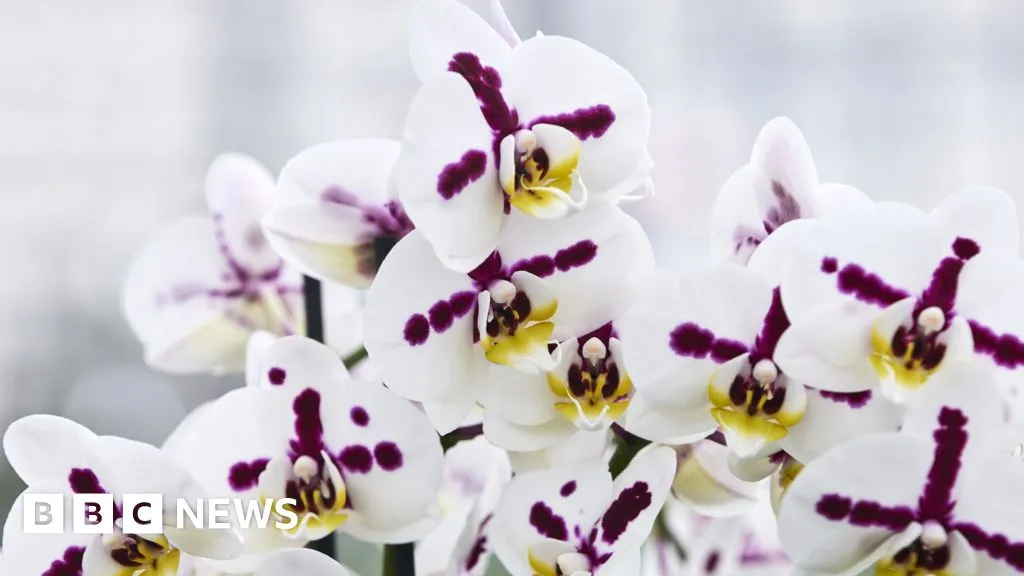
The global orchid market is worth hundreds of millions of dollars. Bringing a new orchid to market can take a decade of hard work. The competition to create beautiful new flowers is fierce.
Speeding Up Orchid Breeding
Developing new orchid types relies heavily on laboratory work, not just greenhouses. Centuries of human intervention have made the genetic background of many commercial orchids complex. This makes it hard to predict what traits a new plant might have.
Dutch orchid breeding firm Floricultura and its rivals are developing genetic markers for specific traits. These include color, shape, disease resistance, and how long flowers last. This helps speed up the selective breeding process.
We're a new kind of news feed.
Regular news is designed to drain you. We're a non-profit built to restore you. Every story we publish is scored for impact, progress, and hope.
Start Your News DetoxInstead of waiting three years for a new plant to flower, breeders can use genetic screening on very young plants. They can then discard plants that do not meet their needs early on. Wart van Zonneveld, Floricultura's research and development manager, explains that they can screen thousands of crossbreeds from the lab. They select only those with the desired genetic markers.
These "novel breeding techniques" are closely guarded secrets. Each company develops its own genetic markers and processes. This allows them to create unique varieties. Van Zonneveld notes that this is due to significant investment.
Paul Arens, an ornamental plant breeding researcher at Wageningen University in the Netherlands, says the foundation of breeding is still the same. Breeders take two plants, look at their characteristics, and cross them. However, modern breeders also use genetic markers and genomics to study plant health.
Protecting New Varieties
Genetics also help protect the intellectual property of new orchid varieties. In Europe, this is done through breeders' rights, and in the United States, through patents.
Arens explains that if a company creates a new orchid, it wants the sole right to sell it. Otherwise, someone else could buy it, multiply it, and sell it themselves. Breeders' rights ensure a new variety is distinct, stable, and uniform compared to existing market products.
While breeders' rights and patents are based on physical descriptions, DNA analysis is a powerful tool. It helps determine which plants a new variety should be compared with. Arens compares it to forensic science, where markers in DNA create a pattern for matching.
The Art of Breeding and Cloning
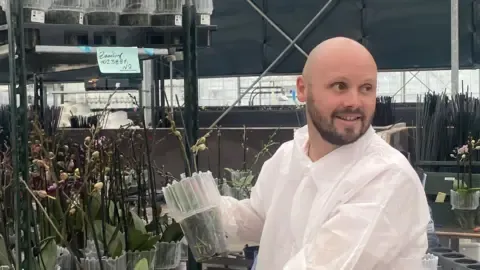
Floricultura does not sell directly to the public or garden centers. They develop new varieties and sell them to cultivators who grow the plants on a large scale. The company has over 180 varieties in its catalog and hundreds more in development. Stefan Kuiper, Floricultura's breeding manager, says they must keep developing new varieties to stay competitive.
After genetic screening and initial selection, new plant varieties take about three years to grow. This happens first in labs and then in greenhouses. However, the development stage still has years to go.
Arens calls breeding "the art of throwing away." It involves discarding plants that do not meet expectations. It is also the art of multiplying the successful ones. The next batch of plants are not siblings; they are exact copies, or clones, of the selected plants.
Stefan Kuiper explains that Floricultura introduced the use of meristems. These are cells that allow a plant to keep growing throughout its life. They are used to clone the surviving plants. The exact technique is a trade secret. These cloned seedlings are then cultivated for years until another selection point.
Sustainable Cultivation and Human Judgment
Growing orchids requires many resources, including heat, light, water, and nutrients over several months. Genetics and other techniques can only speed up the process so much. Plants still need to grow to confirm their characteristics, such as flower shape, size, color, stem count, and disease resistance. Then, another selection is made.
Young plants are sent by airfreight to India and by lorry to Poland for evaluation. They then return to Floricultura's site in Heemskerk, North Holland. This site has over seven hectares of greenhouse space for both development and production.
Floricultura harvests rainwater from its greenhouse roofs. They are also starting to recycle this water and its nutrients for secondary use. Wart van Zonneveld showed off their geothermal well, which pumps 102°C water from 3km below the surface. This provides so much energy that they are considering sharing it with the local council for district heating projects.
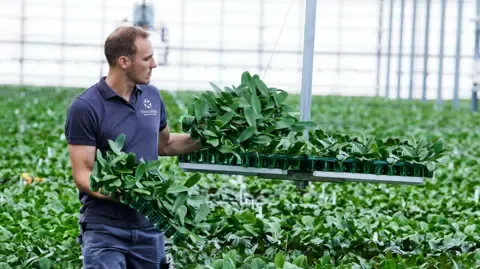
Much of the monitoring and cultivation in the vast greenhouses is automated. Trays of plants move on rollers to the next stage of cultivation.
However, one task remains human-driven at Floricultura. After nine years of work, the decision on which varieties make it into the catalog is still made by Stefan Kuiper and his colleagues. A plant might have all the right genetic traits, but it must also be beautiful to sell. This judgment is made by people. Kuiper says breeding is "a little bit like gambling," and the human element is still essential.