In 1902, a Native American prospector named Tom Fisherman found gold near what would become Goldfield, Nevada. Within months, the desert filled with fortune seekers. Within years, a town of thousands had materialized from nothing—complete with banks, saloons, and ambitious civic dreams. One of those dreams was a three-story schoolhouse that cost $100,000 to build in 1908, equivalent to $3.5 million today.
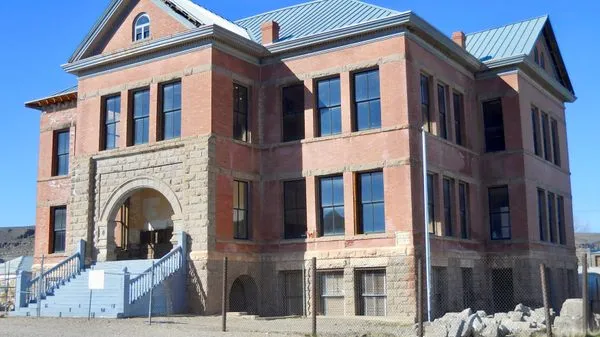
Goldfield Historic High School was designed by architect J.B. Randall with the kind of grandeur you'd expect from a town riding a gold rush high. The building featured an arched entryway, a sweeping staircase, and ornate wrought-iron gates. Inside were 25 faculty members, 125 students, a dozen classrooms, and an auditorium that could seat 450 people—a stunning investment in a community that believed its boom would never end.
It lasted a decade. By 1918, the gold had thinned out. Prospectors moved on. The population collapsed so dramatically that Goldfield's four schools consolidated into one building. By 1953, even that final school had closed. The building sat empty for half a century, slowly surrendering to the desert.
We're a new kind of news feed.
Regular news is designed to drain you. We're a non-profit built to restore you. Every story we publish is scored for impact, progress, and hope.
Start Your News DetoxA town remembers itself
What makes Goldfield different from countless other Western mining towns is what happened next. In 2008, the Goldfield Historical Society decided the schoolhouse was worth saving. They began a restoration project that has quietly continued for over fifteen years—repairs to the stonework façade, a rebuilt front staircase, new windows, a new roof, and careful work to bring classrooms back to usable condition.
The building still stands in a town of about 200 people, a three-story reminder of what Goldfield once was. It's not a symbol of failure, exactly. It's a monument to how quickly fortunes shift, how communities rise on the strength of one discovery, and how some places choose to preserve that history rather than let it vanish entirely.
Visitors can arrange tours by appointment—a small but persistent act of remembrance in the Nevada desert.