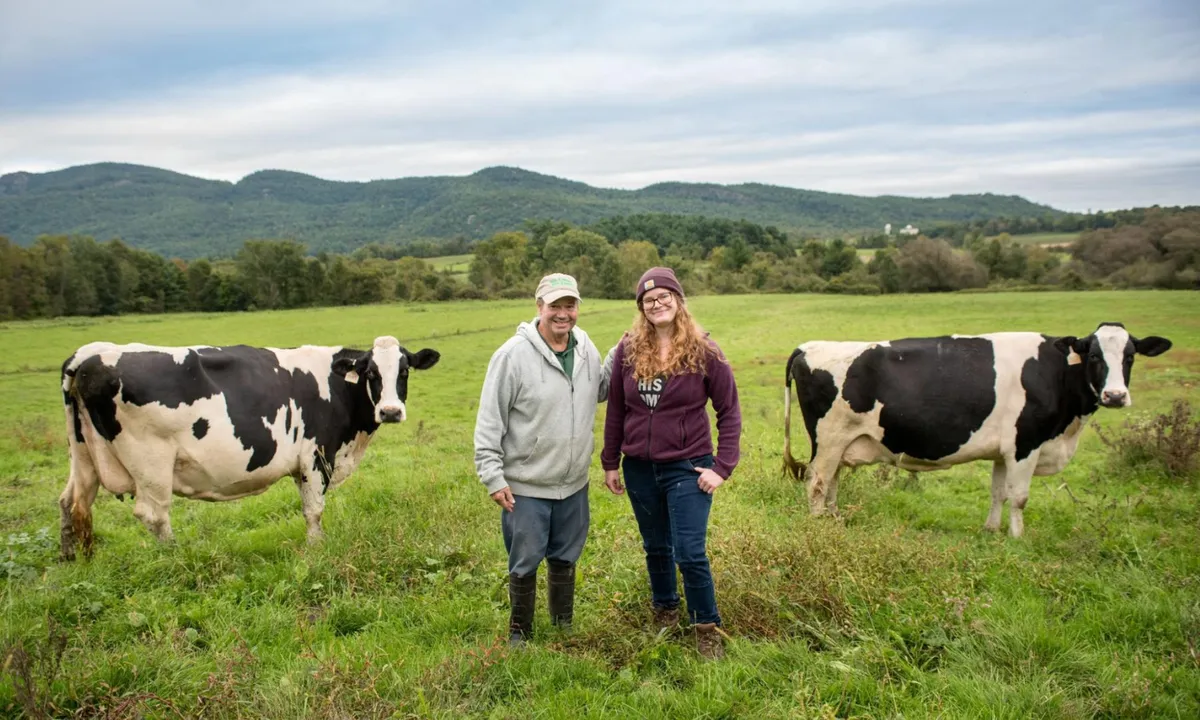
Olivia Fuller grew up in a milking parlor. Her childhood litmus test for friendship was simple: could you handle being around the cows? If not, you weren't staying in her world.
But she didn't plan to stay in that world herself. Watching her parents pour every ounce of physical energy and money into small-scale dairy farming, Fuller saw exhaustion, not a future. She imagined leaving—becoming a writer or magazine editor—and maybe returning someday for a quieter connection to the land.
Then she worked at American Farmland Trust and realized something that shifted everything. There were hundreds, maybe thousands of young people desperate to farm, but they couldn't access land. Her family's farm—Fuller Acres in upstate New York—wasn't a burden to escape. It was a privilege to protect.
We're a new kind of news feed.
Regular news is designed to drain you. We're a non-profit built to restore you. Every story we publish is scored for impact, progress, and hope.
Start Your News DetoxAt 25, the same year the family secured a conservation easement to permanently protect the land for agriculture, Fuller made a quiet decision: she was staying. Three years later, her mother died of pancreatic cancer. And in the midst of that loss, Fuller faced a harder truth: continuing dairy farming at their current scale was no longer financially viable. They were losing thousands of dollars each year. "Our equity was crumbling beneath us," Fuller says.
So she did what her father had done for decades—she got to work. But differently.
Fuller stepped into a leadership role focused on business planning and diversification. She convinced her father to start breeding some of the dairy herd for beef, slowly building a direct-sales model. She tracked the numbers carefully, placed cash in her father's hands, and showed him it could work.
Eventually, her father made the difficult decision to let go of the milking herd entirely. Fuller Acres transitioned to raising beef cattle, pigs, and sheep using rotational grazing—a system where animals naturally fertilize the land as they move. The old milking parlor became a self-serve farm store where customers now stop by to buy meat and linger to chat.
"It may not be a dairy barn, but it will never be an empty barn," her father told her.
The change is measurable in the farm's finances. But for Fuller, the most meaningful metric is watching her father experience a different kind of farming—one where he doesn't have to work himself to exhaustion just to survive. Where he can decide when to call it quits and go fishing. And sometimes, on good days, his daughter picks up a pole and joins him.
The farm that nearly broke the family is now sustaining it in ways that matter beyond the spreadsheet.