The American chestnut was supposed to be gone. In 1904, an Asian fungus arrived in New York on imported lumber, and within decades it had killed virtually every mature chestnut tree across the eastern United States—a species so abundant it once made up a quarter of the forest canopy. Biologists called it "functionally extinct." But on a few hundred acres of Maine forest, something unexpected is happening.
Dr. Bernd Heinrich, now 85, bought 25 chestnut saplings for $10 in 1980. He planted them on his land and watched. The trees grew. Their seeds scattered—carried by bluejays and squirrels, buried in caches as far as a mile away. Forty-four years later, those original saplings have become a thriving forest spanning three generations of natural regeneration. More than a thousand healthy trees now grow on his property, each one mapped and documented by Heinrich and his University of Vermont students. Not a single tree shows signs of blight.
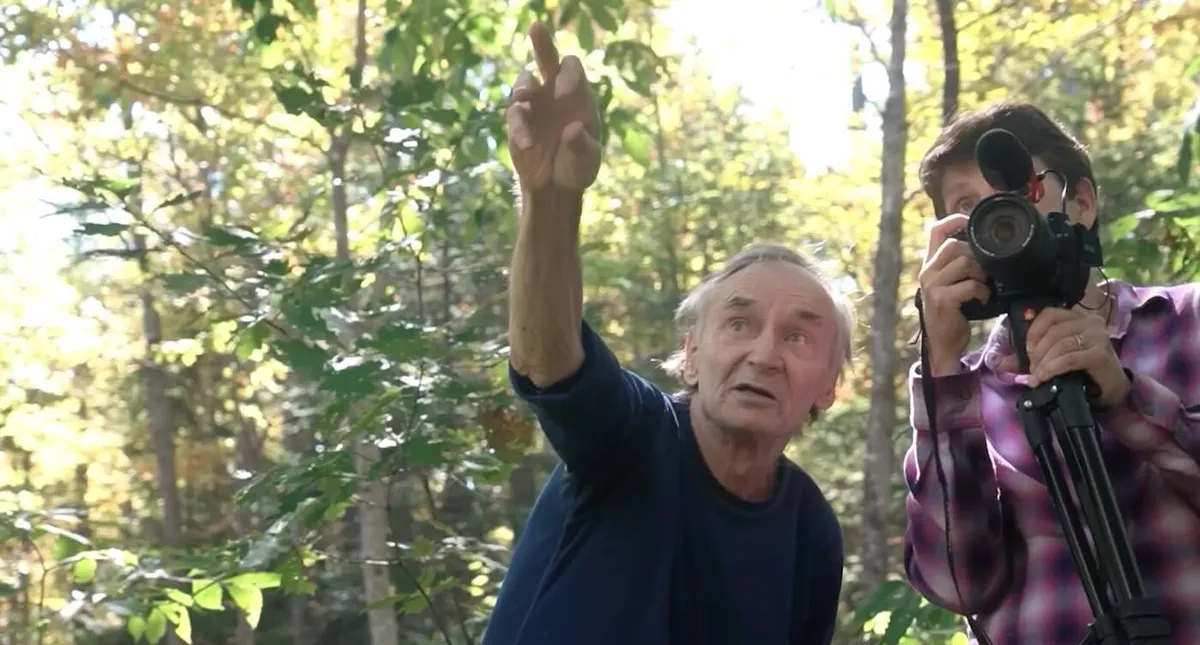
"These chestnuts are really taking off," Heinrich told filmmakers recently, still climbing to the canopy at his age to collect seed samples. "It could very well be that these are blight resistant."
We're a new kind of news feed.
Regular news is designed to drain you. We're a non-profit built to restore you. Every story we publish is scored for impact, progress, and hope.
Start Your News DetoxThe discovery matters because it upends a narrative that has dominated chestnut restoration for thirty years: that genetic engineering was the only viable path forward. The American Chestnut Foundation spent decades developing a genetically modified tree designed to resist the fungus. In December 2023, they abandoned the effort. The engineered trees carried genetic defects. They failed in field trials. After multiple research errors came to light, the Foundation concluded the trees were unsuitable for restoration.
Meanwhile, on Heinrich's land, nature was quietly solving the problem without intervention.
What's unfolding in Maine suggests the chestnut may have other advantages working in its favor. Climate change is shifting temperature zones northward, opening new territory where the fungus may struggle. The trees Heinrich planted came from seed stock with potential resistance traits. And perhaps most importantly, wild populations—not laboratory specimens—may be more resilient than anyone assumed.
Heinrich, a professor emeritus and author of more than 20 books on biology, has spent over four decades observing this forest. His long-term field study, now captured in the documentary The Wild American Chestnut, provides something rare in restoration biology: decades of patient observation showing what actually works on the ground. No headlines. No breakthrough announcements. Just trees growing stronger each year.
The question now is whether this quiet success in Maine can be replicated elsewhere, and whether restoration efforts might learn from what Heinrich's land is already demonstrating: sometimes the most powerful tool isn't engineering a solution, but creating conditions where the species can help itself.