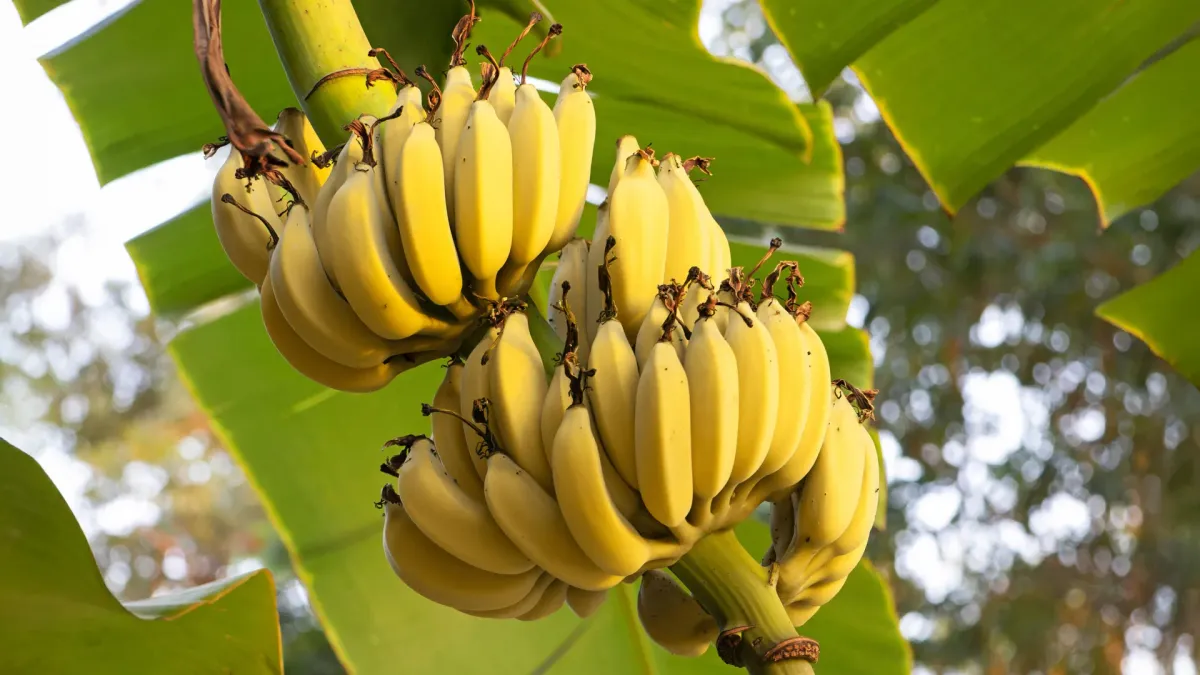
The banana you buy at the grocery store is in trouble. A fungal disease called Fusarium wilt—known in farming circles as Panama disease—is quietly spreading through banana plantations worldwide, attacking plants through contaminated soil and leaving the earth unusable for years. The threat is real enough that researchers have spent decades hunting for a solution in an unlikely place: a wild banana that tastes terrible.
Scientists at the University of Queensland have now found what they were looking for. In a wild diploid banana called Calcutta 4, they've identified the specific genetic region that resists Fusarium wilt's most virulent strain, Race 4. By crossing Calcutta 4 with susceptible banana plants and exposing the offspring to the disease, the team mapped the resistance trait to chromosome 5—a breakthrough Dr. Andrew Chen describes as "the first genetic dissection of Race 4 resistance from this wild subspecies."
This matters because the bananas we eat—the Cavendish variety that dominates global supply—are sitting ducks. They're genetically identical clones, which means if the disease takes hold, there's no natural variation to fall back on. One fungus strain could theoretically wipe out entire regions' crops. It's happened before: a different strain of Fusarium destroyed the Gros Michel banana, the previous global favorite, in the 1950s. The current threat from Race 4 is serious enough that some countries have already reported significant losses.
We're a new kind of news feed.
Regular news is designed to drain you. We're a non-profit built to restore you. Every story we publish is scored for impact, progress, and hope.
Start Your News DetoxFrom Wild Gene to Dinner Table
Here's where the real work begins. Calcutta 4 itself won't save the banana industry—the fruit is inedible. What the Queensland team has done is create a genetic roadmap. Their next step is developing molecular markers, essentially genetic barcode readers that breeders can use to spot the resistance trait in seedlings before they're even planted in soil. This speeds up the selection process dramatically, turning what could be a decades-long breeding effort into something more manageable.
The goal is clear: a banana that tastes good, grows well on commercial farms, and can naturally fight off Panama disease. Plant breeders now have the genetic coordinates they need to hunt for that combination. The findings, published in Horticulture Research, represent the kind of unglamorous but essential work that keeps global food systems stable.
It's not a solution yet. But it's a path forward at a moment when the world's banana supply needs one.