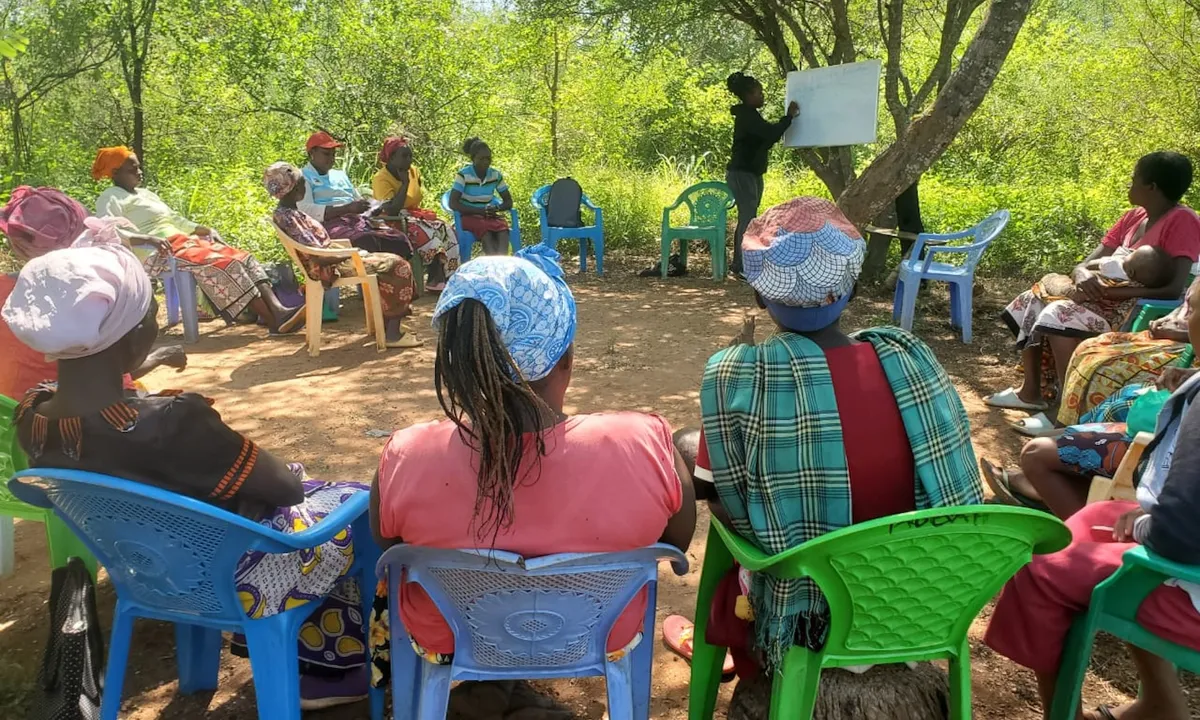
Rosinah Mbenya remembers when agroecology was a fringe idea in Kenya. Now, as Country Coordinator for PELUM Kenya (Participatory Ecological Land Use Management), she's watching smallholder farmers across East and Central Africa quietly rebuild how they grow food — using practices that heal soil, cut chemical costs, and strengthen livelihoods all at once.
"Agroecology has been feeding the world and will continue to feed the world," Mbenya says. It's not a romantic claim. It's a statement grounded in what's actually working on Kenyan farms right now.
The shift is straightforward in principle but demanding in practice. PELUM Kenya advocates for organic, regenerative, and conservation agriculture — methods that replace synthetic inputs with soil-building practices like crop rotation, agroforestry, and integrated pest management. Farmers learn to work with their land's natural systems rather than against them. No GMOs. No chemical dependency.
We're a new kind of news feed.
Regular news is designed to drain you. We're a non-profit built to restore you. Every story we publish is scored for impact, progress, and hope.
Start Your News DetoxThe skeptics say this approach only works for subsistence farmers, that scaling it up is unrealistic. Mbenya disagrees. She's seen it work on larger operations too. "I think it's the future," she says — not as wishful thinking, but as someone watching the evidence accumulate across the region.
The real bottleneck isn't whether agroecology works. It's money. Compared to the financing flowing into conventional farming, investment in agroecological transition remains "very, very low," Mbenya notes. Farmers need support during the shift — training, equipment, market access — and that costs something. Both private investors and governments have largely left this gap unfilled.
Yet the momentum is building. PELUM Kenya's work spans advocacy, knowledge sharing, and capacity building across Kenya, Uganda, Tanzania, Zambia, and beyond. Young people are entering agriculture again, drawn by the prospect of farming that's profitable and regenerative. More investors are asking harder questions about soil health and climate resilience. The financing isn't there yet at the scale needed, but the conversation has shifted from "Can this work?" to "How do we fund it?"
Mbenya remains clear-eyed about the work ahead — there's no shortage of it. But she's also watching something real take shape: a generation of African farmers proving that feeding people and healing the planet aren't competing goals. They're the same goal, finally being pursued together.