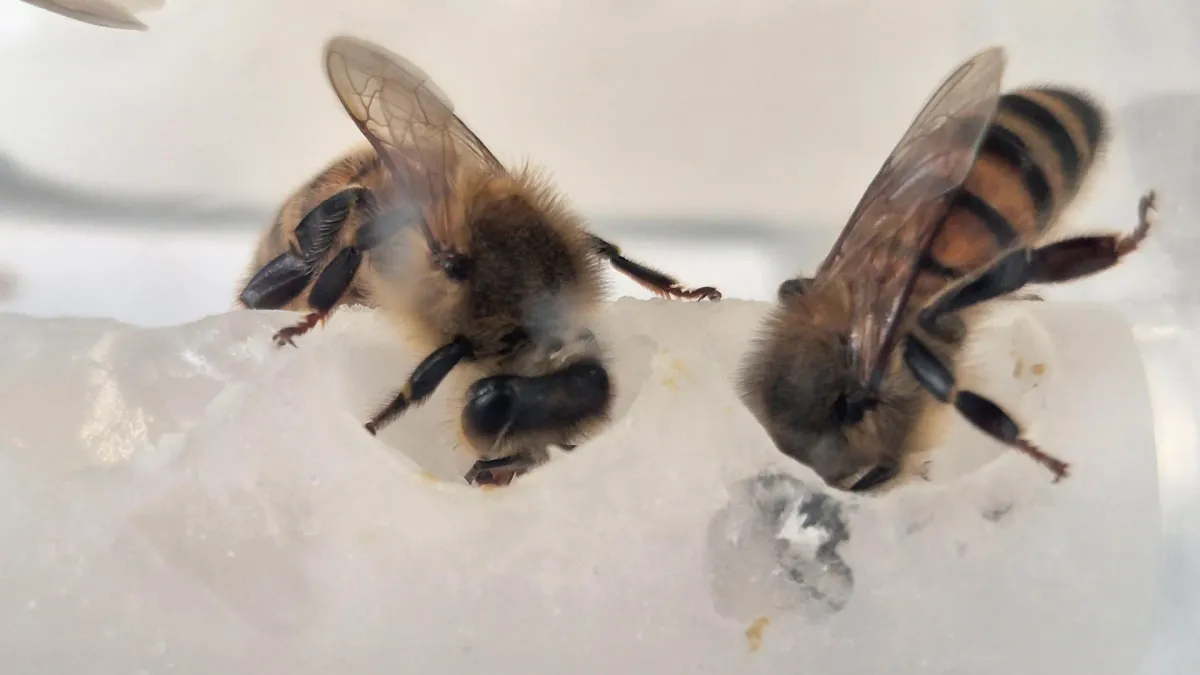
Get this: scientists cooked up a special "superfood" for honeybees, and it made their colonies grow 15 times faster. Seriously. We're talking about a lab-made diet that basically gives bees all the good stuff they've been missing.
Turns out, bees are struggling. Climate change and modern farming are messing with the natural pollen they need to get by. Think of it like us trying to live on empty calories – not great for growth. That's where this new bee chow comes in.
A team from places like the University of Oxford and Kew Gardens figured out that bees need specific fats, called sterols, from pollen to grow. But with fewer diverse flowers around, bees just aren't getting enough of them. The usual pollen substitutes beekeepers use? They're like bee junk food – lots of calories, but none of the crucial nutrients.
We're a new kind of news feed.
Regular news is designed to drain you. We're a non-profit built to restore you. Every story we publish is scored for impact, progress, and hope.
Start Your News DetoxA Clever Lab Fix
So, these clever researchers engineered a special yeast called Yarrowia lipolytica. They taught it to make six essential sterols. Then, they added this souped-up yeast to the bees' diets.
They tested it for three months in a controlled environment, making sure the bees ate nothing else. The results were pretty wild. Colonies on this new diet produced 15 times more young bees that made it to the pupal stage. Even better, they kept raising new bees the whole time. Colonies without the special sterols? They basically stopped having babies after about 90 days.
It gets cooler: the young bees fed this diet had the exact same nutrient makeup as bees eating natural pollen. It's like the supplement perfectly mimicked the real deal.
Why This Is Such a Big Deal
Honeybees are super important for our food supply, pollinating over 70% of the world's major crops. But their numbers are dropping fast, with some areas seeing 40-50% colony losses. This isn't just about honey; it's about what ends up on our plates. This new superfood could be a massive win. It gives bees what they need without them having to compete for limited wildflowers. Professor Geraldine Wright from Oxford says it shows how smart science can solve real-world ecological problems. Plus, it could help wild bees too, easing the pressure on natural pollen supplies.
Dr. Elynor Moore, who led the study, put it simply: it's the difference between humans eating balanced meals and meals missing key nutrients. This tailored feed gives bees exactly what they need.
The next step? Bigger trials out in the real world. If those go well, this bee superfood could be available to farmers in just a couple of years. Imagine that: healthier bees, better crops, and a little less to worry about in the world. That's a buzz-worthy future.