Saving Rare Apples in Ohio
In 2004, Diane Miller, a tree-fruit specialist, traveled to Kazakhstan and Kyrgyzstan. These Central Asian countries are where apples first came from. Her goal was to collect seeds from wild apple trees. She wanted to bring new genetic diversity to American apple breeding programs.
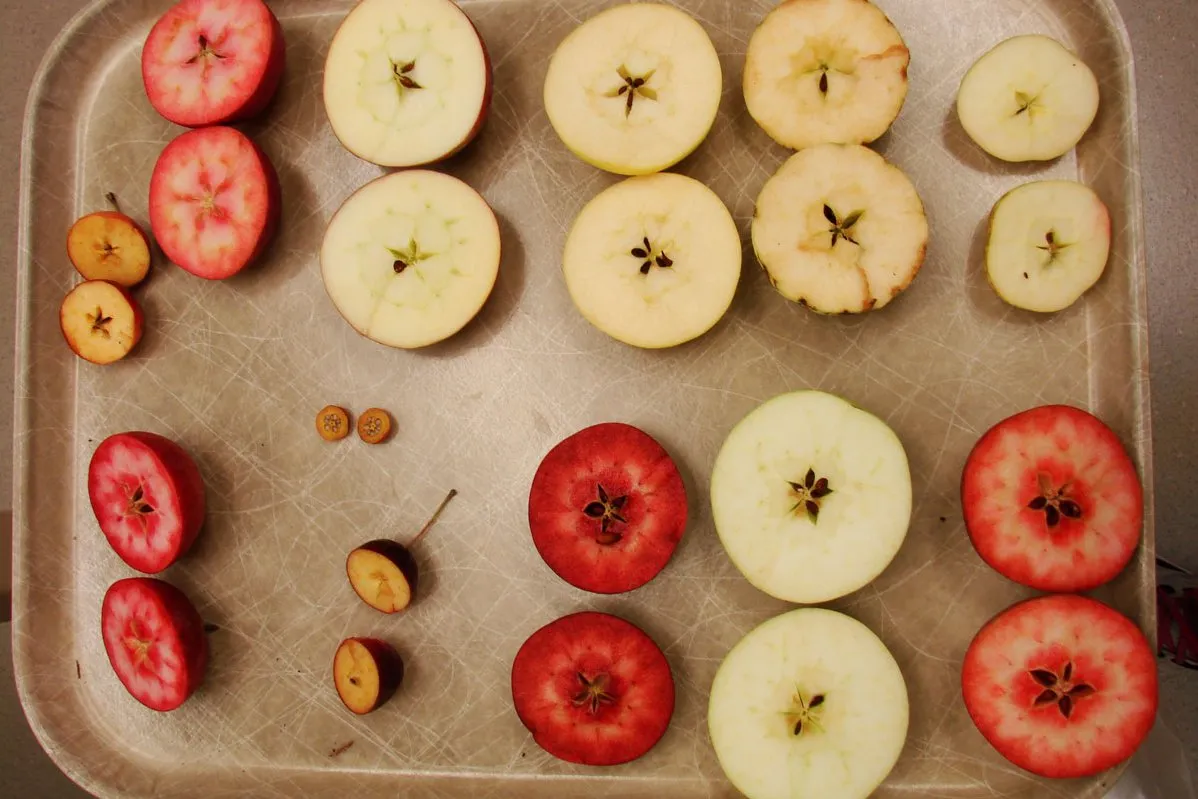
The U.S. apple industry relies on only a few varieties. About 90% of the market comes from just 15 types of apples. In contrast, Central Asia has thousands of wild apple varieties. These trees have grown for centuries, offering huge genetic diversity.
In 2005, Diane and her teenage daughter, Amy, explored Kyrgyzstan. They found mountainous areas covered in apple and walnut forests. The landscape reminded them of their home in Appalachian Ohio. Amy Miller, now a fruit grower, noted this similarity. She thought it meant these trees might grow well in their region.
We're a new kind of news feed.
Regular news is designed to drain you. We're a non-profit built to restore you. Every story we publish is scored for impact, progress, and hope.
Start Your News DetoxThe Millers brought back hundreds of seeds to Ohio. They hoped these long-lived wild trees carried disease resistance. This trait could be bred into American apples. It could also reduce the need for chemical sprays.
In 2007, they planted seedlings at Dawes Arboretum in Ohio. This became part of a larger collection of about 6,000 trees. The Kyrgyz apples thrived there for nearly two decades. These 800 trees became a unique source of wild apple genetics. Many breeders now see this as vital for the future of American apples.
Eliza Greenman, a specialist at Savanna Institute, said this collection could be a foundation. It could lead to apple growing that protects water and biodiversity. It could also improve farmworker health and unlock new apple flavors.
An Uncertain Future for the Collection
However, the future of this collection is now unclear. In December 2025, Dawes Arboretum asked Miller to remove the trees by March 2026. The arboretum's executive director, Stephanie Crockatt, said they were changing research priorities.
This short deadline only allowed for "triage," Greenman said. Over 100 experts signed a letter asking for more time. Dawes then extended the deadline to March 2027. But Greenman noted that even with this extension, the decision risks losing a valuable resource. It could take decades to rebuild.
Diane Miller's work focuses on "genetic diversity for environmental resilience." She champions breeding plants for disease resistance. This reduces the need for fungicides and insecticides.
American apples are vulnerable to pests and diseases. This means they are often sprayed with pesticides weekly. The industry often chooses delicate but popular apples like Honeycrisp. These fetch high prices but require more care and sprays.
In Kyrgyzstan, wild apples have grown for centuries without much human intervention. They are largely unaffected by pests and diseases. This makes them valuable for breeding programs. Their hardy traits could be combined with the sweetness and crunch of commercial varieties.
Matthew Moser Miller, an Ohio orchardist, warned of a "genetic bottleneck." Relying on a small range of varieties weakens disease resistance. The Kyrgyz trees offer a safeguard with their diverse flavors and potential for stronger crops.
Diane Miller spent years breeding these trees. She selected the best ones for desirable qualities. The Kyrgyz trees have "inherent vigor" that domestic apples lack. They also have high levels of phenols, which offer antioxidant benefits.
Moving the entire collection is impossible. Moving only a selection would lose its diversity. Miller will collect cuttings to propagate clones. But she will lose the mature trees, whose age is key to understanding their potential.

Rebuilding the Collection
Stephanie Crockatt, Dawes' executive director since November 2024, said the apple research no longer fits the arboretum's mission. She noted that other research collections have formal agreements, which the apple collection lacked.
Amy Miller said the apple collection started with a handshake agreement. The Midwest Apple Foundation tried to formalize an agreement in 2024. They planned to refresh the planting and replace older trees. But instead, they received the letter asking them to leave.
Crockatt stated that some research plots were left unattended. This allowed invasive species to grow and threaten other collections. She said the decision was based on aligning with the arboretum's nonprofit mission.
The Millers now hope to replicate the original seedling orchard through grafting. They plan to create duplicates in multiple locations for longevity. They are still looking for suitable host sites.
In February, Diane and Amy Miller, along with conservation biologist Matt Thomas, collected cuttings from 120 trees. They will have two more chances to collect material. However, they won't be able to save everything. The rescued trees will no longer grow on their own roots, which limits full evaluation.
Crockatt said the remaining trees will go to local zoos for animals to browse. She noted they "will serve a purpose." However, apple breeders believe the trees' best purpose is to remain at Dawes. There, they could continue as a vast library of genetic material for future study.
Matthew Miller emphasized the importance of protecting this resource. He warned that once lost, these genetics might be impossible to recover.