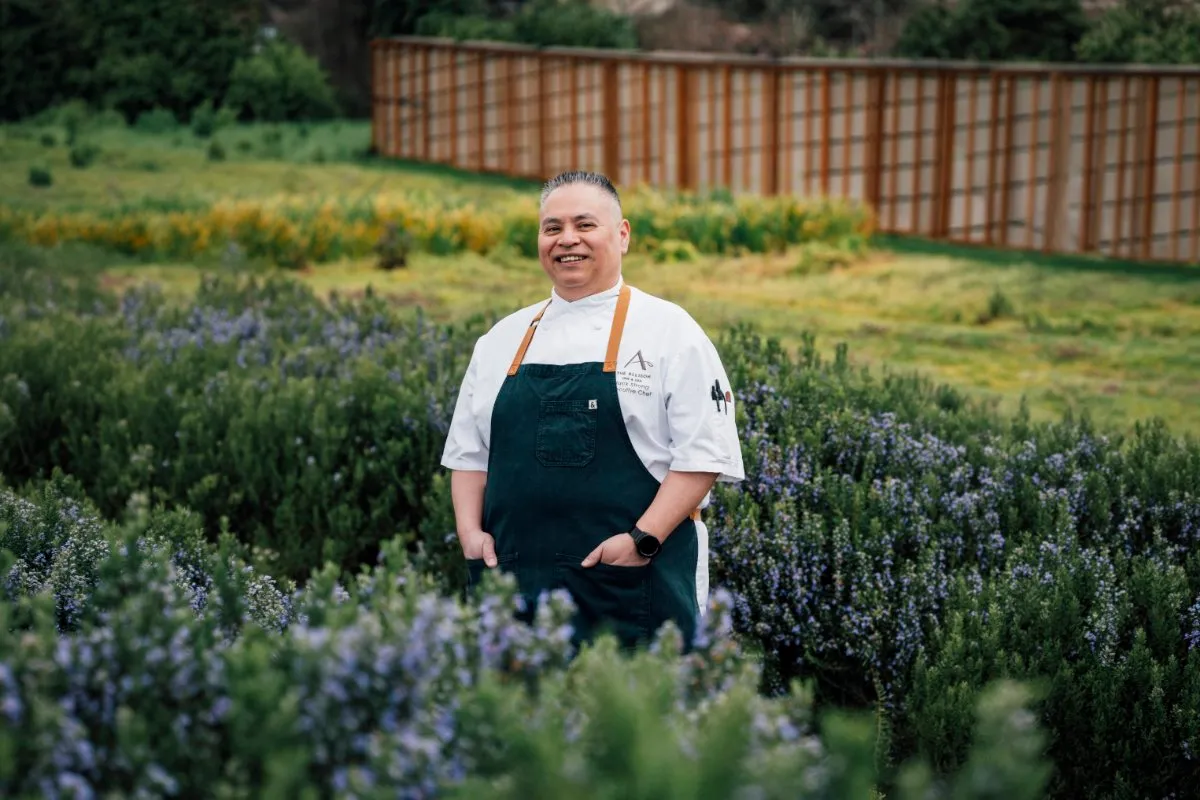
Jack Strong, a member of the Confederated Tribes of Siletz Indians, is the executive chef at The Allison Inn and Spa in Newberg, Oregon. He also partners with the Siletz Valley culinary program, which he attended as a child.
Students in the program cook meals for the entire K-12 school. They also run a food truck called YA-TR’EE-YAN, which means "a gathering of people around food" or "feast" in Dee-ni. The food truck offers free meals to students and tribal members during the summer. It serves recipes from Strong's cookbook, featuring Native ingredients like venison, elk, salmon, and sablefish.
Strong notes that Native foods are often called the first cuisine of the Americas, yet they were the last to be recognized. He aims to share ## Growing Up Siletz
We're a new kind of news feed.
Regular news is designed to drain you. We're a non-profit built to restore you. Every story we publish is scored for impact, progress, and hope.
Start Your News DetoxStrong grew up on the Siletz reservation in central Oregon, raised by his grandparents. He enjoyed the small town feel, where everyone knew each other. He spent time in the forest, fishing in the river, and playing basketball.
His grandmother shared stories about their family and tribal history. The Siletz tribe lost its federal status from the 1950s to the 1960s, a period called "termination." This meant losing land, resources, and benefits. The Siletz now have only a small part of their original land, which stretched from Southern Oregon to Northern California.
Despite these challenges, tribal leaders, including Strong's grandfather, fought to regain recognition. In 1977, the tribe's federal status was restored. As Strong grew up, the tribe began more cultural activities, like the annual "culture camp." Here, youth learned basket weaving and how to prepare eels. His grandmother, who taught herself beadwork, encouraged him to attend.
Strong started cooking for his retired grandfather when he was young, learning from his grandmother who cooked everything from scratch. This sparked his love for the kitchen. He also developed a connection to seafood, fishing in the Siletz River. His uncle was known for his smoked salmon, which he used for bartering. Other relatives worked in seafood processing, bringing salmon heads to his grandmother, who would boil and eat all parts.
During his childhood in the 1980s, the tribe still relied on commodity foods like flour, fats, and sugars. Strong remembers helping his grandmother make noodles from scratch for chicken noodle soup. The Strong house was always full of people sharing meals, which taught him that food connects people and builds community.
Culinary Journey and Native Influences
Strong's first job was at a fish-and-chips place in Newport, where the owners mentored him. He learned about fresh products, hospitality, and teamwork. He then attended a culinary program at Lane Community College. A chef there encouraged him to create a dish reflecting his culture. Strong made a dish inspired by lox and bagels, using fry bread and cold-smoked salmon lox. This was his first dish highlighting his Native culture.
After eight years, Strong moved to Arizona, working at large resorts like the Phoenician Resort and the Sheraton Grand at Wild Horse Pass on the Gila River Reservation. He learned about the foods of other tribes, such as the Navajo, Hopi, and Tohono O’odham. He saw how these Native foods, including chiles, beans, and corn, had sustained people for generations.

Strong eventually returned to the Northwest to be near family. At The Allison, he now highlights Native foods in the kitchen and garden. He sees his role as a chef as nourishing people and supporting local farmers and fishermen. The restaurant sources ingredients from local businesses like Northwest Fresh Seafood, Northwest Premier Meats, Briar Rose Creamery, Carlton Bakery, and Misty Mountain for mushrooms and truffles. They also get sturgeon from Oregon Royal Sturgeon and Ozette potatoes from the Makah tribe.
The Allison's 1.5-acre garden grows produce, including miner's lettuce, a Native food. Strong uses it in a dish called The Allison Garden.
Reconnecting and Mentoring
The Siletz language, Dee-ni, was not taught in schools when Strong was young. Now, there's an online dictionary and programs in elementary schools. Strong learned the language as an adult, using sticky notes to label objects around his house. He often uses Dee-ni words for food on his menus, like lhuk (salmon), gus (potato), and ch’aa-ghee-she’ (egg).
Traditional foods like huckleberries and camas were once mainly for ceremonies. Now, Strong picks huckleberries on tribal lands every year and serves them at The Allison. He even worked with pastry chef Shelly Toombs to create a huckleberry semifreddo.
In 2024, Patrick Clarke, director of the Siletz Valley School culinary program, invited Strong to meet the students. Strong hosted the class at The Allison for a tour of the garden and kitchen, followed by lunch and a Q&A. Students learned about cooking and other hospitality roles like marketing and HR.
Strong and Clarke continued to collaborate. The school hosted Strong, and students made lunch, including fry bread from Strong's cookbook. Strong joined them in the food truck to cook. He now helps connect students with other Native chefs, like at a Native American Heritage Month event at The Allison where students helped with oyster shucking.
Strong aims to guide students toward fulfilling culinary careers, being honest about the challenges like long hours and working holidays. He emphasizes the importance of exposure to new experiences, especially for students from a small town like Siletz. He gives them opportunities like attending the governor's conference in Portland and cooking at the Blue Foods Forum.
At the Blue Foods Forum, students cooked Oregon albacore and helped chefs, including Strong, with plating tribal-caught salmon. They also went on a boat trip, for some, their first time. They learned to butcher whole albacore tuna and buried the fish heads and skeletons to create natural fertilizer, understanding the full-circle journey of food in the ecosystem. This reminded Strong of a childhood lesson from his grandmother about cleaning fish at the river to feed other life.
Strong is impressed by the students' progress. The program gives them direction and benefits the school and community. For the past two years, JORY has featured a dish highlighting traditional Siletz foods, with proceeds supporting the culinary program. Strong, having come from the same school, feels a personal connection to the youth, understanding their experiences and opportunities.
Deep Dive & References
‘Native Foods Have Sustained People for Generations’ - Civil Eats, 2026