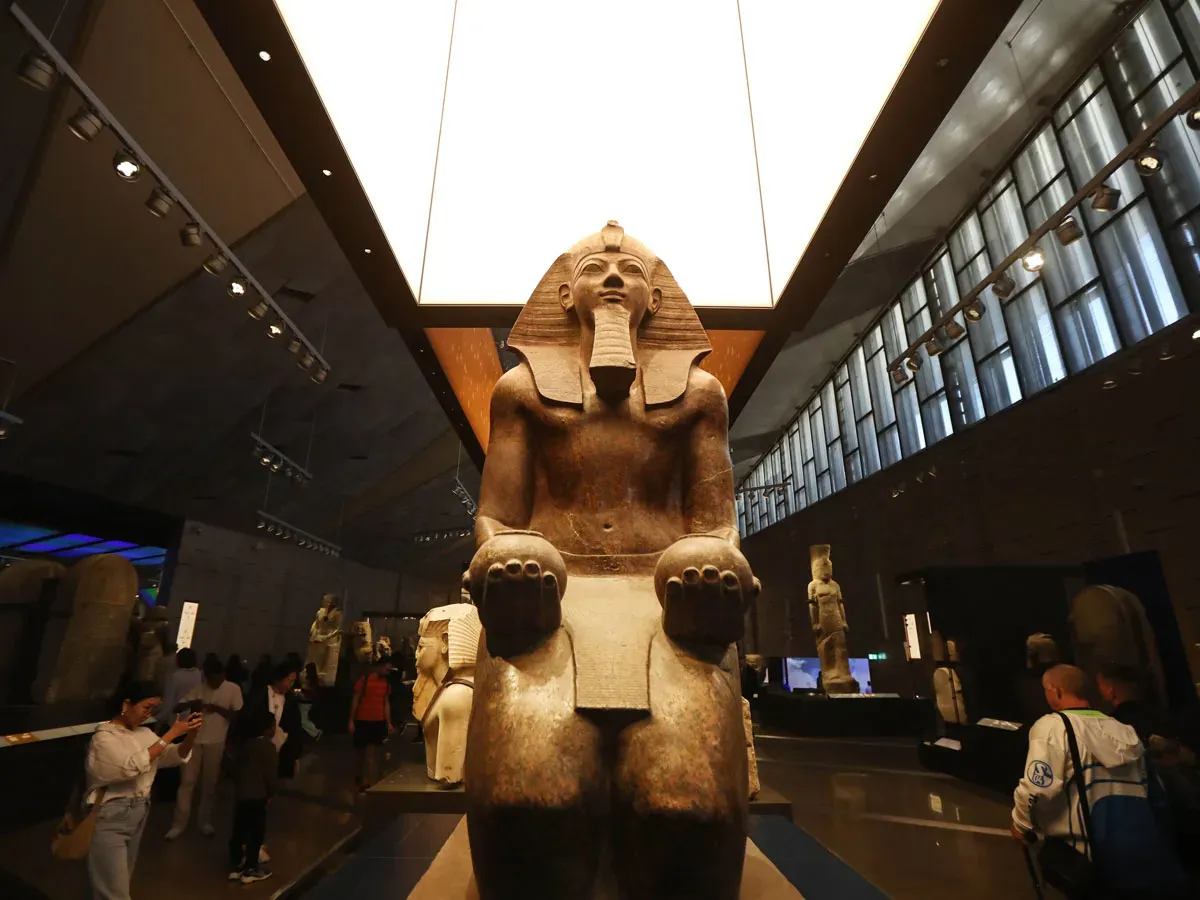
The Grand Egyptian Museum opened its doors with something that hasn't happened in over a century: Tutankhamun's entire burial collection displayed together for the first time since Howard Carter unsealed his tomb in 1922. Across 12 galleries spanning 7,000 years, the museum holds more than 100,000 artifacts—many of them repatriated works returning to Egypt for the first time.
The museum unfolds like a 7,000-year timeline. You move through the Prehistoric and Early Dynastic eras, watch the Old Kingdom's geometric precision give way to the Middle Kingdom's refinement, then encounter the New Kingdom's imperial ambition. The journey culminates in the Tutankhamun galleries, where a young pharaoh's entire afterlife—his throne, his chariot, his golden coffin, his trumpet—sits in one space.
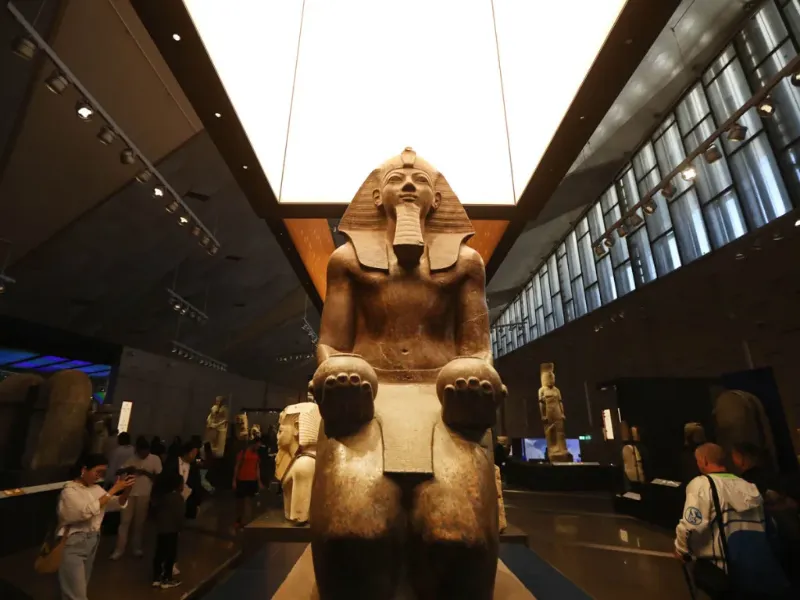
To understand what makes this collection extraordinary, consider the objects that Egyptologists keep returning to. The Narmer Palette, a carved ceremonial object from the 1st Dynasty, shows the moment Upper and Lower Egypt unified—one of the earliest significant artworks from the civilization. The Statue of Khafre, the 4th Dynasty pharaoh who built the second Giza pyramid, remains one of the finest examples of Old Kingdom sculpture: austere, idealized, eternal. Then there's the 36-foot colossal statue of Ramses II, a New Kingdom pharaoh whose reign lasted 66 years and whose ambition was matched only by his talent for self-promotion.
We're a new kind of news feed.
Regular news is designed to drain you. We're a non-profit built to restore you. Every story we publish is scored for impact, progress, and hope.
Start Your News Detox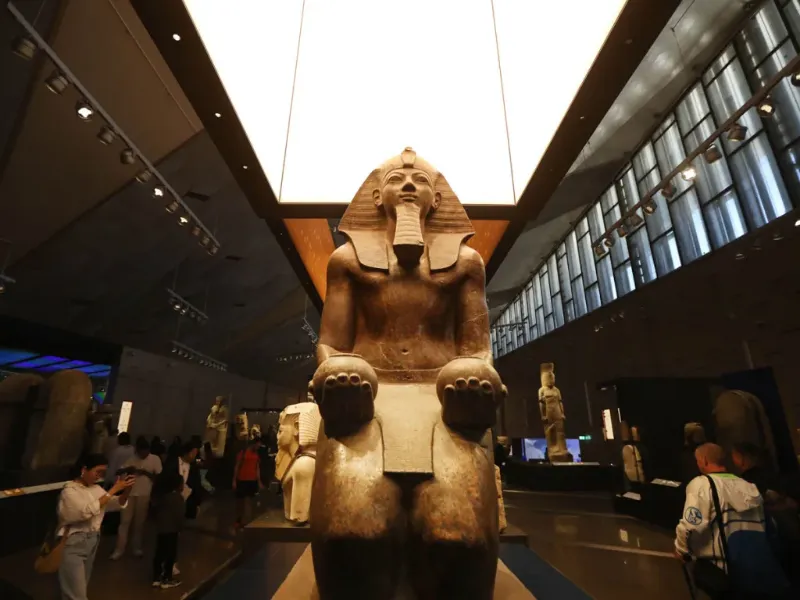
But it's Tutankhamun who dominates. The young king died at 18 or 19, and his obscurity—he was minor in his own time—meant his tomb escaped the looters who picked through nearly every other pharaonic burial. What Carter found in 1922 was a snapshot of royal death ritual: not just the famous golden funeral mask, but the throne he sat on, the chariot he rode, the coffin of solid gold, the shrine that housed his sarcophagus, even the trumpet he played. There are jars used in mummification, a funerary bed with animal-leg feet, canopic shrines for his organs. Most of these objects have never been shown together since his death 3,300 years ago.
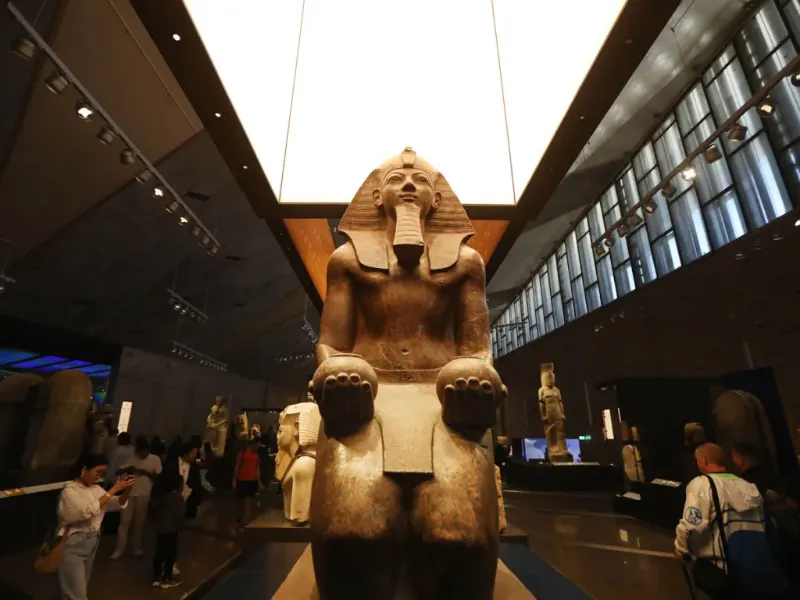
The museum's scale matters. Previous displays scattered these artifacts across different institutions or showed them piecemeal. Now, walking through the Tutankhamun galleries, you see not just individual masterpieces but the material world of an ancient kingdom—the objects that reveal how Egyptians understood death, power, craft, and the passage from one life to the next.
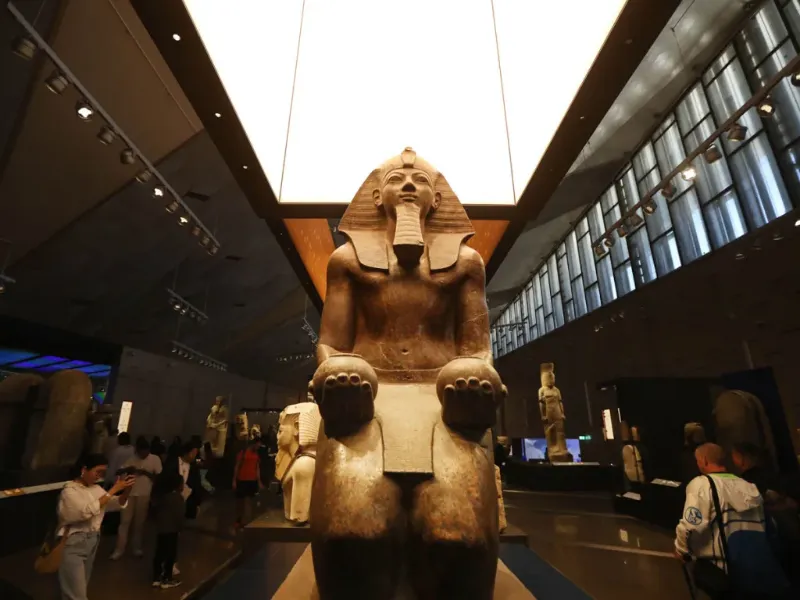
The museum itself represents something else: the repatriation of cultural heritage. For generations, Egyptian treasures sat in European and American museums. This collection, housed in Cairo, shifts where the story of ancient Egypt gets told. It's not just about displaying objects anymore. It's about returning them home.