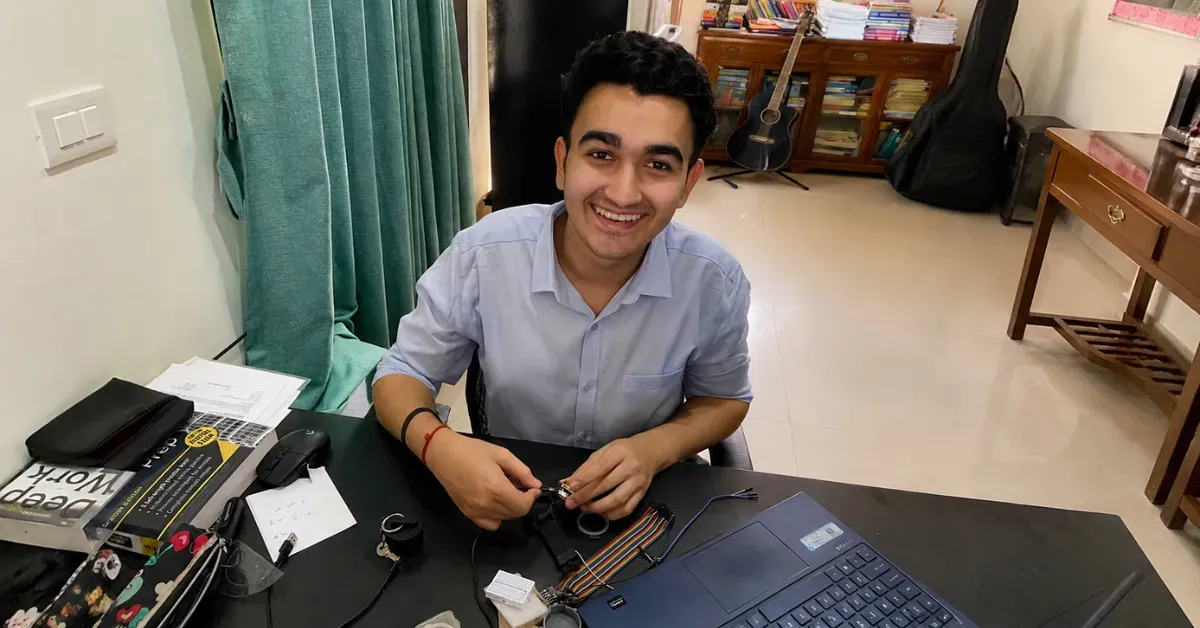
Most 14-year-olds are busy navigating the complex world of high school crushes and questionable fashion choices. Arnav Maharishi, however, found himself navigating something far more complicated: paralysis. After a severe accident in 2022 left him comatose for 11 days, Arnav woke up to a new reality where his dominant right side wouldn't move, and even sitting up required help. Doctors weren't exactly optimistic.
His mother, Dr. Anupriya Maharishi, recounts the harrowing days when her son didn't even recognize her. The recovery was, by all accounts, brutal — a relentless cycle of physiotherapy and occupational therapy that took a heavy emotional and physical toll. Arnav himself questioned the point of living if basic tasks were out of reach. But with the help of a counselor, he slowly began to piece himself back together, eventually returning to school and even picking up squash again. Small steps, but crucial ones.
The Unconventional Path to Innovation
It was during this arduous journey that Arnav, now 17, spotted a glaring gap in the rehab process: a distinct lack of objective measurement. How do you know if you're truly improving if progress is just a feeling? Apparently, you don't. So, like any self-respecting teen with a problem, he built a solution.
We're a new kind of news feed.
Regular news is designed to drain you. We're a non-profit built to restore you. Every story we publish is scored for impact, progress, and hope.
Start Your News DetoxEnter FAIRCHANCE, an AI-powered app that uses your smartphone or laptop camera to track fine motor movements of hands and fingers in real-time. It then translates those wiggles and stretches into cold, hard data, giving patients a quantifiable look at their daily gains. Because knowing exactly how much you've improved is far more motivating than just feeling like you have.
He didn't stop there. Arnav also tackled the common, if somewhat awkward, rehab method of restricting a patient's stronger limb to force the weaker one into action. It's effective, yes, but also uncomfortable and a bit of a billboard for your injury. His answer? The ActiveHand Wristband. Worn on the stronger hand, it gently vibrates when that hand is overused, nudging the patient to rely on the weaker one without any physical restriction. Which, if you think about it, is both ingenious and wonderfully discreet.
Both devices are currently undergoing clinical trials, with FAIRCHANCE being tested by 30 individuals and the ActiveHand Wristband by 20. His work even earned him the Pradhan Mantri Rashtriya Bal Puraskar in Science and Technology in 2025 – India's highest civilian honor for citizens under 18.
What makes Arnav's innovations truly remarkable is that they're born from his own lived experience. Mentored by his neuro-rehabilitation specialist, Dr. Ashwini Kale, Arnav taught himself machine learning, OpenCV, and TensorFlow online. Because when you've faced down paralysis, teaching yourself cutting-edge tech to help others probably feels like a walk in the park. His story is a powerful reminder that sometimes, the most profound solutions come from those who understand the problem intimately.