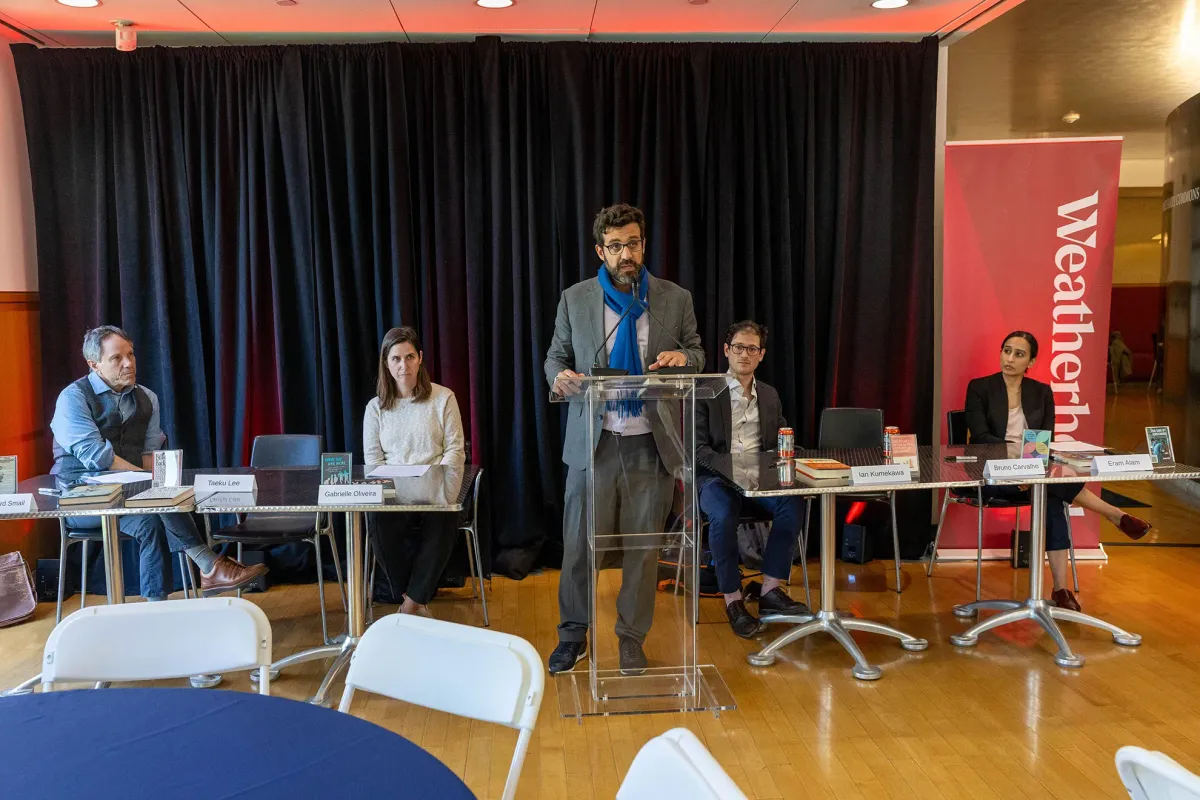
Turns out, the doctor who patched you up might have a backstory that helped shape American healthcare for the last six decades. And no, we're not talking about their residency. We're talking about the fact that roughly one-quarter of U.S. physicians have been immigrants, often stepping up in the underserved urban and rural areas that native-born doctors, shall we say, avoided.
Eram Alam, a history of medicine professor, dives deep into this in her upcoming book, "The Care of Foreigners: How Immigrant Physicians Changed U.S. Healthcare." She explains that a perfect storm brewed in the 1960s: the U.S. was worried about post-colonial nations cozying up to communists, while simultaneously launching Medicare and Medicaid and desegregating hospitals. Suddenly, the need for doctors skyrocketed. So, America started recruiting medical pros from places like Asia and Africa.

Of course, these doctors weren't exactly met with open arms. Racism from the medical establishment was a thing. Alam's book isn't just a history lesson; it's a call for "bold, coordinated, comprehensive reform" to make sure everyone gets medical care, no matter where they or their doctor came from. Because apparently, that's still a radical idea.
We're a new kind of news feed.
Regular news is designed to drain you. We're a non-profit built to restore you. Every story we publish is scored for impact, progress, and hope.
Start Your News DetoxFrom City Dreams to Prison Barges
Moving from saving lives to shaping skylines, Bruno Carvalho's "The Invention of the Future: A History of Cities in the Modern World" explores how cities like Lisbon, Lagos, and Brasilia came to be. Back in the 1700s, people started getting this wild idea that humans, not some divine hand, could actually build the future. Which, if you think about it, is both impressive and slightly terrifying.
Carvalho's book rethinks modern history through these competing visions, pulling from official records and oral histories. He points out how urban planning often has "unintended consequences" — like how high population density was once a health nightmare, but now some folks think it's the answer to our housing woes. The irony, it burns.

Then there's Ian Kumekawa, who took a pandemic lockdown and turned it into a book about a jail barge. Yes, a jail barge. Specifically, the last prison ship in the U.S., floating in New York's East River. His book, "Empty Vessel: The Story of the Global Economy in One Barge," connects this floating jail — built in Sweden, housing oil workers, soldiers, and factory workers before its incarceration career — to old British prison systems and the sprawling world of offshore industries and global trade. It's a "global microhistory" seen from a "barge-eye view." Because apparently, a boat full of prisoners can tell you more about the last 50 years of economic change than your stockbroker.
Gabrielle Oliveira's "Now We’re Here: Family Migration, Children’s Education and Dreams for a Better Life" shares the gut-wrenching stories of families sacrificing everything for a better future. She quotes a 15-year-old from Brazil who simply asked, "Do I have the right to have a good life to dream?" It's a question that hits harder than any economic statistic, reminding us that dignity and respect shouldn't be luxury items.
A Life Beyond the Chains
Finally, we journey back to the 1400s with Daniel Lord Smail, who stumbled upon court records in Marseille in 1998. These weren't just any old records; they detailed an formerly enslaved African woman named Magdalena Coline suing her former enslaver over a small debt. Let that sink in: a formerly enslaved woman, in 1400, taking her former enslaver to court.
Smail's book, "Magdalena Coline: A Life Beyond Slavery in Mediterranean Europe," explores a side of medieval slavery that's often overlooked. It wasn't some minor footnote; it was a substantial, complex trade linked to the Mongol empire, with a massive influx of enslaved people from the Black Sea area after a civil war in the "Golden Horde" around 1350. Coline's singular act of defiance provides a window into a vast, brutal system, reminding us that even in the darkest corners of history, people fought for what was theirs. And sometimes, they even won.