Care keeps us alive. It gets us through infancy, walks us through death, educates us, heals us, gives us choices. If you think you don't need it right now, someone is likely providing it to you anyway.
The person most associated with this care—the mother—has always been essential and always been undervalued. But something shifted in the art world over the past decade. Museums started asking: what if we took motherhood seriously as an artistic subject, not a footnote to an artist's biography?
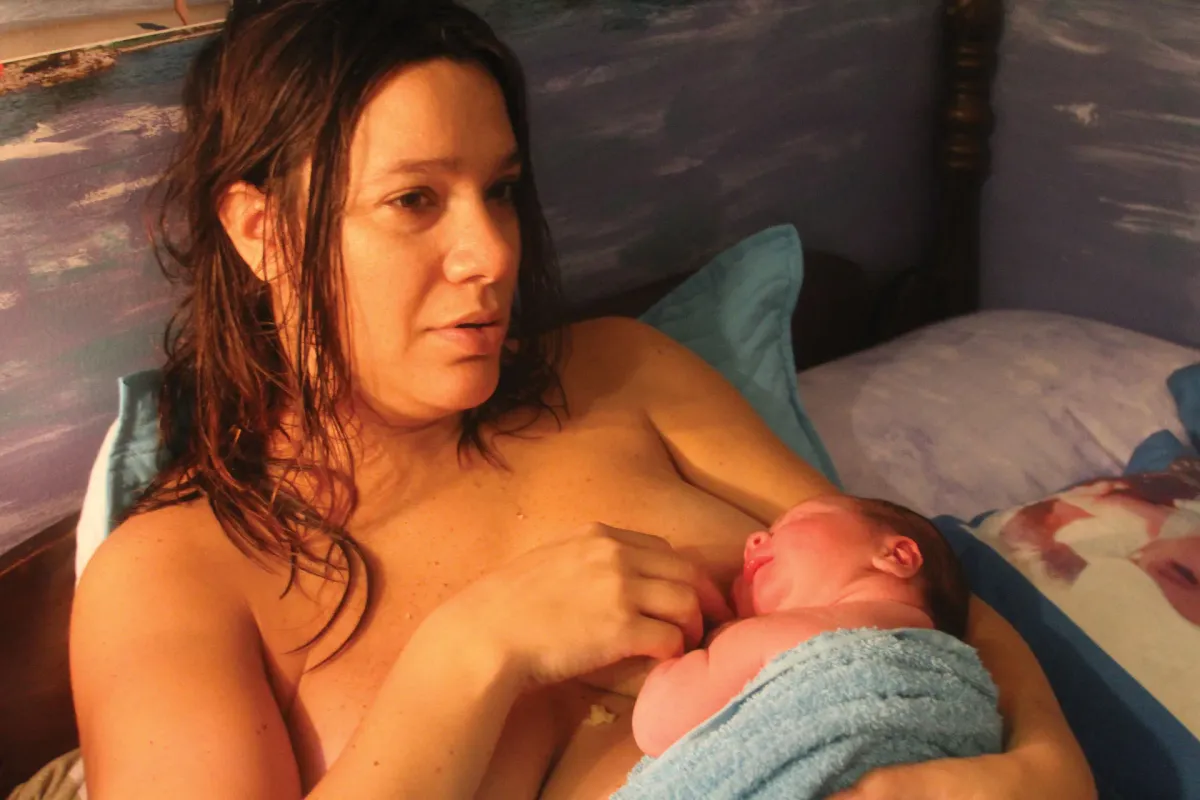
The turning point came gradually. In 2011, performance artist Marni Kotak gave birth to her son Ajax in front of an audience at Microscope Gallery in New York. That same year, artist Natalie Loveless began a series of events called "new maternalisms," proposing that childcare itself could be art. By 2015, the Fondazione Nicola Trussardi mounted "The Great Mother," a survey that refused to sentimentalize motherhood—instead wrestling with Simone de Beauvoir's observation that mothers are simultaneously fearsome and enslaved.
We're a new kind of news feed.
Regular news is designed to drain you. We're a non-profit built to restore you. Every story we publish is scored for impact, progress, and hope.
Start Your News DetoxBut the real momentum built after 2020. The pandemic exposed something the art world could no longer ignore: the West had systematically devalued care work, and mothers had been carrying that weight invisibly. When the Met opened its Alice Neel retrospective in 2021, it placed pregnant bodies, families, and children at the center of her story. Her thick-lined portraits weren't just depicting people—they were depicting concern itself, redefining what artistic mastery could mean.
That opened a door. The Neue Galerie's 2024 Paula Modersohn-Becker show, MoMA's Käthe Kollwitz exhibition that same year, and upcoming retrospectives of Ruth Asawa and Helen Frankenthaler all share a common thread: they're acknowledging that these artists found ways to weave domestic labor into their practice, and that this wasn't a limitation of their work—it was the work.
Parallel to these retrospectives, museums mounted more explicitly political exhibitions. "Portraying Pregnancy: From Holbein to Social Media" (2020), "A Perfect Power: Motherhood and African Art" (2020), "Good Mom/Bad Mom: Unraveling the Mother Myth" (2025), and others used motherhood as a lens to examine power, agency, and how society controls reproductive bodies. These weren't nostalgic looks back. They were asking: what does it mean to recognize the agency of people who birth and parent as models for how human society could actually work.
The conversation has spread beyond gallery walls. MIT Press has published dozens of books examining the politics of mothering, reproductive health, and how design shapes maternal bodies. The catalog for "Designing Motherhood" traces how objects, drugs, and garments have been engineered to support—and control—mothers across a century.
What's happening is a slow institutional reckoning. For decades, art history treated motherhood as either invisible or sentimental. Now museums are asking harder questions: Who does care work? Who profits from it? What would culture look like if we treated it as central rather than peripheral. The answers are still unfolding.