Chander Ram is 77 now, but he can still walk you through the three high Himalayan passes that lead into Tibet as if he crossed them yesterday. He remembers the mules, the goats, the weight of the journey. When the Indo-China war erupted in 1962, he was caught in the middle of Gyannim Mandi, one of Tibet's largest trading posts. He made it out. That story—the escape, the survival, the specific texture of a life lived at altitude—nearly died with him.
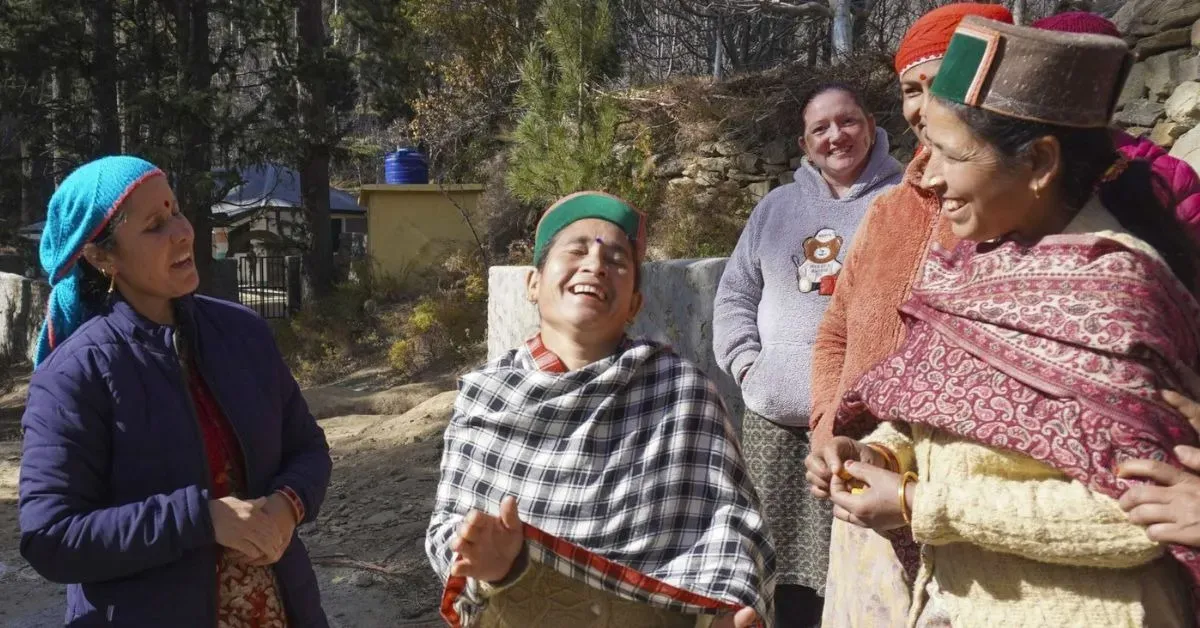
Then Beena Nitwal found him. Beena belongs to the Bhotia community, native to the villages of Kumaon. She'd just completed the Himal Prakriti Storytelling Fellowship, a six-month training program that teaches people in remote pockets of the Indian Himalayan region to document their own histories. She was intent on capturing Chander's memories before they vanished.
Stories that might otherwise disappear
The Himal Prakriti program started small: five Fellows per year, each working with two other storytellers from their village. Deepak Pachhai joined the second batch in 2024 at age 23. "I first learned how to use my phone camera efficiently, including camera angles, then eventually I learnt editing," he says. "I learnt how to not just take pictures and videos, but also how to put them together to tell a visual story."
We're a new kind of news feed.
Regular news is designed to drain you. We're a non-profit built to restore you. Every story we publish is scored for impact, progress, and hope.
Start Your News DetoxDeepak's first major piece documented the thunair trees—Himalayan yew—that grow throughout Uttarakhand. "These ancient trees are far from ordinary," he wrote. "Every part serves a purpose and tells the story of our land and its people." His own family discovered this firsthand: when their house burned down years ago, the thunair windows and doors remained unharmed, still standing in their new home today.
Voices of Rural India, the platform that publishes these stories, was born during the COVID-19 lockdown of 2020. Tourism had stopped. Income had stopped. Co-founder Malika Virdi saw an opportunity in the silence: "During that one year of quiet, we had no income from tourism. The website first carried a handful of stories crafted by storytellers from five states across the country that were impacted by the closure of community-led tourism enterprises."
The mission was straightforward—give rural people the tools and platform to tell their own stories before fading traditions walked into oblivion. Over the past three years, 51 storytellers from across the Indian Himalayan region have published hundreds of pieces on the portal.
One story that circulated widely was Radhamani K P's account of her work as a walking librarian. Since 2012, she's visited homes across her community carrying 25 to 30 books in a cloth shopping bag, letting women choose what they want to read. By writing it down, she gave others permission to see their own quiet work as worth documenting.
Beena, the woman who interviewed Chander Ram, had stopped writing after marriage and family responsibilities took over. "Then in 2020, Malika ji said, 'Let's write our own stories'," she recalls. The editorial team at Voices of Rural India guided her back to it, word by word.
What's happening here is a shift in who gets to be the author of a community's story. Instead of outsiders parachuting in to document "fading cultures" like museum pieces, the people living those cultures are picking up cameras and notebooks themselves. They're learning video editing and narrative structure not as abstract skills, but as tools to preserve what matters to them. Isha Shah, co-founder of Youth Climate Connect and part of the Himal Prakriti coordination team, sees it clearly: "It's not just a tool for documentation, but also a skill that people in rural areas can develop, given the popularity of social media and their engagement with it as consumers of content."
Chander Ram's story about the three passes, the war, the escape—it exists now. Deepak's trees will be there for the next generation. Radhamani's walking library is on record. These aren't stories preserved by institutions. They're stories owned by the people who lived them.