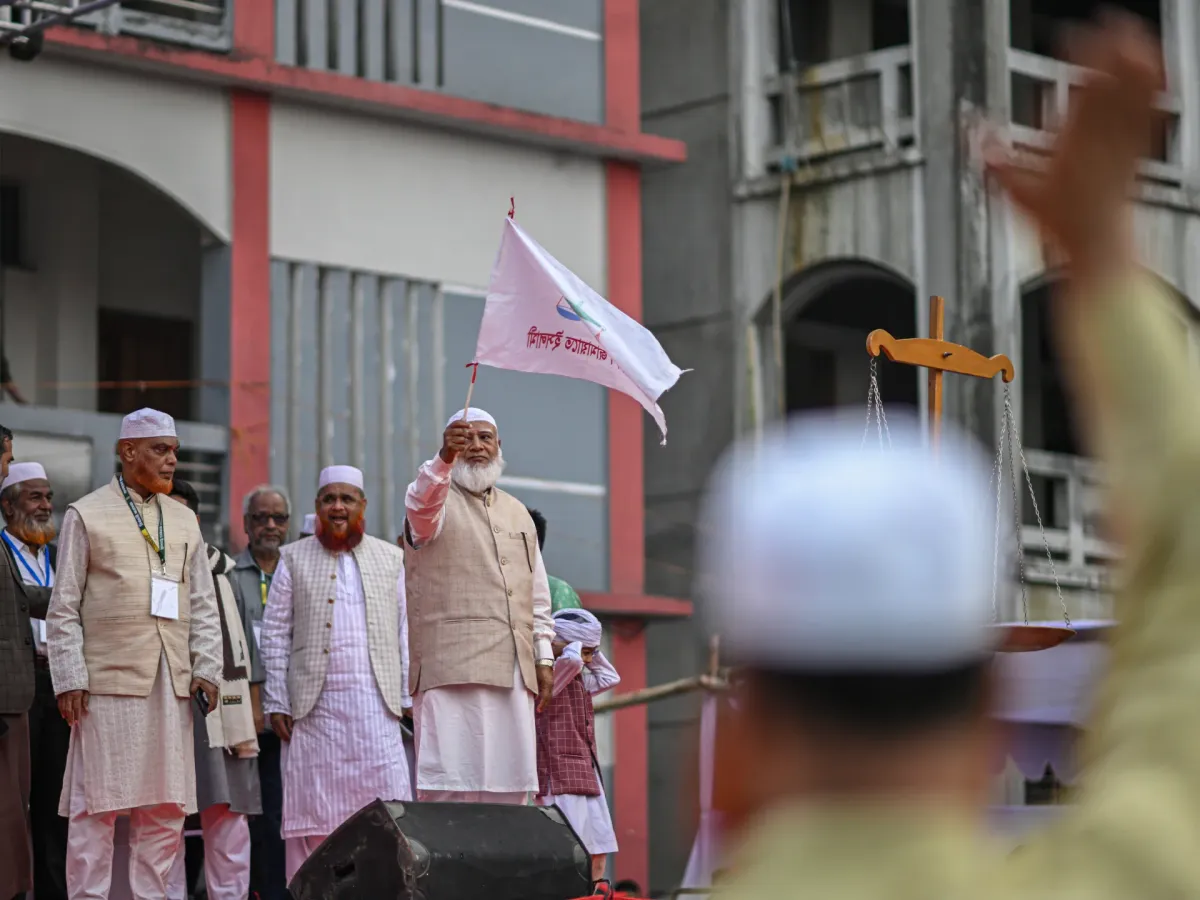
Krishna Nandi is a Hindu businessman and parliamentary candidate for Bangladesh Jamaat-e-Islami. For many, this feels contradictory—but it's precisely the point he's making.
For decades, Bangladesh's religious minorities have been told a simple story: Islamic politics means persecution. Vote for an Islamic party, the narrative goes, and Hindus will be pushed out. Nandi's candidacy in Khulna-1 exists to challenge that assumption directly.
"If Jamaat-e-Islami comes to power, no Hindu will have to leave Bangladesh," he says. "Hindus will live in this country with dignity, safety, and respect." He's not speaking symbolically. He's talking about concrete guarantees—security, justice, equal citizenship under law.
We're a new kind of news feed.
Regular news is designed to drain you. We're a non-profit built to restore you. Every story we publish is scored for impact, progress, and hope.
Start Your News DetoxNandi joined Jamaat in 2003, drawn by what he saw as discipline and accountability within the party. He points out that Jamaat doesn't operate through vote-buying, intimidation, or extortion—principles he says are enforced internally. That's unusual enough in Bangladeshi politics that ordinary citizens, including minorities, are now reassessing their political choices.
In his constituency, people have lived under genuine pressure. Hindus have faced targeted attacks, lost jobs unfairly, endured economic marginalization. Nandi has been explicit: those injustices will be addressed through lawful procedures. Violence and intimidation against any community won't be tolerated.
During the July 2024 uprising, when many minority communities felt unsafe, it was members of organizations like Jamaat who protected Hindu temples and places of worship, Nandi notes. A state governed by justice protects minorities better than one governed by slogans.
His framing is deliberate. Jamaat is an Islamic party in values, he argues, but a national party in responsibility. Justice, accountability, and human dignity aren't owned by any single religion. Bangladesh is plural by reality, not by charity. Any political force that ignores that fact can't govern sustainably.
This election, Nandi says, isn't about importing ideology or exporting fear. It's about restoring trust between citizens and the state. His candidacy is an opening—toward a political conversation beyond communal suspicion, beyond the idea that identity must divide.