

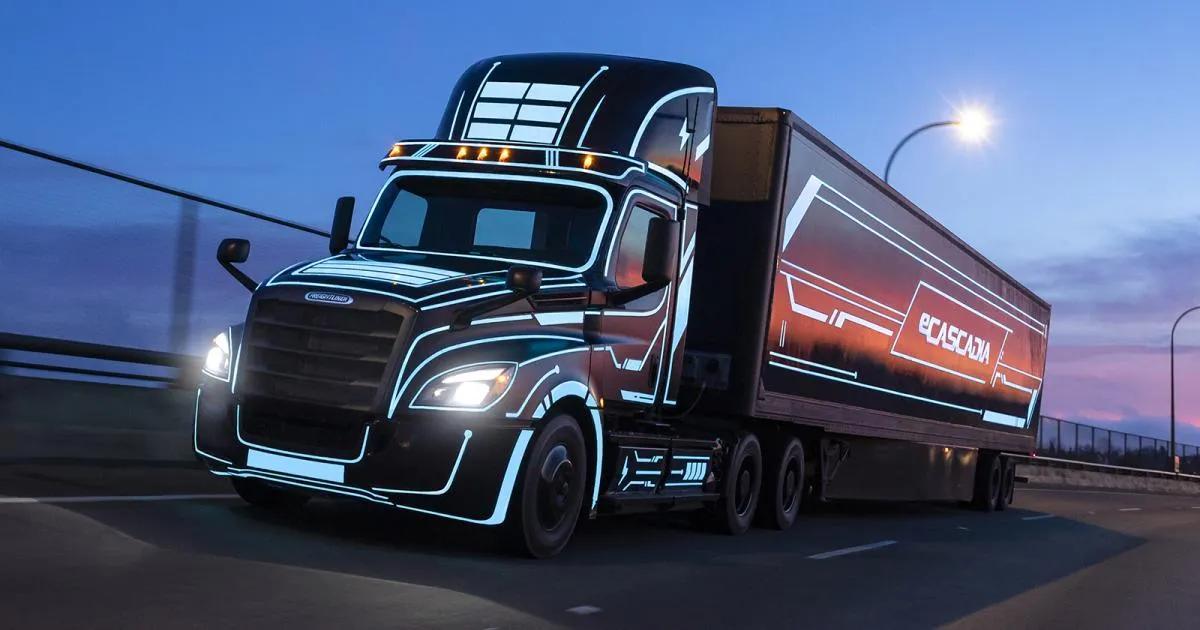
Nearly 200 trucking fleets have already committed to going electric. That number was closer to 18 in 2017. This isn't a gradual shift — it's momentum that's accelerating fast, and the Inflation Reduction Act just handed the industry a significant push.
The numbers tell the story. Wood Mackenzie expects electric trucks on U.S. roads to jump from around 2,000 in 2019 to more than 54,000 by the end of 2025. That's a 27-fold increase in six years. And here's the part that matters for fleet operators making the financial case: Roush Industries found that electric trucks will cost less to buy and operate than diesel trucks by 2027 — just a few years away.
But the economics only work if the upfront costs come down, and that's where the new law steps in. The Inflation Reduction Act — the most consequential U.S. climate law to date — includes over $20 billion in direct support for truck electrification. Individual companies can claim up to $40,000 in tax credits for each commercial zero-emission vehicle. The charging infrastructure credit jumped from $30,000 to $100,000 per property, which matters because fleets can't go electric without somewhere to charge.
We're a new kind of news feed.
Regular news is designed to drain you. We're a non-profit built to restore you. Every story we publish is scored for impact, progress, and hope.
Start Your News DetoxThe Infrastructure Backbone
Beyond the credits, the law funds the physical backbone this transition needs. The U.S. Postal Service gets $3 billion to buy zero-emission vehicles and build charging networks. Ports get another $3 billion in grants for zero-emission equipment. There's $2 billion to retool existing auto plants for clean vehicle production, and up to $20 billion in loans for entirely new manufacturing facilities.
There's also $60 million specifically directed at reducing diesel emissions in low-income communities — recognizing that the pollution from goods movement hasn't been evenly distributed.
What makes this different from earlier climate policies is the scale and specificity. These aren't aspirational targets or tax credits that disappear in five years. This is sustained, substantial funding aimed at removing the barriers that have kept truck electrification from scaling faster. The companies that have already started the transition — from UPS to Walmart to smaller regional fleets — now have the financial runway to expand. Those still sitting on the fence have a clear signal: the infrastructure and incentives are here. The time to plan is now.
The real test comes next. Can manufacturers scale production fast enough to meet demand. Can charging networks be built at the pace fleets need. Can the cost curve continue its downward trajectory. The law creates the conditions for all of this to happen, but execution is everything.





