In the Czech Republic, the conversation around LGBTQ+ rights often feels like a particularly awkward family dinner: a bit of tolerance, a dash of political grandstanding, and the occasional uncle loudly declaring that "gender issues" are a foreign invention. Because apparently, queer people just spontaneously appeared last Tuesday.
But a new interactive map of Prague is here to politely (but firmly) remind everyone that LGBTQ+ individuals have been part of Czech culture for centuries. Think of it as a historical mic drop.
Rewriting History, One Pin Drop at a Time
Central and Eastern Europe isn't exactly a beacon of queer acceptance, though the Czech Republic often fares slightly better than its neighbors. Still, that hasn't stopped some politicians from making homophobic remarks — often claiming that gender diversity is a "cultural import" from places like Brussels or the US. Because if it's not from here, it must be bad, right?
We're a new kind of news feed.
Regular news is designed to drain you. We're a non-profit built to restore you. Every story we publish is scored for impact, progress, and hope.
Start Your News DetoxThis is despite the fact that nearly two-thirds of Czechs support same-sex marriage, and inheritance rights for same-sex partners improved just this year. Yet, verbal or physical abuse is still a grim reality for over 40% of LGBTQ+ Czechs, with more than 90% of those incidents going unreported. Let that unsettling number sink in.
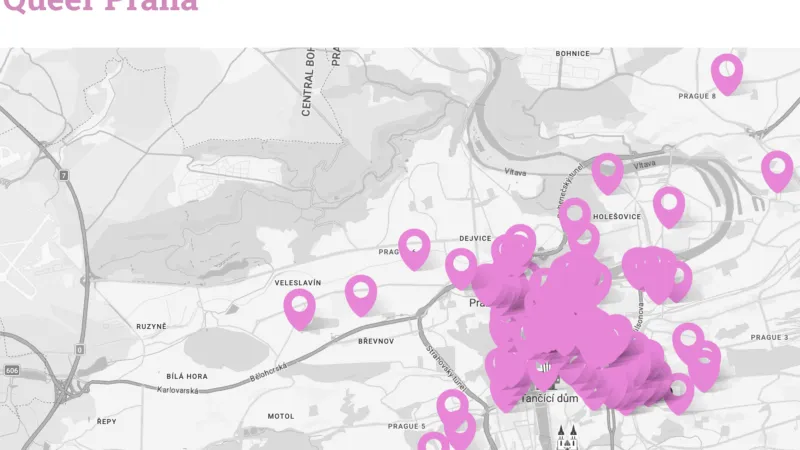
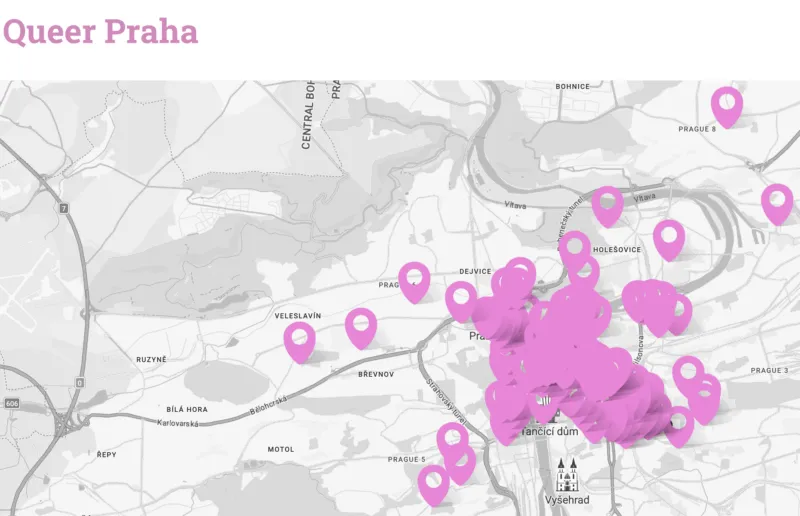
To counter this historical amnesia (or deliberate erasure), the Czech LGBTQ+ activist group Společnost Pro Queer Pamět (Society for Queer Memory) launched "Queer Prague." It's an online interactive map, first published as a physical guide in 2014, that now features 160 points across the city.
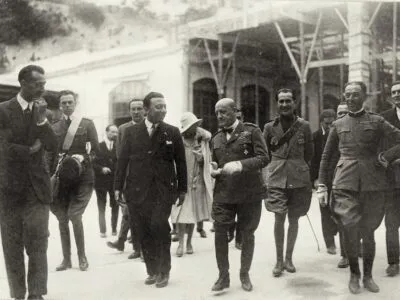
Imagine clicking on Republic Square and learning it was once a known "cruising area" for gay men. Or discovering the hidden histories of artists like Jan Zrzavý and Toyen, whose lives prove that the queer past isn't just a series of tragic court records, but also rich, complex stories of people finding ways to live and create.
Ladislav Jackson, a representative for the NGO, explains that the project grew out of an academic conference in 2009. Historians then turned their findings into the "Queer Prague" guide, which promptly sold out. Because, apparently, people are actually interested in history when it's not being whitewashed.
Why History Matters Now More Than Ever
The map's oldest point dates back to 1376, marking the first recorded trial for homosexual behavior. Most entries, however, are from the first half of the 20th century. Jackson emphasizes that the goal is to show that queer people have always existed, everywhere, in all eras — Austro-Hungarian, the First Republic, WWII, the socialist regime. It's not a "new phenomenon" or a sign of a "corrupted era," as some would have you believe.
Because, as Jackson puts it, no developed society can truly thrive without preserving its queer history in museums and archives. It's a fundamental part of maintaining and expanding human rights. And perhaps, just perhaps, it might get that awkward uncle to finally shut up at dinner.
It's a powerful reminder that history isn't just what happened; it's also who gets to tell the story. And sometimes, a map can speak louder than any politician.