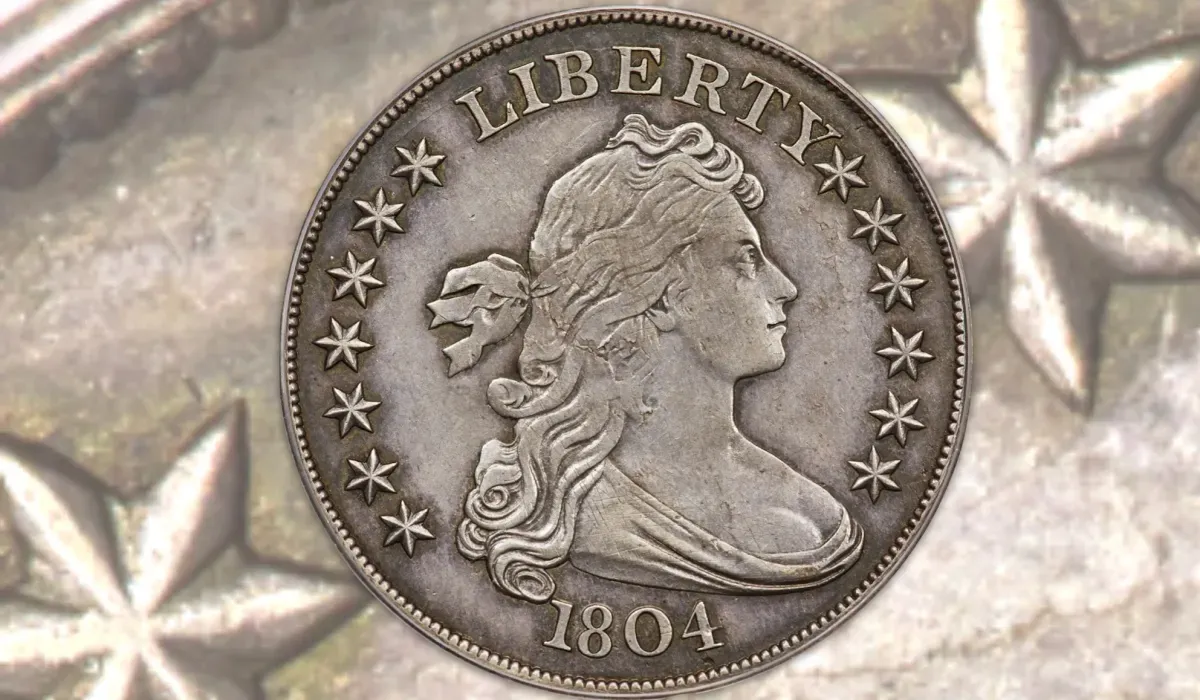
An 1804 Draped Bust dollar—the coin that collectors call the "King of Silver Dollars"—is going under the hammer at Heritage Auctions next week, and it's one of only 16 known to exist.
This particular coin, the Adams-Carter Class III, has passed through the hands of some of the most serious collectors in American history. Phineas Adams owned it. So did Amon G. Carter Sr. and Edward Howland Robinson Green. In 1941, numismatist B. Max Mehl wrote that no single coin in the entire world had generated more "romance, interest, and comment" than this one. It's expected to sell for well over $1 million.
Why a coin from 220 years ago still matters
Rarity is part of the story, but not the whole one. The 1804 dollar represents a specific moment in American minting—a moment that was, oddly enough, never supposed to happen. The coins weren't actually made for circulation in 1804. They were struck later, in small batches, as diplomatic gifts and collector pieces. That accident of history is why so few survived, and why the ones that did became obsessions.
We're a new kind of news feed.
Regular news is designed to drain you. We're a non-profit built to restore you. Every story we publish is scored for impact, progress, and hope.
Start Your News DetoxWhat makes this auction notable isn't just the headline coin. The Presidio Collection being auctioned January 14–17 focuses on what numismatists call the "100 Greatest US Coins"—a curated list of pieces that represent both rarity and quality. The collection includes an 1854-S Liberty Quarter Eagle, one of only 13 known examples minted during the California Gold Rush, and several rare gold coins and "stellas" (four-dollar gold pieces) from the Costa Family Collection, including an 1880 Coiled Hair Stella, of which only nine are documented to exist.
For most people, coin collecting feels like a niche hobby. But these auctions reveal something deeper: the human impulse to preserve and value objects that connect us to the past. A coin that circulated (or was meant to) in 1804 carries the weight of two centuries of American history. Every time it changes hands, it tells a story about who we were and what we thought was worth keeping.