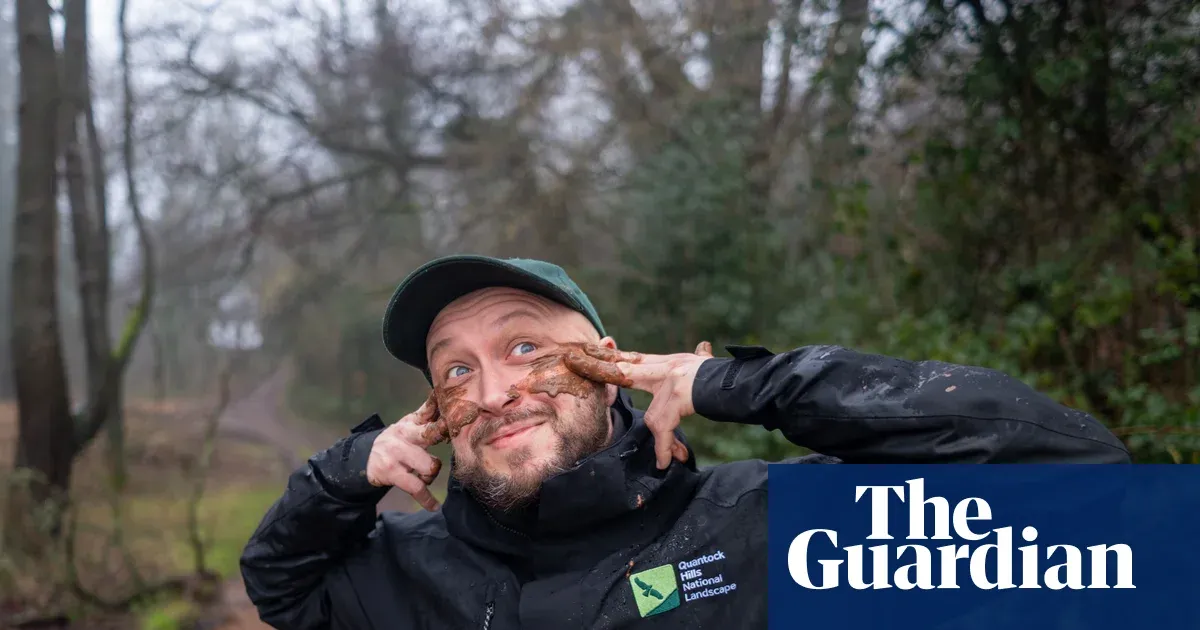
On a rain-soaked afternoon in the Quantock Hills, Jon Barrett—a community engagement officer for the national landscape—was grinning while trudging through ankle-deep mud. Most people dread this time of year. He's trying to change that.
Barrett and his team are running a Month of Mud festival in February, inspired by the Anglo-Saxon calendar. They called this season Solmōnaþ—literally "mud month"—and they're betting that a shift in perspective can turn winter's worst feature into something worth celebrating.
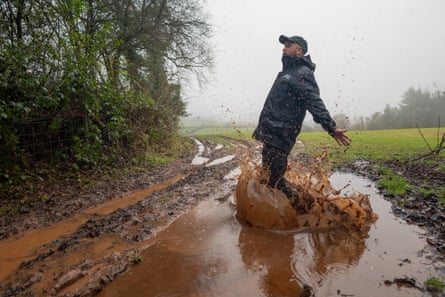 Barrett hopes the event will allow people to get up close and personal with the mud. Photograph: Jim Wileman/The Guardian
We're a new kind of news feed.
Regular news is designed to drain you. We're a non-profit built to restore you. Every story we publish is scored for impact, progress, and hope.
Start Your News DetoxWhat a month of mud actually looks like
The festival ranges from squelchy guided hikes to art sessions where participants mix the red-hued local mud with honey to make paint. There are storytelling nights focused on earthy legends—the kind that remind you mud isn't just a nuisance, it's been woven into human culture for thousands of years. The goal is simple: get people out in the weather they'd normally avoid, and help them see the season differently.
Barrett isn't interested in keeping things tidy. He happily smeared mud across his cheeks during our conversation, though he admits there's no scientific evidence the Quantocks mud has skincare benefits. What matters is the closeness—the willingness to get your hands and face dirty, to stop treating winter as something to endure indoors.
He hopes the festival will draw not just hardened walkers but people who'd normally stay home when the weather turns. The Quantocks already attract trail runners and mountain bikers who relish the slippy paths. Now Barrett wants to show casual visitors that mud season doesn't have to be an obstacle.
Why mud actually matters
Andy Stevenson, a ranger for the landscape, points out that mud is habitat. Brittle stars live in muddy coastal areas nearby. Earthworms tunnel through it. When people and grazing animals create shallow pools and churned ground, bees and wasps get drinking spots and places to burrow. Mud isn't inert—it's alive.
Dan Broadbent, a West Country storyteller, sees it differently. He notes that mud appears in creation myths across cultures. Humans made from earth. The Romantic poet Samuel Taylor Coleridge, who lived in Somerset in the late 1700s, wrote about being "stuck in the mire" and searching for "mud-lost sandals." Writers and poets have always found something in mud worth exploring.
But Broadbent's real insight is about timing. "Mud appears as the hard ground becomes softer and ready for ploughing and sowing after winter," he says. "Mud therefore becomes something almost sacred, to do with regeneration and renewal." It's not just a seasonal inconvenience. It's the threshold between dormancy and growth—the moment when the earth softens enough to receive new life.
That's the reframe at the heart of this festival. February mud isn't something to resent. It's the ground preparing itself for spring.