UK scientists have successfully grown fully working food pipes in a lab. They then transplanted these into mini pigs. This breakthrough offers new hope for young patients.
The research was published in the journal Nature Biotechnology.
A New Solution for Children Like Casey
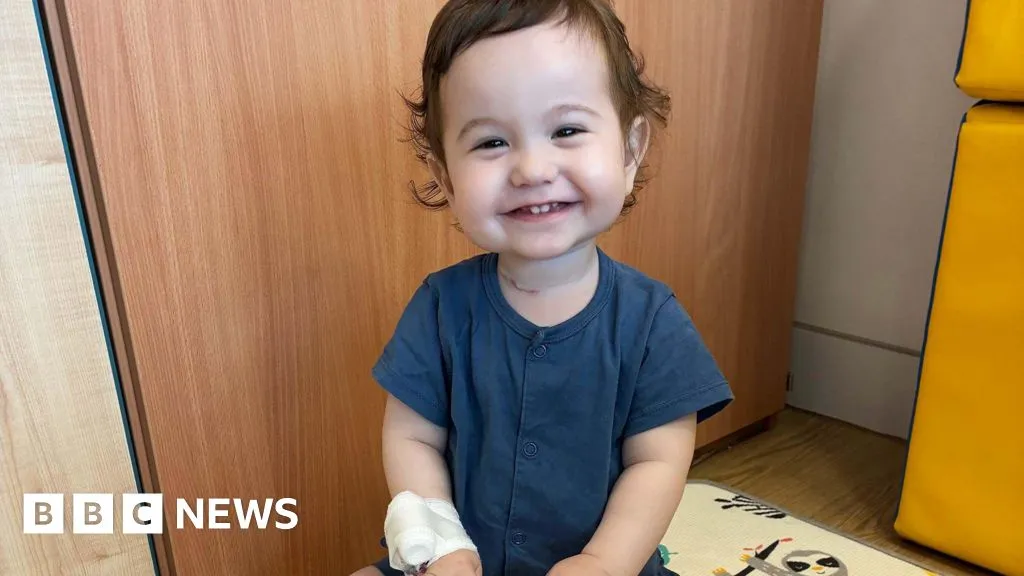
Two-year-old Casey Mcintyre was born with 11cm of his esophagus missing. His esophagus is his food pipe. His mom, Silviya, knew before he was born that he would need many surgeries.
Doctors moved Casey's stomach up to close the gap. But he still uses a feeding tube while he learns to swallow. Silviya said the surgeries have affected his vocal cords, so he is catching up with his speech.
We're a new kind of news feed.
Regular news is designed to drain you. We're a non-profit built to restore you. Every story we publish is scored for impact, progress, and hope.
Start Your News DetoxCasey's dad, Sean, said they had to learn many new things as parents. This included feeding Casey through a stomach tube and dealing with urgent hospital calls.
Sean said, "Whatever the team did for him was really a miracle." He added that a single operation early in a child's life to transplant a working esophagus would be life-changing.
About 18 babies in the UK are born each year with the same condition as Casey.
How the Lab-Grown Food Pipes Work
The research in pigs shows it is possible to safely replace a full section of the esophagus. It also restores normal function, including swallowing. The pigs did not need anti-rejection drugs because the implant was grown using their own cells.
Scientists used Göttingen minipigs for the study. These pigs are similar to human children in size and cell makeup.
To create the new food pipes, scientists took a donor pig's esophagus. They removed its cells but kept the support structure. Then, they added new cells to this structure. This was placed in a special container called a bioreactor. The bioreactor pumped growth fluids through the tissue for a week to help it grow.

Eight pigs received the transplants and recovered well. They developed working swallowing muscles. Five pigs survived to the six-month mark of the trial. Their new food pipes had working muscle, nerves, and blood vessels.
Professor Paolo De Coppi led the research team at Great Ormond Street Hospital and University College London. He hopes to offer this treatment to children within the next five years.
He explained that the esophagus is a complex organ. It does not have its own blood supply, so it cannot be transplanted in the usual way. He noted that animal models similar to humans are essential for developing alternatives.
The new food pipe would not be suitable for adults with other esophageal problems, like cancer, because of its size. It is designed to grow with children as they get older.
Deep Dive & References
Lab-grown food pipe offers new hope for young patients - Nature Biotechnology, 2024