When ICE raids swept through Southern California last summer, Dulce Flores and Angie Portillio didn't march with signs. They picked up ribbon and thread.
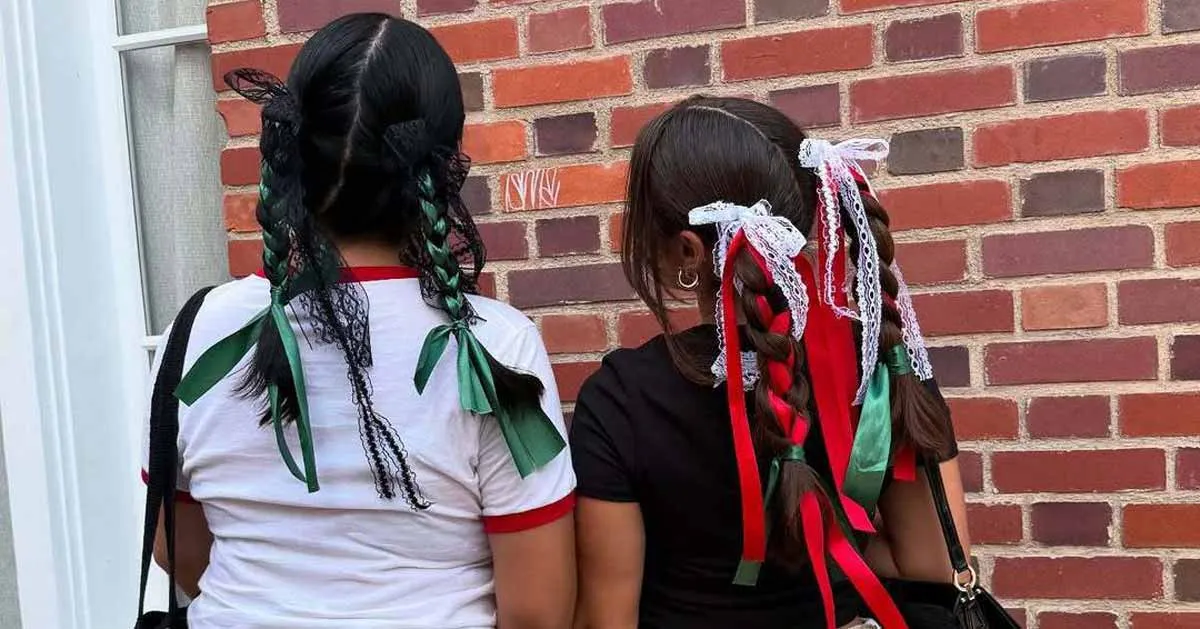
They started Ponte Your Moños—"put on your bow," a play on the Spanish phrase "ponte chingona," meaning be a badass. The idea was simple: braid hair in the traditional trenzas style, charge what people could afford, and funnel every dollar back to immigrant neighbors facing detention and deportation.
Traditional ribbon braids are woven into the fabric of Mexican and Central American heritage, rooted in Indigenous celebrations in Oaxaca. For generations, they've marked Quinceañeras, Sunday mass, weddings—the moments that matter. Wearing them now, Flores and Portillio realized, could mean something else entirely: visibility. Defiance. A way to say "we are here" without saying a word.
We're a new kind of news feed.
Regular news is designed to drain you. We're a non-profit built to restore you. Every story we publish is scored for impact, progress, and hope.
Start Your News DetoxSince June, the two have braided more than 1,000 people at pop-up events across Santa Ana and Los Angeles. At one event outside the Otay Mesa Detention Center in San Diego, they raised $5,000 in a single day—money that went directly to detainees for phone calls home, legal support, and commissary fees. The funds have also bought out street vendors' entire stock so they could leave work and get to safety.
But something unexpected happened in the chair. Volunteer Ashley described it as healing—not just the act of resistance, but the act of sitting together. "Mostly every girl that sat in the chair said it reminded them of their mom doing their trenzas when they were little," she said. The braids became a bridge between generations, a way to process fear and uncertainty through the hands of someone who understood.
"It's in our roots," Portillio said. "It's a tribute to them."
What started in Southern California is spreading. Chapters of Ponte Your Moños are forming across the country—Minnesota, other cities still organizing. Flores told local news she's fielding requests from people asking how to replicate the model in their own communities. The group's motto, "Make Braids, No Raids," has become shorthand for a specific kind of protest: one rooted in culture, powered by community, and impossible to ignore.
The trenzas aren't subtle. They're meant to be seen. In a moment when immigration policy creates fear and uncertainty, wearing your heritage as an act of resistance says something louder than any slogan: we belong here, we matter, and we're not going anywhere.
As more chapters form, the movement is proving that protest doesn't always look like what we expect. Sometimes it looks like a woman sitting in a chair, remembering her mother's hands, and knowing that showing up for her community is the most political act she can make.