Near Angkor Wat, where millions of tourists arrive each year, a quieter economy thrives along the Siem Reap River. Families wash clothes by hand in round basins—not because it's traditional, but because it works. It pays. And it's become the backbone of how entire households survive.
Photographer Macy Castañeda-Lee discovered this world while attending the Angkor Photo Festival, documenting what she calls an "invisible" workforce. For the Khmer people here, laundry isn't just a chore. It's a symbol of economic stability and health, a way to measure whether a family can make it through the month.
Brothers Sothea and Bong Chea live in a home built from scrap fabric and salvaged materials. The laundry hanging outside serves two purposes: it brings in money from tourists' dirty clothes, and it acts as an insect barrier at night. One income stream, multiple uses. This is how resourcefulness works on the ground.
We're a new kind of news feed.
Regular news is designed to drain you. We're a non-profit built to restore you. Every story we publish is scored for impact, progress, and hope.
Start Your News DetoxMany families juggle multiple enterprises. Vonn Da Li Na and his wife run both a salon and a laundry service, their daughter helping with the scrubbing. "It is our work, along with the salon, so we just try to have fun with it," he told Castañeda-Lee. "I let my daughter have fun. But I wish we had a washing machine and other resources to make the process faster." That wish—for better tools, not to abandon the work—captures something real about how people adapt to what they have.
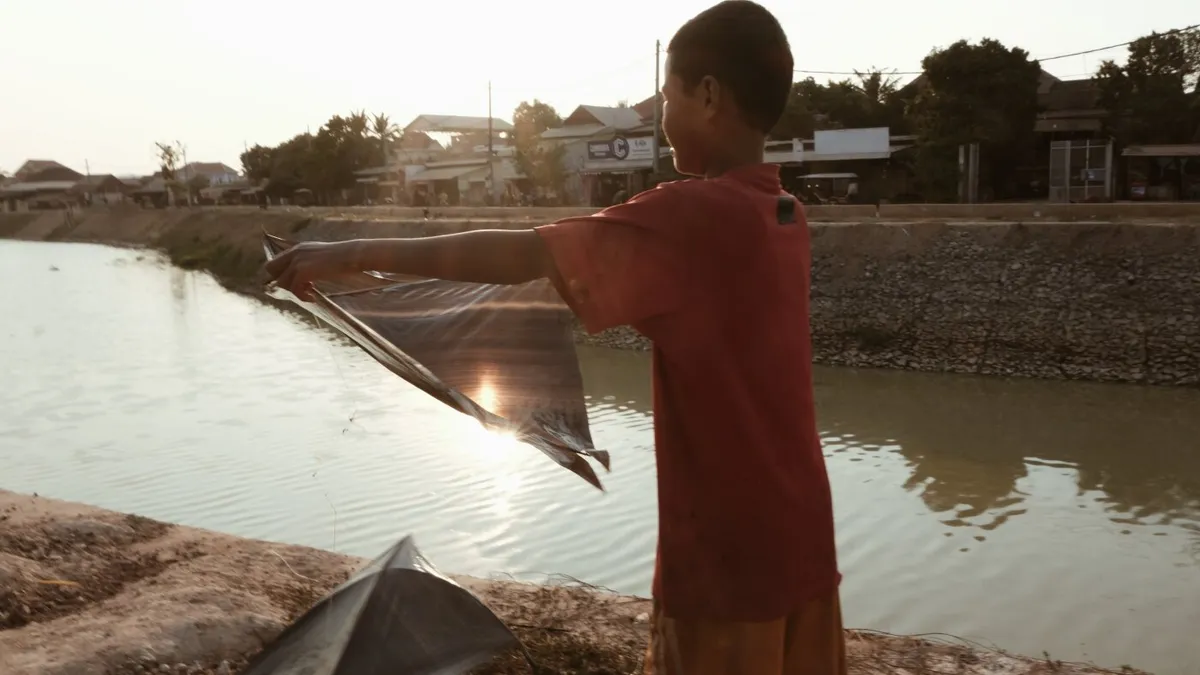
The Siem Reap River is the water source for most of these operations. It's not ideal from a sanitary standpoint, and Castañeda-Lee doesn't pretend otherwise. But Honme Thana, a mother of three who runs her own laundry business, has learned to work with what the river offers. "She told me she's learning how to work with nature," Castañeda-Lee said. That phrase—working with nature rather than against it—hints at a deeper resilience.
What struck Castañeda-Lee most was the rhythm of the work itself. "What calmed me throughout this project was that these people weren't on their phones while waiting for the laundry," she reflected. "Sometimes they would just sit and be still." In a world obsessed with constant stimulation, these families have carved out something closer to presence—not by choice, perhaps, but by circumstance.
The laundry economy around Siem Reap isn't going anywhere. As long as tourists arrive, clothes need washing. As long as families need income, someone will be at the river. Castañeda-Lee plans to return and keep documenting this evolving tradition, watching how these communities continue to adapt and persist.