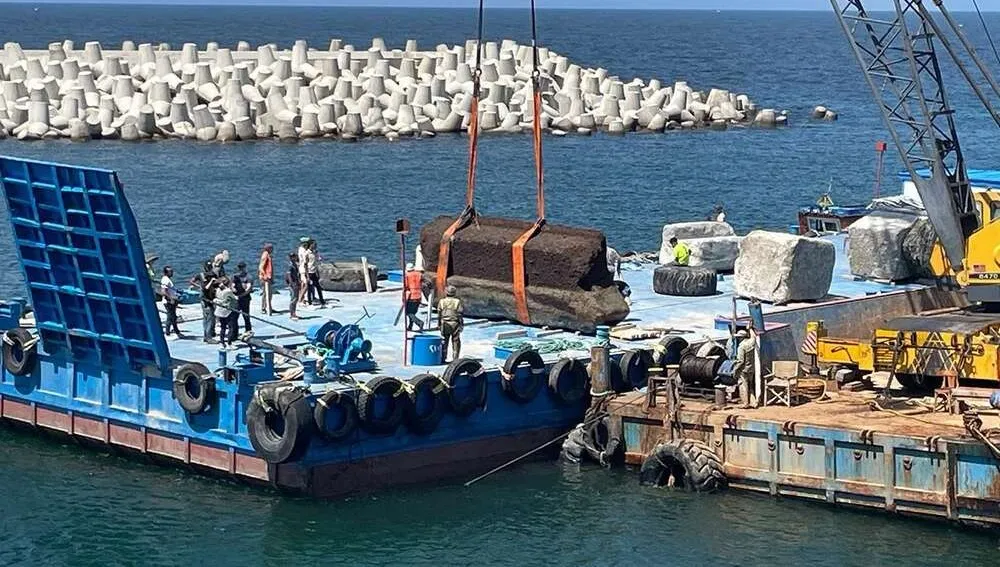
Most people know the Lewis and Clark Expedition left from St. Louis in May 1804, heading toward the Pacific. But the expedition's real beginning happened seven months earlier in a small Indiana town most travelers have never heard of.
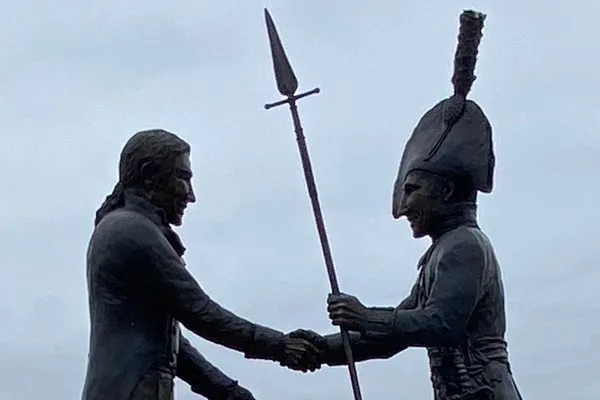
On October 14, 1803, Meriwether Lewis arrived in Clarksville, Indiana, at the Falls of the Ohio River. He'd traveled from Washington, D.C., carrying President Thomas Jefferson's instructions for what would become one of America's most significant journeys. There, along the Ohio's banks, he met William Clark for the first time. The two men would spend the next three years mapping the continent, recording hundreds of plant and animal species, and reshaping American territorial claims. A pair of statues now marks that October meeting place—a quiet monument to the moment everything began.
The Hidden Start
After the Louisiana Purchase in 1803, Jefferson saw an opportunity. He wanted the vast territory west of the Mississippi mapped, its trade routes documented, its plants and animals catalogued, and its Native peoples contacted peacefully. He also wanted the United States to claim it before European powers could. Lewis, his personal secretary and an Army captain, got the job. Lewis then chose Clark, a second lieutenant, as co-leader—and the two remained equals throughout, with Clark earning the title "Captain" despite his lower rank.
We're a new kind of news feed.
Regular news is designed to drain you. We're a non-profit built to restore you. Every story we publish is scored for impact, progress, and hope.
Start Your News DetoxWhile Lewis oversaw construction of a keelboat in Pittsburgh that summer, Clark recruited men from the Louisville and Clarksville areas. About one-third of the final 45-person Corps came from this region. When Lewis sailed the keelboat down the Ohio River in October 1803, he arrived in Clarksville with his crew—and a Newfoundland dog named Seaman that he'd purchased for the journey.
On October 26, the group departed for St. Louis, where they spent the winter at Camp River Dubois. The actual westbound journey began on May 14, 1804, the date most history books cite. But the expedition's foundation—its leadership, its core members, its supplies—all came together in Clarksville first.
What Came After
The Corps reached the Pacific in November 1805 and began the return journey in March 1806. They were back in St. Louis by September, and by November 1806, they'd returned to the Falls of the Ohio where it all started. Despite starvation, illness, and extraordinary hardship, they lost only one man. They brought back detailed maps, records of over 200 plant species and 120 animal species, and geographic knowledge that shifted American territorial power.
That success came with a darker legacy. The expedition paved the way for westward expansion and the forced relocation of Native peoples across the continent. The statues in Clarksville stand at a threshold—marking both a moment of exploration and the beginning of a displacement that would reshape the continent for centuries.
Visitors to the site can explore the Falls of Ohio State Park's interpretive center, which tells the fuller story of what happened before the famous journey west.