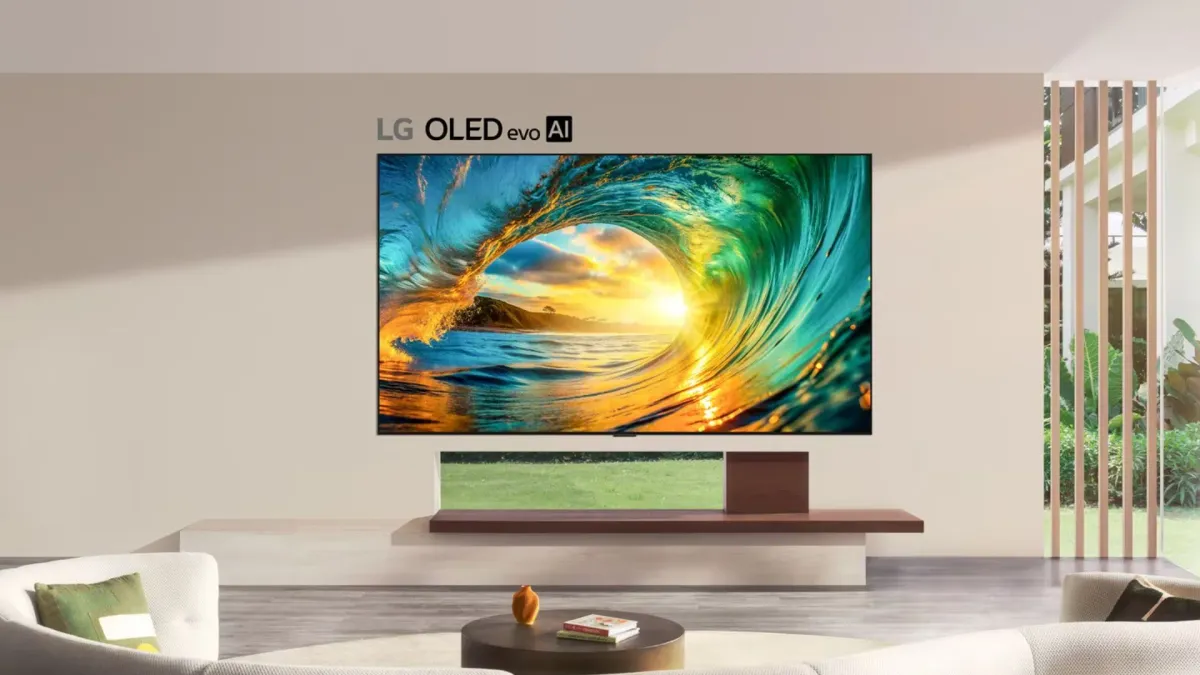
LG has built a television so thin it practically disappears into your wall—and now it doesn't need cables either.
The W6, unveiled ahead of CES 2026, is just 9 millimeters thick. That's thinner than a pencil. More importantly, it's the first OLED TV from LG that transmits 4K video wirelessly at up to 165Hz, which means smooth motion and no noticeable lag, even for fast-paced gaming. Everything—the screen, processor, power supply, and speakers—is built into that paper-thin frame. No soundbar. No external box sitting underneath. Just a display that hangs flat against your wall with nothing visible but the image.
The wireless piece changes the room
For years, "wireless" TVs still required a power cable snaking behind them. The W6 still needs power, but the video and audio come through the air. You connect other devices—your gaming console, streaming box, whatever—to a small Zero Connect Box instead of the TV itself. This actually gives you more flexibility in how you arrange a room. The TV can sit anywhere there's power; your devices can be in a cabinet or closet.
We're a new kind of news feed.
Regular news is designed to drain you. We're a non-profit built to restore you. Every story we publish is scored for impact, progress, and hope.
Start Your News DetoxThe wireless transmission handles both video and audio without the stuttering or delay that plagued earlier wireless TV attempts. LG says this is the result of years of refinement in their wireless technology, finally reaching a threshold where it's genuinely reliable.
The picture got brighter and smarter
Beyond the wireless leap, LG upgraded the image quality across the board. The new Hyper Radiant Color system, powered by a third-generation AI processor five times more powerful than before, can reach peak brightness at nearly four times the level of standard OLED TVs. That matters if you have a bright living room—one of the historic weaknesses of OLED screens. A new surface treatment reduces reflections, so you're not watching yourself watch TV.
The TV also includes dual AI upscaling, which means it can take lower-resolution content and intelligently fill in detail. For gamers, it supports Nvidia G-Sync and AMD FreeSync with a 0.1-millisecond response time. The software layer expanded too: webOS now integrates Google Gemini and Microsoft Copilot for voice control and content discovery.
The W6 represents a shift in how premium TVs are designed—not just thinner, but genuinely integrated. No visible hardware. No cable management. Just image quality that demands attention. It's scheduled to arrive in 2026, and the wireless capability will likely become the table stakes for high-end displays going forward.