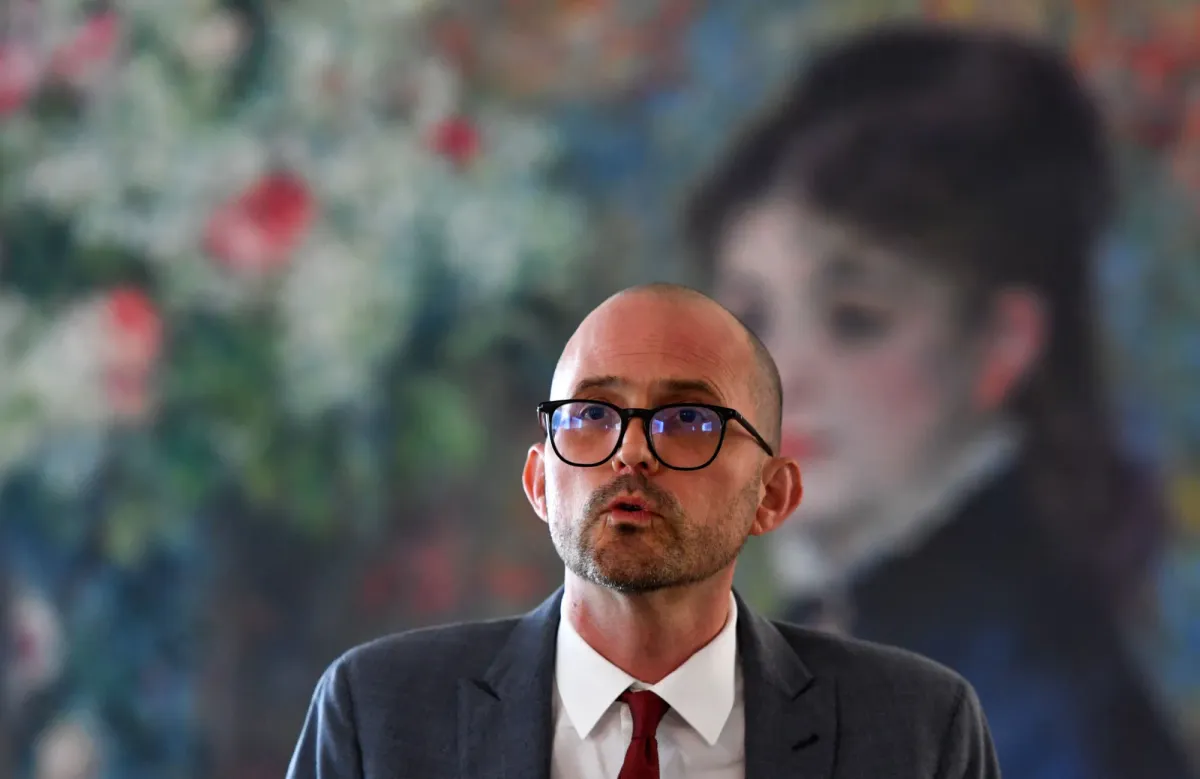
Manuel Rabaté spent eight years building one of the Middle East's most ambitious cultural institutions from the ground up. Now he's taking on something even bigger: shepherding India's largest private museum through a transformation that will reshape the subcontinent's cultural landscape.
Rabaté, who opened Louvre Abu Dhabi in 2016 and has directed it since, is joining the Kiran Nadar Museum of Art (KNMA) in New Delhi as its first chief executive and director. The move marks a significant moment for both institutions — and a signal of how India's private cultural sector is maturing.
KNMA has occupied a shopping mall space since its founding in 2010, but that's about to change dramatically. The museum is moving into a purpose-built campus designed by architect David Adjaye near Delhi's international airport. The complex, expected to open within three years, will sprawl across multiple exhibition galleries, performance spaces, a library, archive, and education center. Kiran Nadar, the museum's founder and chair, calls it the largest museum and cultural center in South Asia.
We're a new kind of news feed.
Regular news is designed to drain you. We're a non-profit built to restore you. Every story we publish is scored for impact, progress, and hope.
Start Your News DetoxRabaté's résumé reads like a master class in building cultural infrastructure from scratch. Before launching Louvre Abu Dhabi, he led France Muséums, the French government consultancy that designed the Abu Dhabi project. Before that, he held senior roles at the Louvre and the Musée du Quai Branly–Jacques Chirac in Paris. At Louvre Abu Dhabi, he didn't just open a building — he expanded the permanent collection, developed the exhibition program, and essentially created curatorial roles in a region where they barely existed before.
What's striking about this move is what it suggests about where serious art collecting and institutional ambition are heading. KNMA already had strong internal leadership: chief curator Roobina Karode and director of acquisitions Deepanjana Klein have been building the collection and program for years. Rabaté's appointment isn't about replacing that vision — it's about scaling it globally while keeping it rooted in South Asian art and culture.
"I have always had a keen interest in South Asia and in India in particular, both for its cultural richness and its institutional life," Rabaté said in his announcement. "I am excited to be part of a project that will change the museum landscape of the subcontinent."
He steps down from Abu Dhabi on March 7 and takes up his New Delhi role in the first half of this year. For Louvre Abu Dhabi, a successor search is underway — another signal that the institution has moved past its founding phase and into sustainable operation.