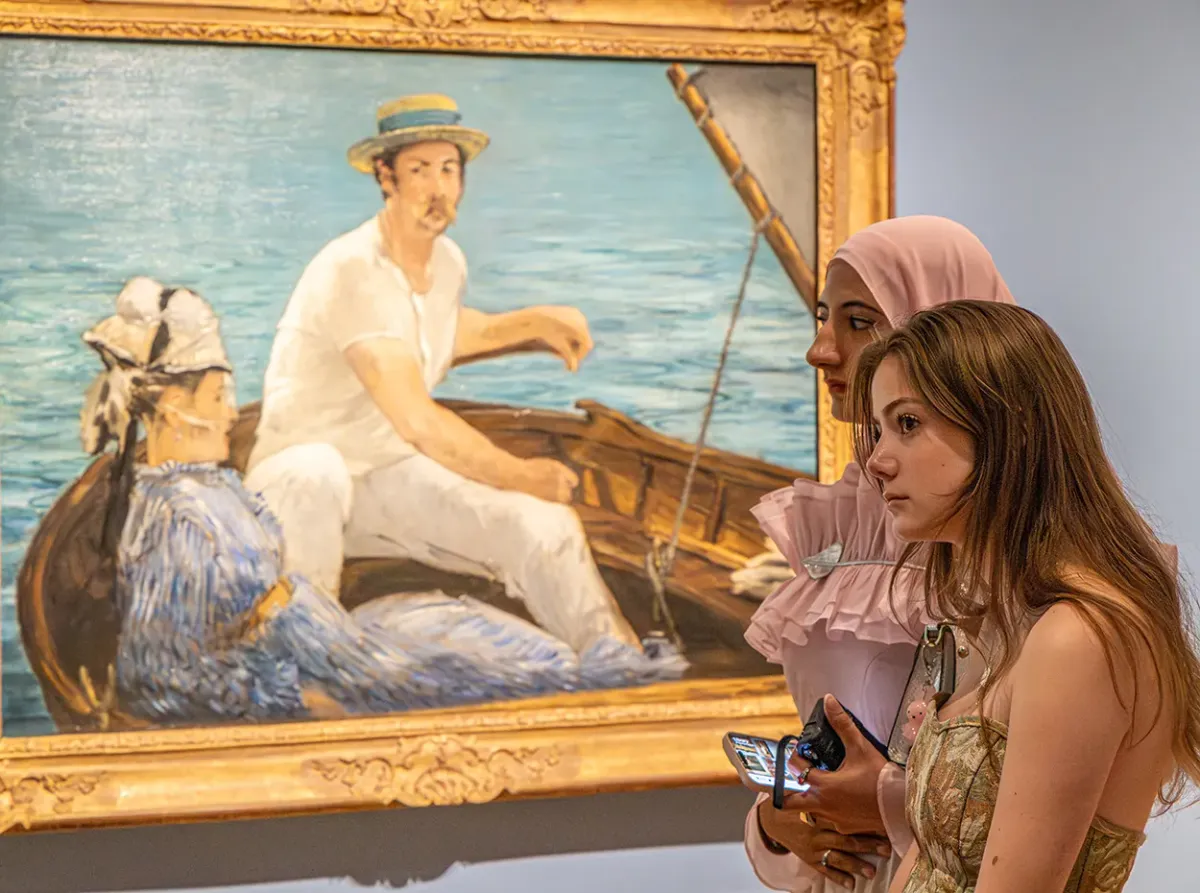
For far too long, art history has crowned Édouard Manet the undisputed "father" of Impressionism, leaving Berthe Morisot as a mere footnote – if she was mentioned at all. She was one of the only women to exhibit with the Impressionists, yet somehow, her contributions often got filed under "talented friend of a famous guy."
Well, the Cleveland Museum of Art is here to rewrite that narrative, with a new exhibition that argues Morisot wasn't just among the greats, she was actively shaping modern painting. And frankly, it’s about time.
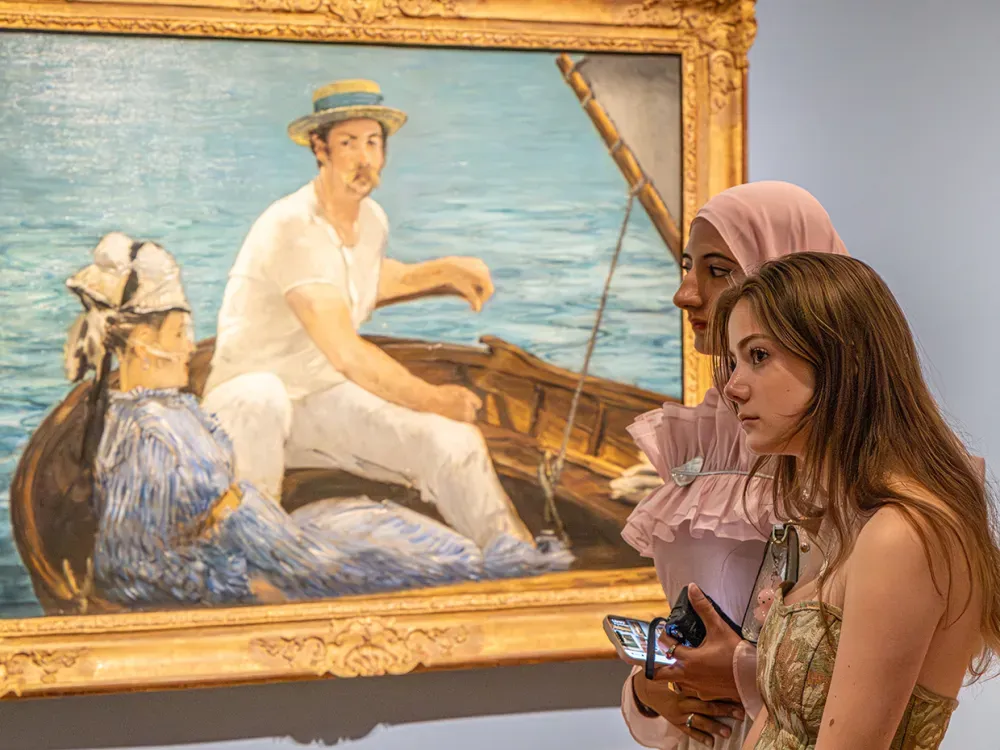
The Manet of It All
The story starts, as many things did in 19th-century Paris, at the Louvre. Manet and Morisot met in 1868, both copying paintings, as one did. Their families, both well-to-do, became intertwined, culminating in Morisot marrying Manet's brother, Eugène. Before that, though, Edouard painted her portrait a staggering eleven times.
We're a new kind of news feed.
Regular news is designed to drain you. We're a non-profit built to restore you. Every story we publish is scored for impact, progress, and hope.
Start Your News DetoxNaturally, these intimate sessions — a 36-year-old married Manet, known for his scandalous art, and a 27-year-old aspiring Morisot — have fueled centuries of speculative whispers. The exhibition leans into this, with the first section exploring the delicious "did they or didn't they" questions. Berthe Morisot Reclining (1873) practically winks at the viewer, inviting all sorts of scandalous interpretations.
But then, the exhibition pivots, shifting from Morisot as muse to Morisot as master. Her View of Paris from the Trocadero (1871–1873) is a quiet, contemplative response to Manet's own bustling cityscape from a few years prior. Hers shows a Paris recovering from war, reflective and subdued, rather than celebratory. It’s a subtle flex, really.
Morisot also introduces a recurring motif here: a child with their back to the viewer. These figures often act as an invitation into a scene, but they also hold back a secret, a reminder that we can’t truly know another’s inner world. Even her adults often look away, keeping their thoughts private, even as they’re laid bare on canvas.
Her Quiet Influence
Turns out, Manet was paying attention. Curator Emily Beeny suggests he actually adopted Morisot's child motif, using it in his own explorations of the modern city. Take The Railway (1873), for instance. It shows a woman gazing at the viewer, while a child peers through an iron fence at a train. Manet's direct gaze was his signature, but that child looking away? That might just be Morisot's influence, suggesting a new kind of privacy in public life.
Morisot also quietly championed the theme of labor, long before it became a Manet talking point. While Manet depicted railway workers separate from the wealthy, Morisot frequently featured her family's maid and nanny, Paisie. Paisie appears with Morisot's daughter, Julie, often engaged in tasks like sewing. In Paisie Sewing in the Garden at Bougival (1881), her hands become expressive lines, mirroring the repetitive rhythm of stitches.
This focus on textile arts wasn't just subject matter; it informed her brushwork. Her paintings often have a rhythmic quality that echoes the repetitive motion of needlework, treating lines like threads connecting the physical act of painting to craft.
Yes, focusing on children and sewing might seem to reinforce old gender roles. But Morisot lived within those conventions. To ignore them would be to ignore her unique genius. The exhibition closes with an 1885 self-portrait, Morisot staring boldly from the canvas. It’s a powerful image of confidence, but perhaps her most profound contributions — the quiet inner lives, the power of a line, the subtle influence — are even more revolutionary.