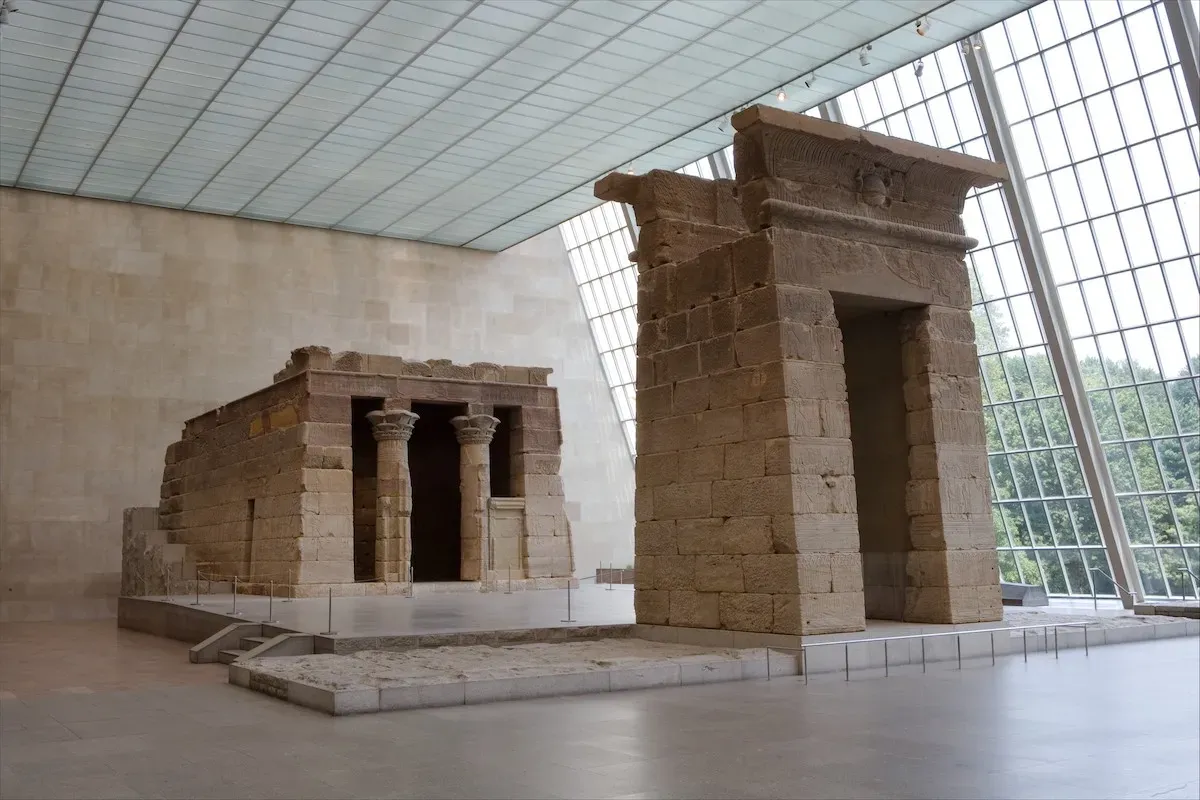
Picture this: a 2,000-year-old Egyptian temple, usually home to quiet contemplation and the occasional flash of a tourist's camera. Now, imagine it populated by the famously elongated, almost skeletal figures of Swiss modernist sculptor Alberto Giacometti. Because apparently, that's where we are this summer, and it's delightfully unsettling.
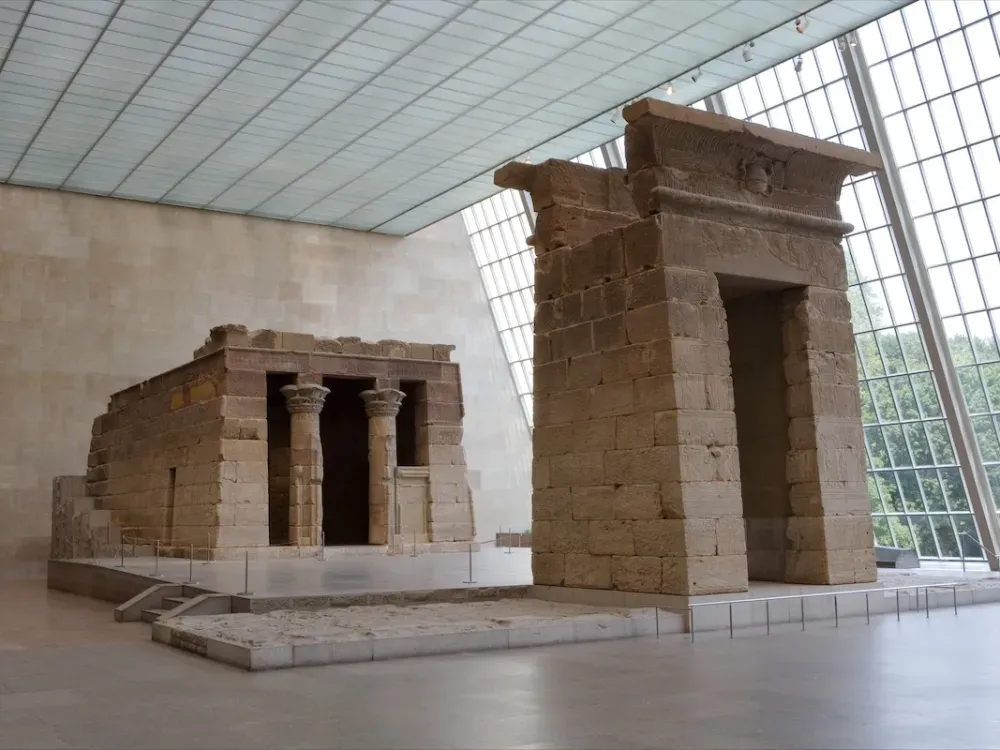
The Metropolitan Museum of Art is staging a rare exhibition, "Giacometti in the Temple of Dendur," placing 17 of his iconic sculptures within the hallowed (and very ancient) walls of the Temple of Dendur. It's a move that feels less like a traditional gallery show and more like a high-concept art installation designed to make you think about time, humanity, and perhaps, your own posture.
A Dialogue Across Millennia
This isn't just a quirky juxtaposition. The Met's modern art wing is currently closed for renovations, which might explain the museum's creative use of space. But it's also a deliberate attempt to bridge millennia, forcing a conversation between ancient Egyptian stoicism and Giacometti's existential angst. The museum has tried this before, with "Flight into Egypt" in 2024, but Giacometti's figures feel particularly resonant here.
We're a new kind of news feed.
Regular news is designed to drain you. We're a non-profit built to restore you. Every story we publish is scored for impact, progress, and hope.
Start Your News DetoxStarting June 12, prepare to see Walking Woman (I) (1932), a sculpture known for its almost impossibly tall and slender form, standing in the Temple of Dendur's offering hall. Meanwhile, Women of Venice (1956) will grace the temple's terrace, perhaps looking out over the water feature, contemplating its own fragile existence.
The Temple of Dendur itself dates back to 10 BCE, arriving at the Met in 1978 — well after Giacometti's death. Yet, the exhibition suggests the artist was profoundly influenced by Egyptian art he encountered early in his career in Florence and Rome. He apparently saw in those ancient forms a way to express both stillness and powerful emotion, a concept that clearly stuck.
This whole endeavor is a joint effort between the Met's Egyptian and modern art departments, which sounds like the best kind of interdepartmental collaboration. Stephanie D’Alessandro, from the modern art side, notes that Giacometti was always exploring what it means to be human. Seeing his sculptures, with their raw, stripped-down essence, against the backdrop of an ancient civilization's enduring monuments, certainly makes you feel like you're getting to the core of something profound. Or at least, it makes you want to immediately tell someone about the skinny statues in the Egyptian temple.