
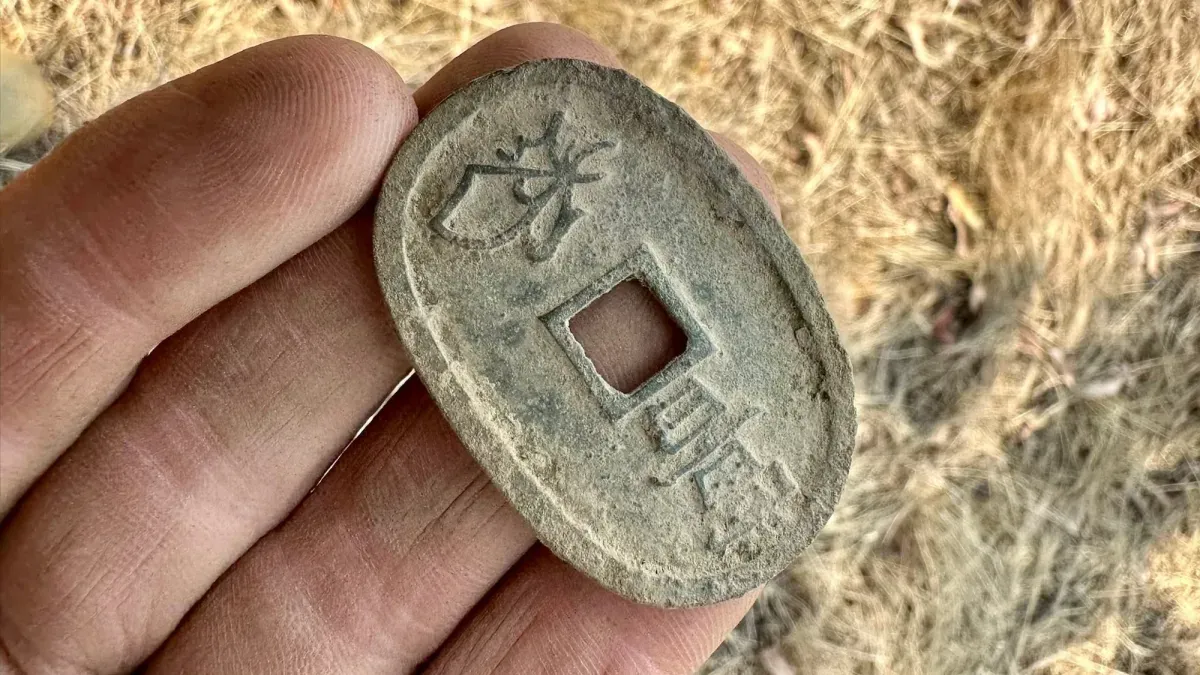
Angus James was sweeping an abandoned sports field in Victoria with his metal detector when it pinged. What emerged from the soil was a 100 Mon Tenpō Tsūhō—a well-preserved Japanese coin from the 1800s, the kind of find that stops you mid-swing and makes you wonder what story it's been holding.
James posted photos of the discovery to social media in late January, and the coin itself became a small window into a moment when the world converged on Australia. The gold rushes that began in 1851 transformed the continent almost overnight. Before the precious metal was discovered, Australia's population hovered around 430,000. Within two decades, by 1871, it had swelled to over 1.7 million.
That explosive growth meant people arrived from everywhere—not just Britain and Europe, but from China, Japan, and across Asia. They came chasing fortunes, bringing their own currency, their own languages, their own hopes. Most of those stories disappeared into the earth. A coin like the one James found is one of the rare physical echoes of that moment, proof that someone from Japan stood on that Victorian field with the same hunger for possibility that drew millions of others.
We're a new kind of news feed.
Regular news is designed to drain you. We're a non-profit built to restore you. Every story we publish is scored for impact, progress, and hope.
Start Your News DetoxFinds like this remind us that history isn't just in museums or textbooks. It's scattered across ordinary ground, waiting for someone curious enough to listen for it. James's discovery won't change Australia's relationship with its gold rush past, but it does something quieter and perhaps more valuable: it brings one forgotten traveler briefly back into view.