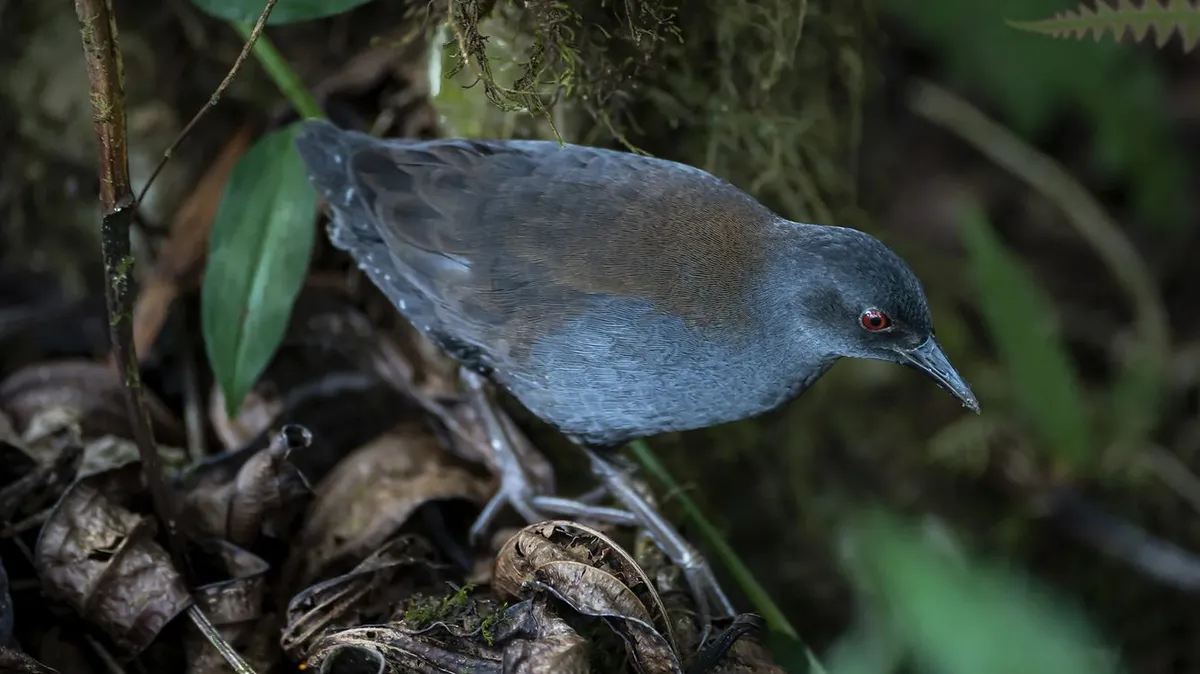
A blue-feathered bird that vanished from Floreana Island two centuries ago has come back. The Galapagos rail — a ground-dwelling species last documented by Charles Darwin himself — is now walking openly across the island, calling to mates without the constant threat of predation.
For nearly a decade, conservation teams removed invasive rats, cats, and flies from Floreana. The work was painstaking, unglamorous, and essential. Once those predators were gone, something unexpected happened: the ecosystem didn't just recover, it came alive.
"The rails reappeared and now it's very common to find these birds just walking around the island," said Paola Sangolquí of the Jocotoco Conservation Foundation. "You can hear it, you can see it."
We're a new kind of news feed.
Regular news is designed to drain you. We're a non-profit built to restore you. Every story we publish is scored for impact, progress, and hope.
Start Your News DetoxBefore the eradication, the rail's eggs were easy targets. Cats and rats hunted them relentlessly. The species persisted on other Galapagos islands but was thought extinct on Floreana — lost to the same pressures that have erased so many endemic species worldwide. The rails' return proves that assumption wrong.
When silence breaks into song
But the rail's reappearance tells only part of the story. Across Floreana, native finches have started singing differently. They sing longer. They sing louder. Some have even created entirely new song patterns.
For over a century, these birds lived in survival mode. Predators meant staying hidden, staying quiet. A young finch that sang boldly was a young finch that didn't survive to breed. Evolution shaped them toward silence.
Now, with the island safe again, that evolutionary pressure has lifted. Birds are experimenting. They're filling the soundscape with melodies that hadn't been heard on Floreana in generations — if ever. Birgit Fessl of the Charles Darwin Foundation described it as "more than a century of pent up melody released upon the island airwaves."
This isn't metaphorical. The acoustic ecology of Floreana has fundamentally shifted. A place that was quiet is now loud with life.
The restoration of Floreana matters beyond the island itself. It's a working proof that ecosystem collapse isn't always irreversible. The Galapagos — those islands that shaped Darwin's thinking about nature and evolution — are demonstrating that intensive, sustained conservation can rewire an ecosystem back toward health. The rails walking freely. The finches singing boldly. These aren't small victories. They're evidence that when humans commit to undoing damage, nature responds faster than we usually expect.