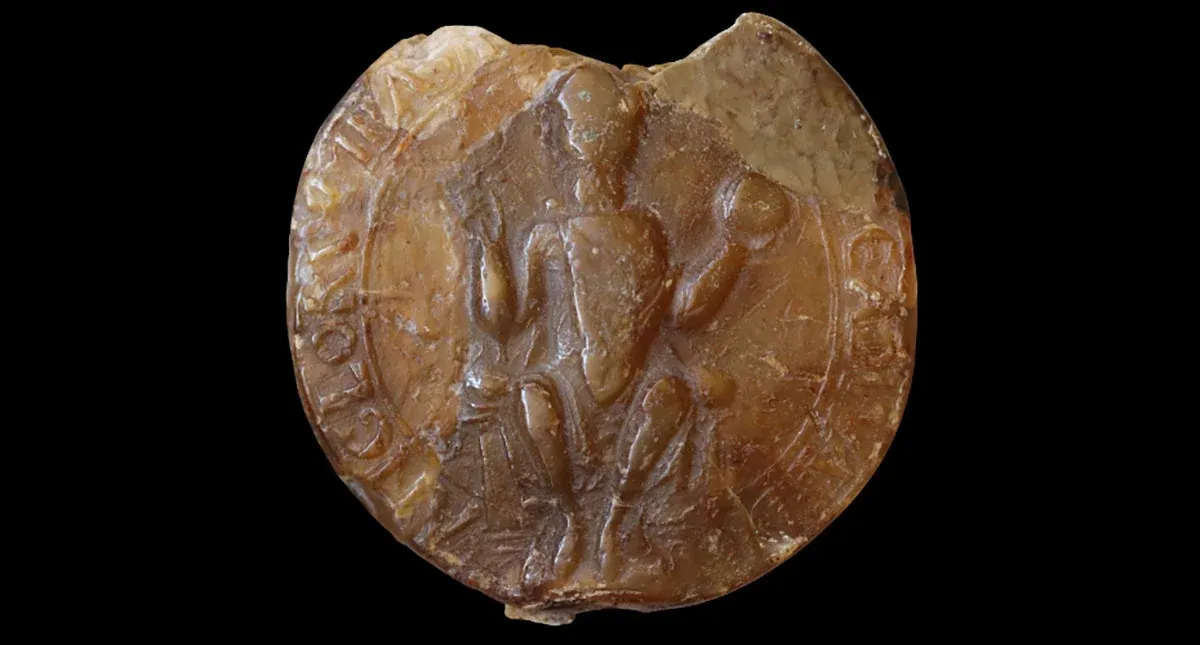
Imagine losing your car keys, only to find them four decades later in a dusty box you swore you'd already checked. Now imagine those keys belonged to an 11th-century English king, and their rediscovery just rewrote a tiny piece of history. That's essentially what happened with a rare royal seal belonging to Edward the Confessor, which recently resurfaced in the French National Archives after being declared missing for over 40 years.
Edward, for those whose medieval history is a tad rusty, ruled England from 1042 to 1066. He was the last Anglo-Saxon king before the Norman Conquest, commissioned Westminster Abbey, and eventually got canonized. Busy guy. He had three known seals, but one, the 'Saint-Denis seal,' was the best preserved — until it vanished without a trace from the Paris Archives Nationales sometime in the 1980s. Historians collectively sighed.
A Lucky Find in a Forgotten Corner
Fast forward to 2021. A curator and a PhD student, rifling through a section of the Paris archive dedicated to damaged and separated seals (because apparently that's where historical treasures go to hide), stumbled upon it. Like finding a priceless relic in the junk drawer, but way more impressive. This discovery, now being shared publicly for the first time, is thanks to Dr. Guilhem Dorandeu, who found the seal, and Professor Levi Roach from the University of Exeter. Their new study, published in Early Medieval England and its Neighbours, reveals some fascinating details about Edward's reign.
We're a new kind of news feed.
Regular news is designed to drain you. We're a non-profit built to restore you. Every story we publish is scored for impact, progress, and hope.
Start Your News DetoxTurns out, this two-sided wax impression, once used to authenticate crucial state documents, shows Edward was quite the internationalist. The seal's design includes the phrase 'Anglorum basileus,' using basileus — a term typically reserved for the Byzantine emperor. This suggests Edward was either directly referencing Byzantine authority or, more likely, giving it an English twist. Either way, it's a bold flex.
One side even features a sword, a symbol not commonly associated with English royalty at the time. Yet, it popped up on Byzantine coins shortly before Edward's reign, including those of Constantine the Great. So, Edward was essentially borrowing power-dressing tips from across the continent, which is both clever and slightly audacious.
Professor Roach called the rediscovery a "wow" moment, noting it's the only intact pre-Conquest English royal seal. Which, if you think about it, makes studying its imagery and its role in diplomatic affairs particularly thrilling. It also connects to the rise of the 'writ-charter,' a document form that allowed kings to grant land and rights, and tell local officials to enforce them. Edward's reign saw a significant boom in these, suggesting he was adopting a more European, and decidedly more assertive, way of doing business.
What this all means is that England's ruling class was already deeply influenced by continental Europe, including Norman France, before William the Conqueror even thought about popping over for a visit in 1066. So, next time you misplace something important, maybe just wait 40 years. It might just turn into a groundbreaking historical discovery.