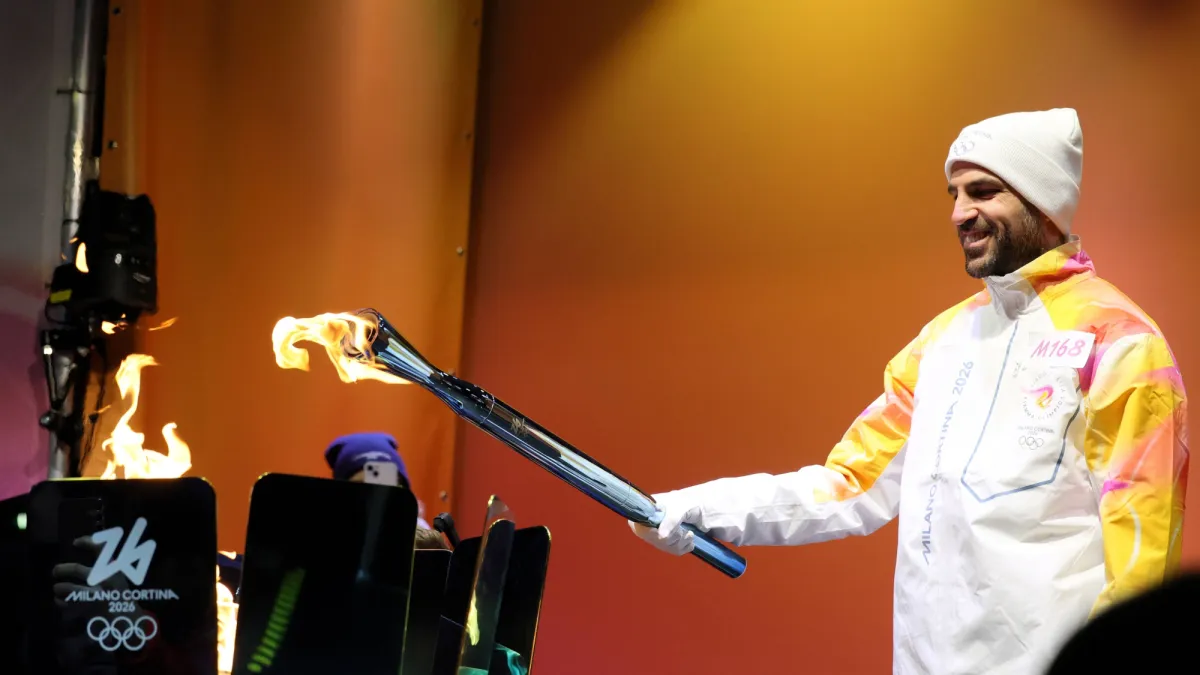
Carlo Ratti, an MIT engineer and architect from Turin, Italy, spent three years designing the torch for the 2026 Winter Olympics in Milano Cortina. The result is called "Essential"—and it's a study in doing more with less.
The torch needed to survive a 7,000-mile journey from Olympia, Greece to Milan through unpredictable Alpine weather, high altitude, and wind. Most Olympic torches are built once, carried, and discarded. Ratti's design can be recharged 10 times, which means organizers needed to manufacture far fewer of them. The entire torch weighs just under 2.5 pounds—the lightest ever created for the Games—and is made primarily from recycled aluminum.
"It is about what the object or the design is to convey," Ratti explained. "How it can touch people, how it can relate to people, how it can transmit emotions." That philosophy shaped every decision. The torch's internal burner is visible through a vertical opening along its side, so spectators watching the relay can actually see the flame burning inside. The design keeps the focus where it belongs: on the fire itself, not the object holding it.
We're a new kind of news feed.
Regular news is designed to drain you. We're a non-profit built to restore you. Every story we publish is scored for impact, progress, and hope.
Start Your News DetoxPowering the flame is bio-GPL—a renewable fuel made from 100% sustainable feedstocks by energy company ENI. The torch's exterior is finished with a heat-resistant coating that shifts color as it reflects the environments it passes through. The Olympic torch glows blue-green; the Paralympic version is gold. It earned an honorable mention from the Compasso d'Oro, Italy's most prestigious industrial design award.
Ratti, a winter sports enthusiast who grew up in Turin (which hosted the 2006 Winter Games), carried the torch himself through his hometown in January. He sees the 2026 Games as an opportunity to reshape how the world thinks about Italy—not as a museum of ancient Rome and Renaissance art, but as Europe's second-largest industrial power and a leader in innovation and technology.
"Italy does indeed have a significant past," he said. "But the reality is that it is also the second-largest industrial powerhouse in Europe and is leading in innovation and tech in many fields." The torch, in his view, bridges both: it draws on Italian design heritage while embodying forward-looking engineering and sustainability.
The torch relay began in late November and will pass through all 110 Italian provinces before arriving in Milan for the opening ceremony on February 6, 2026. For 16 days of competition, the flame will burn continuously—a tradition that traces back to ancient Greece, where fire was considered sacred.