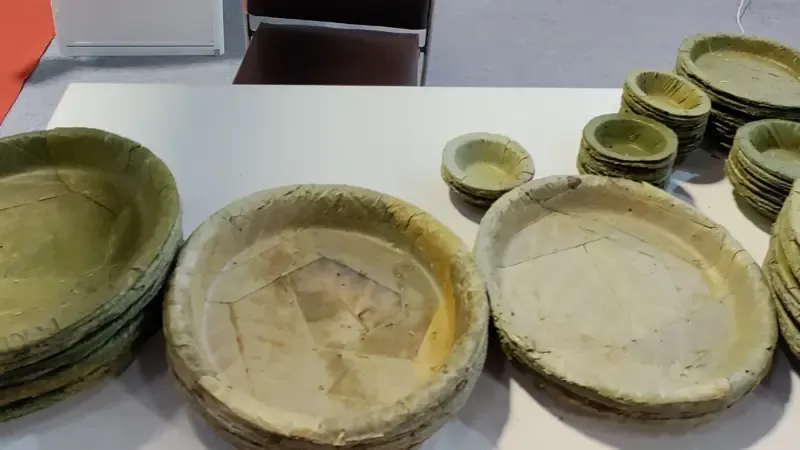
Turns out, one of the most effective solutions to climate change might just be… leaves. Specifically, Nepal's traditional duna and tapari — bowls and plates crafted from sal, bauhinia, or banana leaves — are making a serious comeback, proving that sometimes, the old ways are simply the best ways.
While the rest of the world has been busy drowning in plastic and styrofoam, rural Nepal never quite let go of these natural alternatives. And now, thanks to a healthy dose of environmental consciousness and some smart business moves, they're not just surviving; they're thriving.
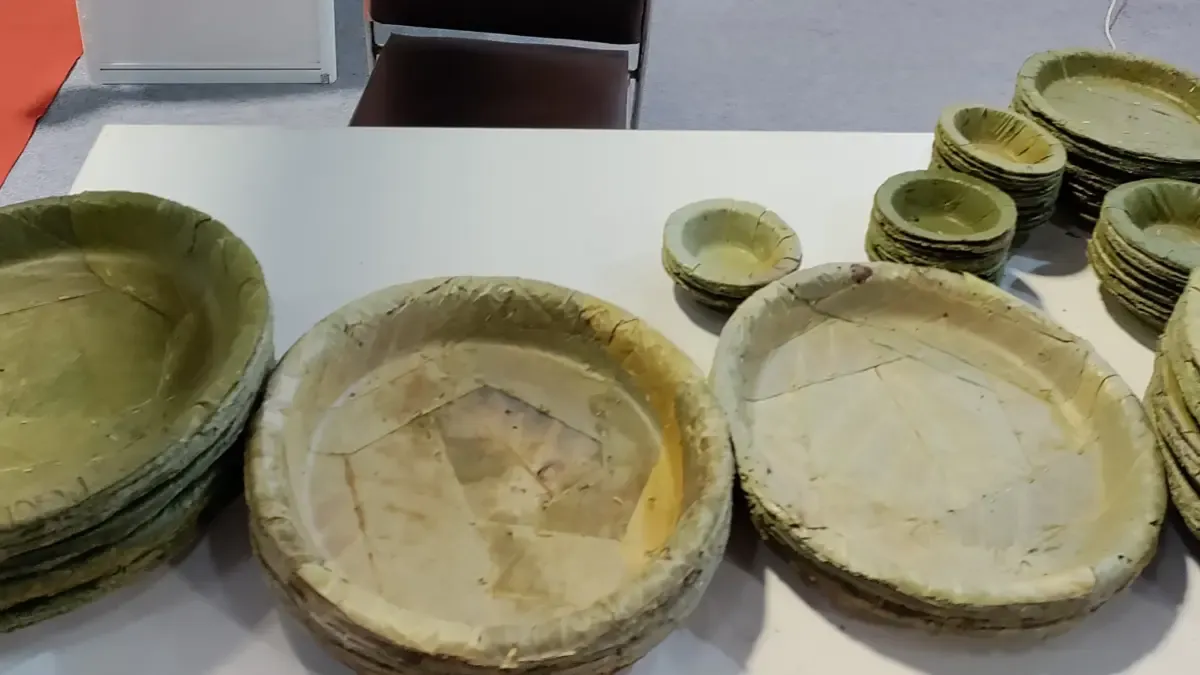
The Leaf Plate Renaissance
Nepali food blogger Jyoti Pathak points out that these fresh leaf plates are the go-to for pretty much every cultural event worth its salt: religious rituals, festivals, even weddings. And the dry sal leaf versions? They're now popping up at picnics, restaurants, and street food stalls. Because, apparently, even street food deserves a little eco-chic.
We're a new kind of news feed.
Regular news is designed to drain you. We're a non-profit built to restore you. Every story we publish is scored for impact, progress, and hope.
Start Your News DetoxThe demand isn't just a gentle breeze; it's a full-on gust. This surge has sparked a flurry of small businesses, many getting a leg up from NGOs. Take Binod Baral's Tapari Global Private Limited, for instance. Since 2017, they've been employing women from over 1,000 families to churn out tapari. Baral highlights the obvious (but often ignored) benefits: minimal energy use, a tiny carbon footprint compared to plastic or paper, and zero chemicals. Healthier for the planet, healthier for your momo.
Over in western Nepal, a group of 21 women, the Milijuli Tilakanya Dunatapri Udhyami Firm, is using an electricity-powered machine from the National Innovation Centre to make their duna and tapari. Because tradition, meet technology.
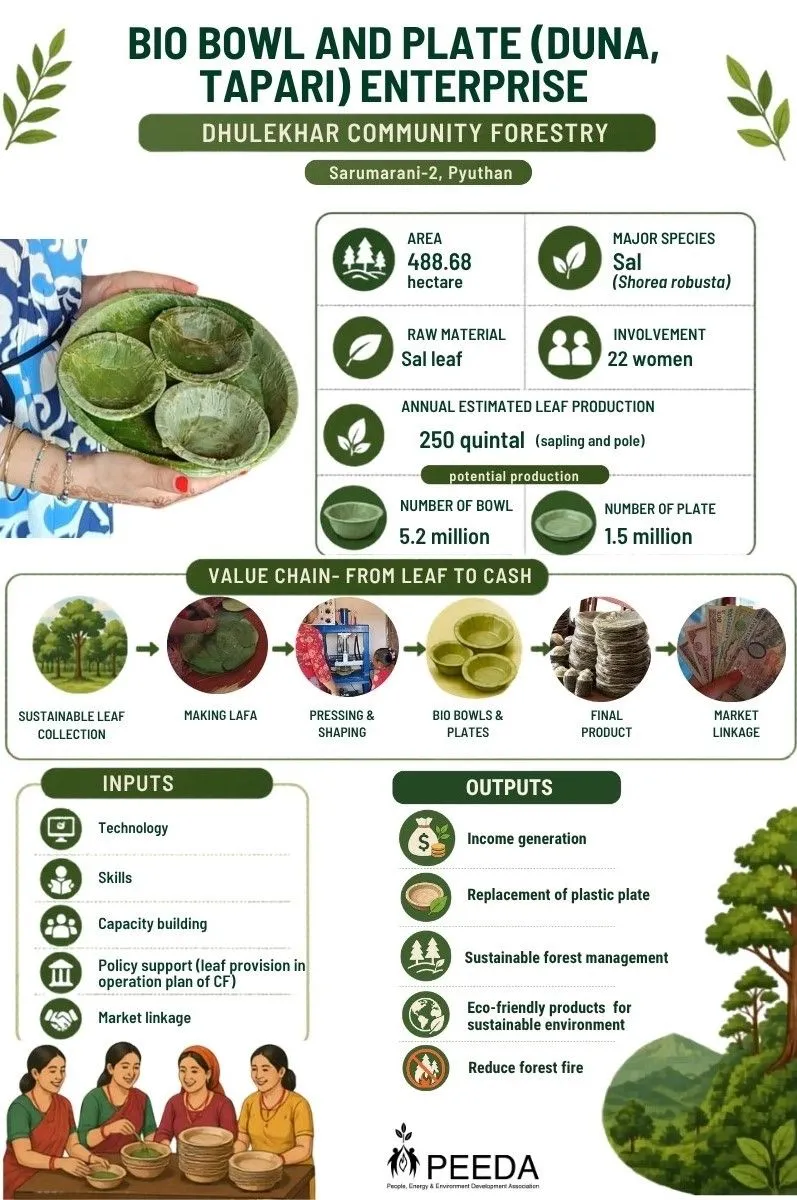
Another enterprise, backed by the People, Energy and Environment Development Association (PEEDA), is collecting sal leaves from the Dhulekhar Community Forest. They're transforming these leaves into biodegradable bowls and plates, offering a genuine, no-nonsense alternative to plastic. This particular venture is run by 22 women, more than half of whom are Indigenous, blending ancient wisdom with modern sustainable practices. The Dhulekhar Community Forest alone can supply enough sal leaves annually for about 5.2 million bio-bowls and 1.5 million bio-plates. Let that satisfying number sink in.
Nepal's community forests — national forests managed by local user groups — are the unsung heroes here. Nearly 2.58 million hectares of forestland have been handed over to these groups, empowering locals to actively protect and manage them. While Nepal's carbon emissions are barely a blip on the global radar, the country still grapples with climate impacts like forest fires and vanishing water sources, hitting women particularly hard.
But these forest-based businesses are flipping the script. Women in these community forest groups are turning vulnerabilities into viable livelihoods, contributing to environmental conservation, climate resilience, and local economies. All by going back to basics, one very useful leaf at a time.