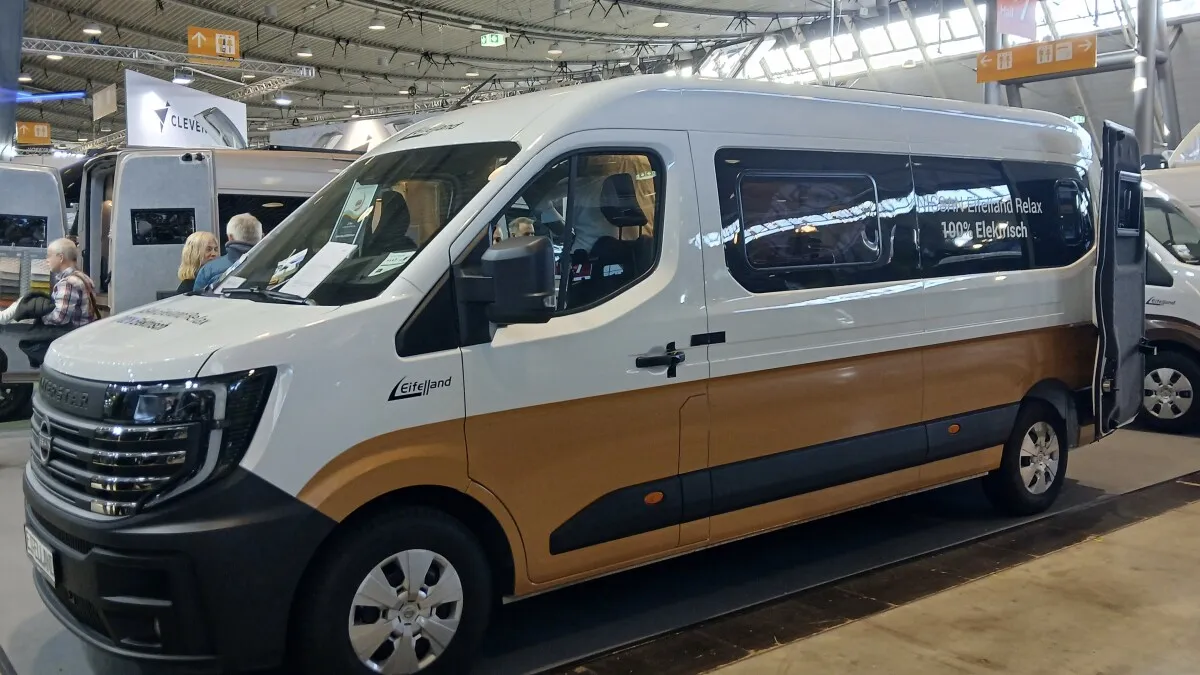
A German conversion specialist has turned the Nissan Interstar into something unexpected: a genuinely livable electric camper van that doesn't pretend to be something it's not.
Eiffeland, a company that transforms vans into mobile homes, has stripped away the aesthetic pretense and focused on what actually matters when you're living in a box on wheels: space, comfort, and the ability to stay powered up far from a charging station.
What makes this different
The "Relax" conversion package is built for two people who want to spend weeks away from civilization without sacrificing basic functionality. There's a proper double bed at the rear (75 by 63 inches), with storage underneath instead of wasted space. The kitchen isn't a gimmick—it has a dual-burner gas stove, a real sink, and a compressor fridge. The dining table folds away. The cabinetry is actual wood, not laminate theater.
We're a new kind of news feed.
Regular news is designed to drain you. We're a non-profit built to restore you. Every story we publish is scored for impact, progress, and hope.
Start Your News DetoxWhat sets the electric version apart is the solar setup. A 190-watt solar array tops the van, feeding into a 100-amp-hour lithium battery. This isn't designed to make you energy-independent forever—that's not realistic in a camper van—but it means you can run lights, charge devices, and keep the fridge running for days without plugging in. For someone parked near a lake or in a mountain valley, that changes the entire experience of being there.
The electric Interstar itself carries an 87-kilowatt-hour battery and can travel 254 miles on a charge—enough for a week of moving between campsites without range anxiety becoming the dominant emotion. The 141-horsepower motor is quiet, which matters when you're trying to sleep in a van parked next to other vans.
Nissan is also offering a diesel version for people who aren't ready to commit to electric, priced at roughly $99,000. The electric model runs about $103,000. Both will appear at the CMT 2026 show in Germany, where camper van enthusiasts will get a proper look at the real-world layout.
What's quietly significant here is that a major automaker is taking the electric camper van seriously—not as a novelty, but as a real product with real engineering behind it. The solar setup, the battery management, the range calculations—these suggest that someone at Nissan spent time thinking about how people actually live in vans, not just how to sell them a gimmick.
The camper van market is growing, and as it does, the infrastructure for charging and solar technology continues to improve. A van like this, built now, might actually feel less compromised five years from now than it does today.