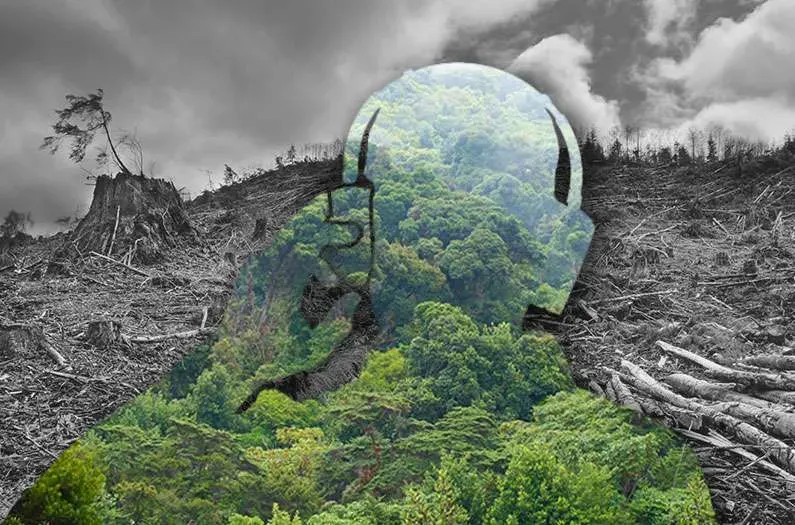
Brazil's Atlantic Forest is coming back—and the people making it happen aren't governments or conservation organizations. They're farmers and private landowners who've decided to replant.
A new study of the Atlantic Forest Restoration Pact, a 15-year-old collaboration between governments, NGOs, companies, and landowners, found something encouraging: vegetation cover on participating private lands increased by 20% between 2000 and 2018. That's a measurable shift in a region that lost 90% of its original forest to agriculture, urbanization, and sprawl.
The researchers analyzed 158,000 hectares of land across 17 Brazilian states—half of it actively restored, half left untouched as a control. The restored areas gained 4,600 hectares of new forest, roughly the size of Manhattan. It's not a reversal of centuries of clearing, but it's a real reversal.
We're a new kind of news feed.
Regular news is designed to drain you. We're a non-profit built to restore you. Every story we publish is scored for impact, progress, and hope.
Start Your News DetoxWhat makes private land matter
About three-quarters of the Atlantic Forest sits on private property, which is why this shift matters. You can't restore a landscape at scale without the people who own it. The pact works by identifying priority areas, helping landowners with implementation, and tracking both environmental and economic outcomes.
But the real driver might be simpler than policy. Ludmila Pugliese de Siqueira, a biologist with Conservation International Brazil and co-author of the study, describes what landowners report after planting trees: springs return. Streams fill again. The land cools down. These aren't abstract environmental gains—they're changes you notice when you step outside. A farm that was drying up becomes livable again.
That tangibility matters. Environmental restoration often gets framed as sacrifice—give up land, accept lower yields, do it for the planet. This story is different. Landowners are seeing direct benefits to their own property and daily lives. Springs that dried up decades ago are flowing again.
The scale ahead
The pact's goal is ambitious: restore 15 million hectares by 2050. At current rates, that's possible but not guaranteed. The study shows the mechanism works. The question now is whether enough private landowners will choose to participate, and whether the economic incentives—water security, cooler microclimates, potential carbon credits—remain compelling as the work scales up.
The Atlantic Forest is one of the world's most biodiverse regions and one of the most destroyed. This study suggests that recovery isn't waiting for perfect policy or unlimited public funding. It's happening where landowners see their own interest aligned with the forest's.