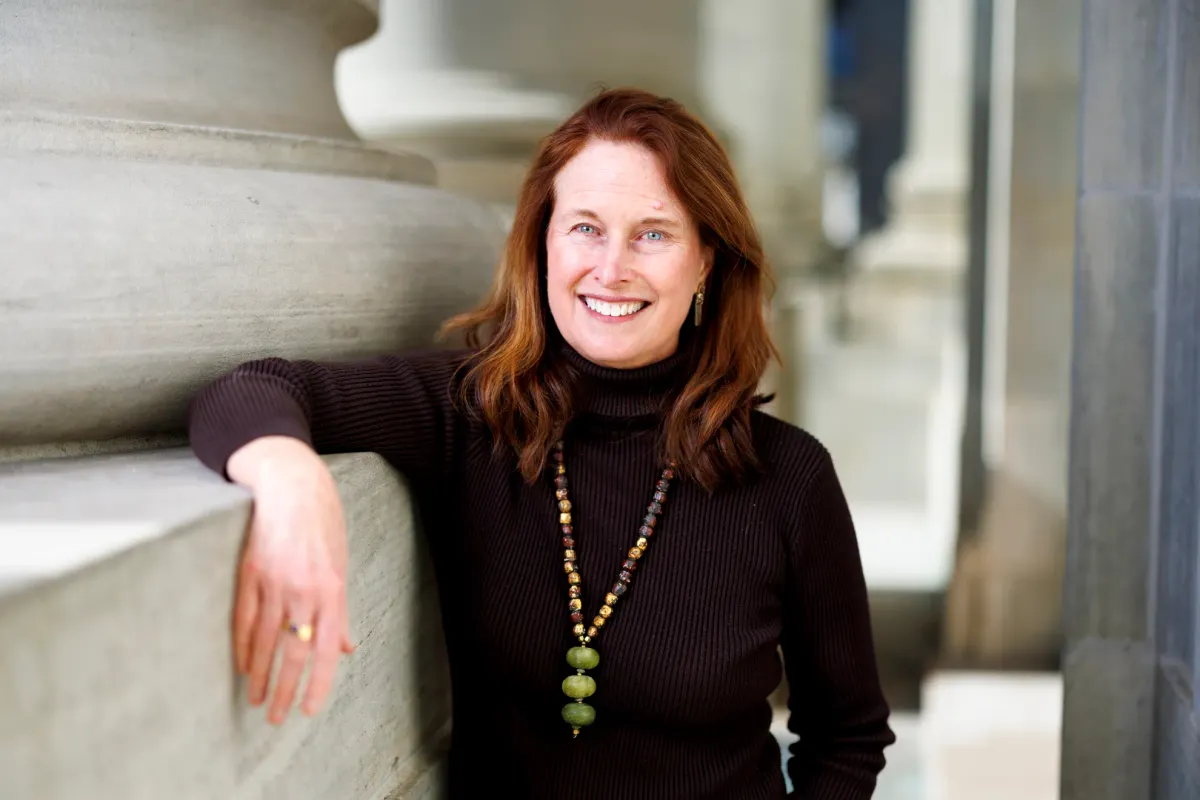
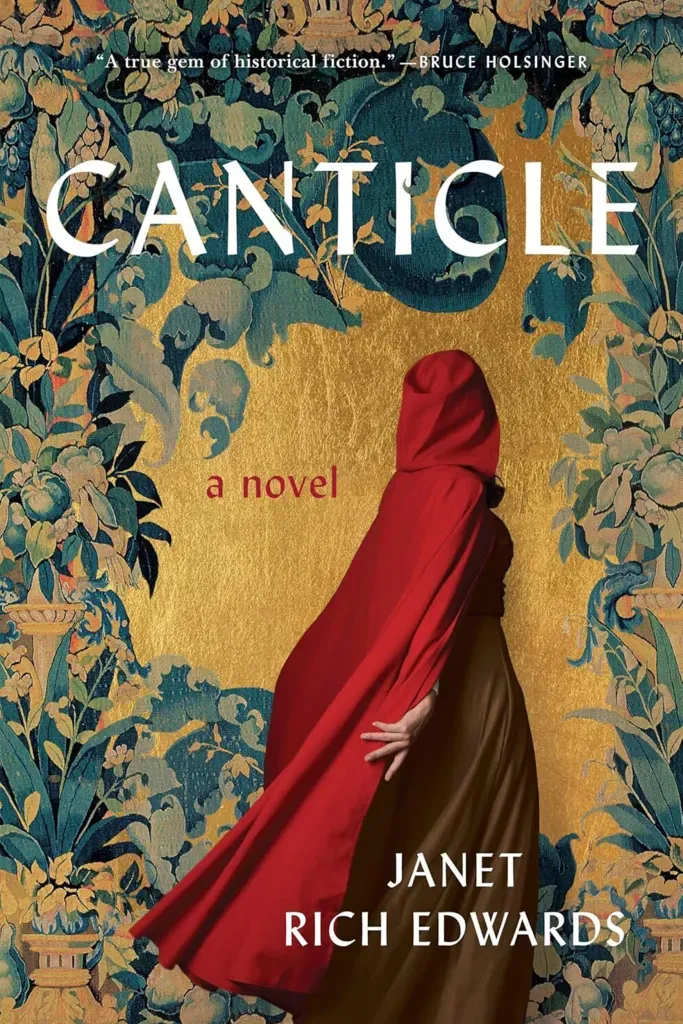
Janet Rich-Edwards found inspiration for her debut novel, "Canticle," during a lecture. The talk by fellow Radcliffe scholar Katie Bugyis focused on liturgical books used by medieval nuns. Rich-Edwards, a 2018-2019 Helen Putnam Fellow at Radcliffe, felt a deep connection to the past.
"You sort of feel a connection back through centuries," Rich-Edwards said. "As academics, we’re all book-lovers ourselves, and to be reminded how sacred books are feels a little bit like coming home."
"Canticle" tells the story of Aleys, a young woman in 13th-century Bruges. Aleys experiences mystical visions. She flees an unwanted marriage and joins the beguines. This group of religious women lived independently, outside the church's strict rules. When Aleys starts performing what seem to be miracles, many people want something from her, including a local bishop. The novel explores themes of faith, doubt, and the strength of women seeking freedom. Publications like The New York Times and People magazine have recommended it.
We're a new kind of news feed.
Regular news is designed to drain you. We're a non-profit built to restore you. Every story we publish is scored for impact, progress, and hope.
Start Your News DetoxFrom Epidemiology to Fiction
Writing fiction might seem unusual for Rich-Edwards. She is an epidemiologist and an associate professor of medicine at Harvard Medical School. Her Radcliffe fellowship project studied how childhood trauma affects addiction, appetite, and health. However, she started writing fiction at age 50. She believes in trying new things with each new decade.
By the time she heard Bugyis' lecture, Rich-Edwards had already written several manuscripts. She was looking for a new project. "I thought, ‘I would love to write about that,’" she recalled. After the lecture, she asked Bugyis for research advice.
Bugyis, a 2018-2019 Joy Foundation Fellow at Radcliffe, helped Rich-Edwards with materials. She said watching the novel gain attention has been "really magical." Bugyis is now an associate professor at the University of Notre Dame.
The Power of Collaboration
The Harvard Radcliffe Institute's fellowship program encourages different fields to work together. Each year, it brings together 50 scholars from various areas. These include humanities, sciences, social sciences, and arts. Writers and journalists also join to pursue research or creative projects.
Rich-Edwards described the Radcliffe Institute as a "true university." She noted that mathematicians, poets, and social scientists learn from each other. Rich-Edwards knows Radcliffe well. She was a fellow and also co-directed the institute’s science program for seven years.
"Canticle" is not the only novel to come from the 2018-2019 fellowship group, or even from Bugyis' lecture. Lauren Groff's award-winning novel "Matrix" also drew inspiration from Bugyis' research. Groff, a 2018-2019 Suzanne Young Murray Fellow at Radcliffe, said the lecture made her brain "exploding into rainbows."
Bugyis studies the daily religious life of medieval nuns. She examines old manuscripts for clues. A wax drop on parchment might mean prayers were read in the evening. Notes in the text could show where a cantor should change her voice.
As a historian, Bugyis must stick to facts and careful guesses. She admires how Rich-Edwards and Groff create a reality around these historical points. "I think fiction is able to take these little points of contact that I find and take them all the way," Bugyis said.
For Rich-Edwards, these connections to the past were personal. She believes everyone, especially women, needs freedom to follow their desires. She felt a bond with the beguines who sought their own space for worship and work. Rich-Edwards found her own writing space after her children grew up. She sees it as finding "a room of one’s own."