

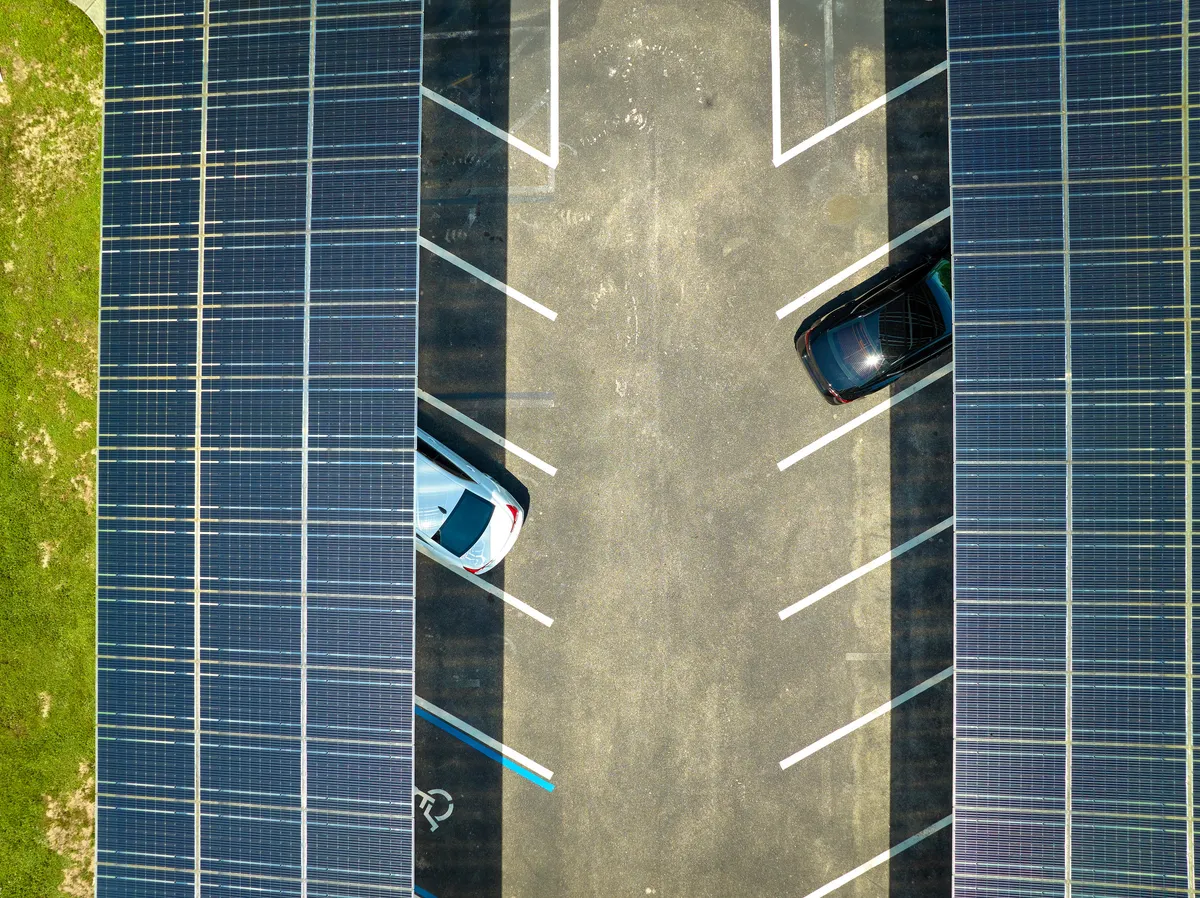
Starting this month, any parking lot in South Korea with more than 80 spaces must install solar canopies or carports. The requirement applies to new construction and existing lots alike — a nationwide shift that treats asphalt as potential clean energy infrastructure.
The policy amends South Korea's renewable energy law with a practical logic: nearly every community has parking lots sitting idle most of the day. Why not use that space to generate power.
The Ministry of Trade, Industry and Energy estimates the move will expand renewable capacity while creating jobs in solar installation and construction. But there's a quieter benefit that matters more to drivers themselves.
We're a new kind of news feed.
Regular news is designed to drain you. We're a non-profit built to restore you. Every story we publish is scored for impact, progress, and hope.
Start Your News DetoxShade and Power in One Structure
Solar canopies do more than feed the grid. They keep cars cooler in summer, shield them from rain and snow, and reduce interior wear over time. For electric vehicles, a cooler cabin means less air conditioning load — which translates to better battery range. Many installations pair with EV chargers, turning parking spots into charging stations.
As one Ministry official noted, the approach maximizes land efficiency while offering "noticeable comfort to people using parking lots during hot weather." It's the kind of solution that works because it solves two problems at once.
The law was approved in late September. Installation projects are expected to roll out across the country in the coming months.
Already Spreading Elsewhere
South Korea isn't alone in recognizing parking lots as untapped solar real estate. In Arizona, the Northwest Fire District's solar carport system generates over 1.23 million kilowatt-hours of clean power annually. New York recently opened 400 million square feet of commercially zoned space for EV charging and parking-lot solar projects.
Sun-rich states like Texas, Florida, and New Mexico could scale similar approaches quickly. Even smaller projects — solar canopies at school or municipal lots — reduce community energy costs while building local renewable capacity.
The concept mirrors why households install rooftop solar: cleaner energy, long-term savings, and a sense of energy resilience.
A Pattern Worth Noticing
South Korea's policy reveals something about climate innovation: the biggest breakthroughs often don't require new technology or new land. They require seeing familiar spaces differently. Parking lots cover vast acreage across cities and suburbs worldwide. Treating them as solar infrastructure doesn't just support national renewable targets — it delivers daily comfort and savings to the people who use them.
As more regions explore creative climate solutions, solar parking lots are likely to become ordinary infrastructure, offering shade today and cleaner power tomorrow.





