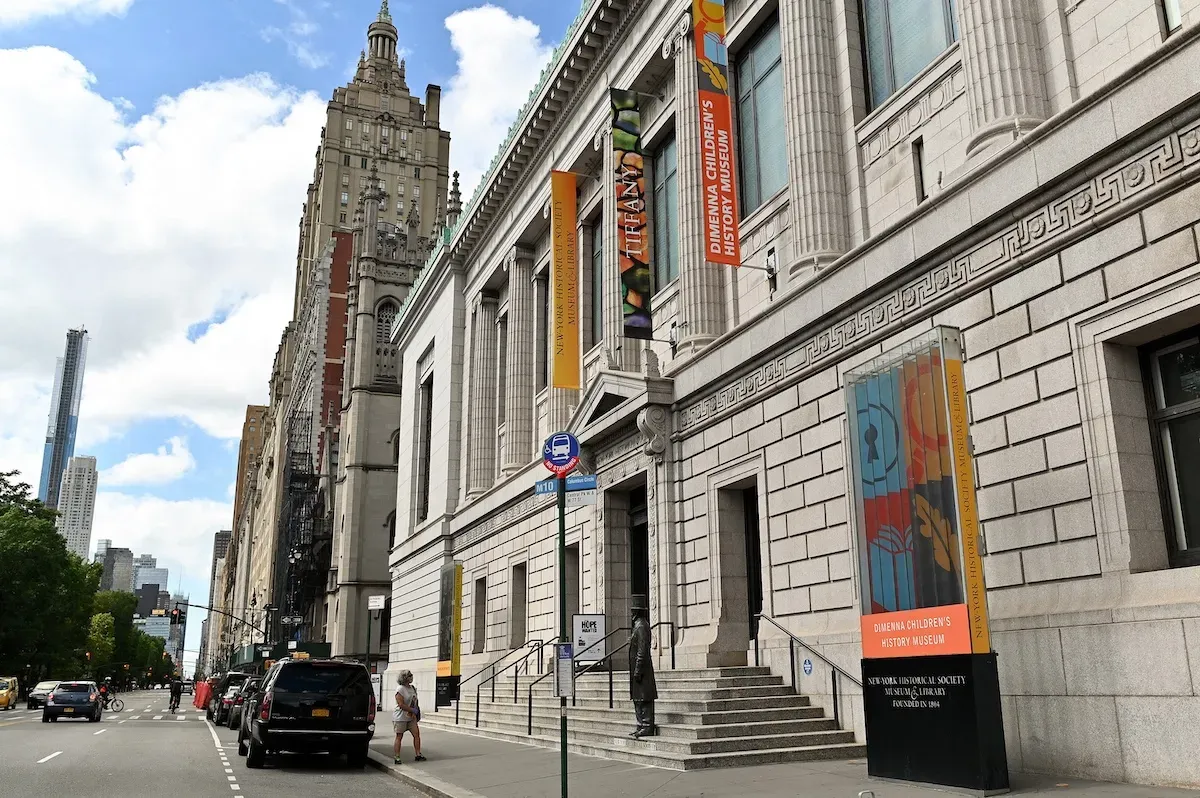
The New York Historical Society is receiving a major gift: over 100 modern and contemporary works by Native American artists, donated by board chair Dr. Agnes Hsu-Tang and her husband, Oscar Tang. The collection spans from early 20th-century Tewa potter Nampeyo of Hano to contemporary Choctaw/Cherokee painter Jeffrey Gibson—a sweeping arc of Indigenous artistic expression that the museum will now hold in trust.
This isn't just a donation. It's a deliberate repositioning. The gift arrives as the U.S. approaches its 250th anniversary, and the New York Historical is using the moment to do something it hasn't always done well: center Native American voices and histories as foundational to American culture, not peripheral to it.
A Shift in How We Tell the Story
Louise Mirrer, the museum's president and CEO, frames this as part of a larger institutional turn. It builds on the 2023 exhibition "Kay WalkingStick/Hudson River School," which asked a simple but overdue question: where are Indigenous artists in the canonical stories we tell about American art and landscape. This new collection answers that by showing them everywhere—across centuries, mediums, and movements.
We're a new kind of news feed.
Regular news is designed to drain you. We're a non-profit built to restore you. Every story we publish is scored for impact, progress, and hope.
Start Your News DetoxThe exhibition opening this April, "House Made of Dawn: Art by Native Americans 1880 to Now," will feature ceramicist Maria Martinez (San Ildefonso), illustrator Angel De Cora (Ho-Chunk), and poet-composer Zitkala-Ša (Yankton Dakota) alongside mid-20th century painters like Oscar Howe (Yanktonai Dakota) and George Morrison (Ojibwe). Photographer Lee Marmon (Laguna) will be shown in a New York museum for the first time. The Kiowa Six—a group of painters whose work shaped modernism—will be there too.
The curation matters here. Wendy Nālani E. Ikemoto, a Native Hawaiian curator and the museum's vice president, is organizing the show. That's not incidental. It means Indigenous artists are shaping how Indigenous art is presented, not being interpreted through an external lens.
What makes this gift significant isn't just scale. It's that it arrives at a moment when American museums are finally asking themselves harder questions about whose stories they've been telling and whose they've left out. The Hsu-Tang collection doesn't erase that history—but it does offer a chance to build something different going forward.
The exhibition runs from April 22 through August 2.