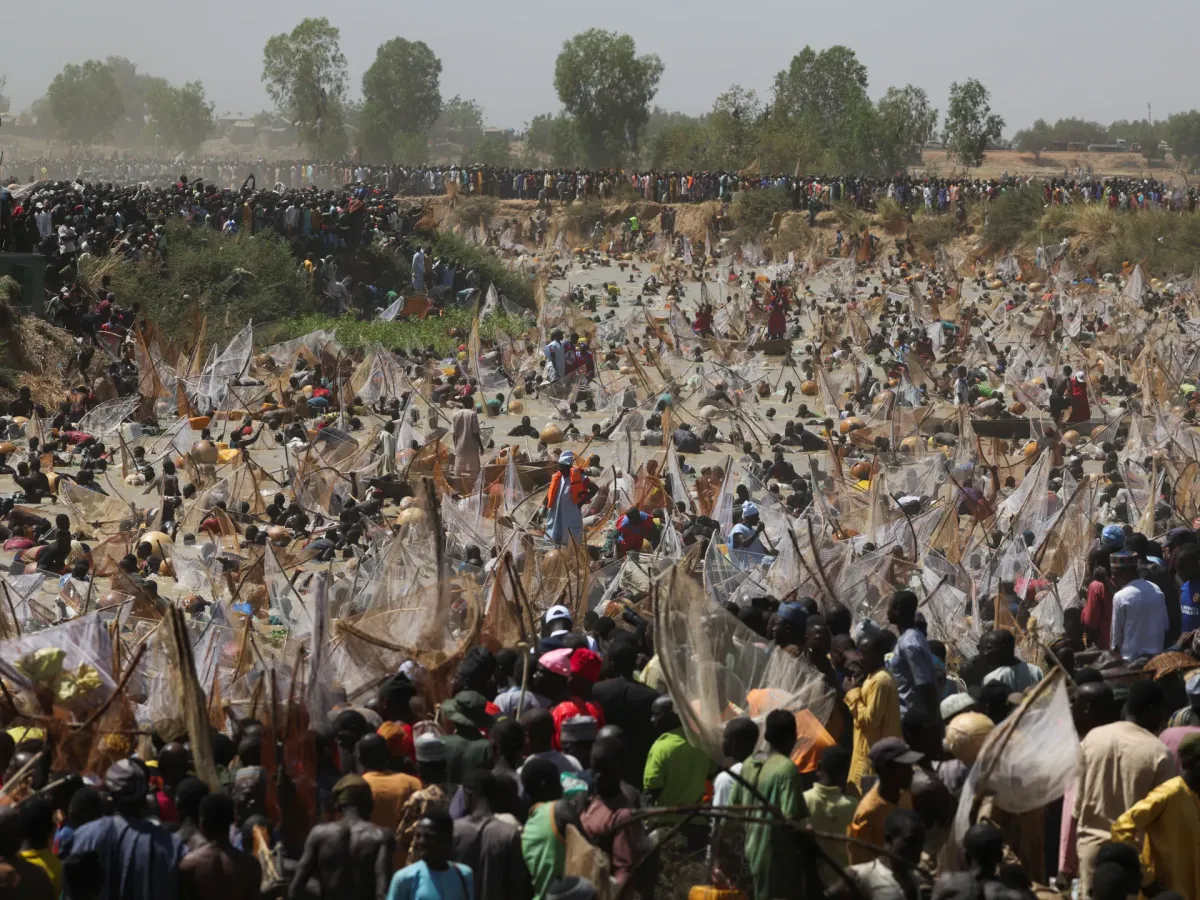
On Saturday, thousands of fishermen waded into the Matan Fadan river in northwestern Nigeria, their hand-woven nets spreading across water that had been closed to them for most of the year. The Argungu fishing contest was back—and with it, a piece of cultural life that had gone quiet for far too long.
The festival, which originated in 1934 as a peace celebration between the Sokoto Caliphate and the Argungu emirate, had run unbroken for decades. Then, in 2010, security concerns and infrastructure problems forced it to pause. A brief revival in 2020 ended just as quickly. This year's return felt different. President Bola Tinubu attended, joining spectators as competitors used only traditional methods—bare hands, calabash gourds, nets woven by hand—to fish the UNESCO heritage site.
The contest's champion caught a 59-kilogram croaker fish and claimed the cash prize. But for most participants, the real prize was simpler. Aliyu Muhammadu, a 63-year-old fisherman, put it plainly: "I thank God that I got something to take home to my family to eat. I am very happy that I came."
We're a new kind of news feed.
Regular news is designed to drain you. We're a non-profit built to restore you. Every story we publish is scored for impact, progress, and hope.
Start Your News DetoxThe river remains closed year-round, managed by a titled authority called the Sarkin Ruwa—the water chief. This careful stewardship means the festival week becomes the only time fishermen can work these waters. Beyond the competition itself, the event draws cultural performances: traditional wrestling, music, displays that remind the community of shared identity.
Yet the return hasn't been seamless. Hussein Mukwashe, the current Sarkin Ruwa, acknowledged the lingering hesitation. "Our challenge now is that people are scared of coming. A lot of people don't attend the event like before because of insecurity." Nigeria's northern regions have faced years of violence, and that fear hasn't simply vanished with one festival's reopening.
What has shifted is possibility. The fact that thousands showed up—that the water chief could oversee the nets again, that families could gather, that a 63-year-old fisherman could bring home food—suggests something is being rebuilt. Not solved. Not overnight. But rebuilt.