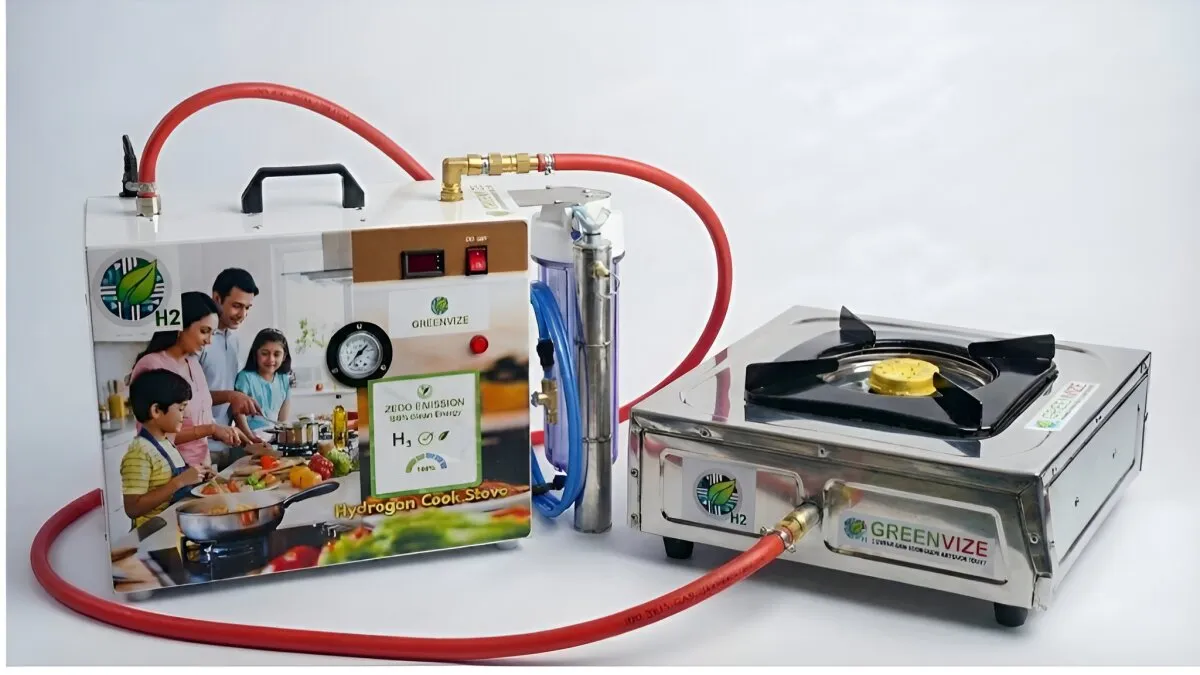
Imagine a kitchen where your stove sips water and a tiny bit of electricity, then somehow conjures up enough heat to cook dinner. Sounds like something out of a sci-fi movie, or maybe just a very ambitious startup in India. GreenVize, an Indian company, is now offering just that: a hydrogen-powered cooking unit that promises to slash your energy bills.
Here’s the magic trick: The system uses something called Proton Exchange Membrane (PEM) electrolysis. Basically, it takes good old H₂O (that's water, for the non-chemists among us), zaps it with a little electricity, and splits it into hydrogen and oxygen. The hydrogen gets immediately funneled to your burner, while the oxygen just… goes into the air. No need to store explosive gas tanks in your pantry, which is nice.
GreenVize claims its single-burner unit can cook continuously for up to six hours on just 100 milliliters of distilled water and a mere 1 kWh of electricity. For comparison, your standard induction cooker might chew through 9-12 kWh for the same amount of time. The company's founder, Sanjeev Choudhary, envisions this as a game-changer for places like hotels and community kitchens, offering better efficiency and flexibility.
We're a new kind of news feed.
Regular news is designed to drain you. We're a non-profit built to restore you. Every story we publish is scored for impact, progress, and hope.
Start Your News DetoxNow, for the reality check. While 1 kWh for six hours sounds like a dream, the laws of physics still apply. PEM electrolyzers aren't 100% efficient; they typically hover around 65-75%. Factor in some energy loss from the burning process, and that 1 kWh of electricity translates to about 0.5 to 0.6 kWh of actual heat getting to your pot.
What does that mean for your dinner plans? It means you're cooking at a maximum power of about 100 watts per burner. To put that in perspective, most induction burners blast out 1,500 to 2,000 watts. Boiling a quart of water on a standard induction stove takes about four minutes. On GreenVize's hydrogen stove? Over an hour. That 30-minute stir-fry might become a 7.5-hour slow-cook adventure.
So, while the technology is undeniably cool and a step toward cleaner cooking, don't expect to sear a steak in record time. It's less about high-speed culinary acrobatics and more about a gentle, persistent warmth. Which, if you think about it, is both impressive and slightly terrifying for anyone who's ever waited impatiently for pasta water to boil.